

Canzoni
La filosofia di vita rock schizza fuori da una gran quantità di brani musicali. Sono tantissimi, ma – per noi – mai troppi. Tanti altri ne arriveranno in futuro. Perché il rock (quello verace) è sempre assai più d’un genere musicale: è un modo di affrontare e intendere l’esistenza quotidiana. La musica rock è una filosofia di vita. Spregiudicata, irriverente, disinvolta. Certamente con limiti e difetti, ma viva, dinamica, potente.
A B C D E F G H I J K L M N O P R S T U V W Y TITOLI CON NUMERI
A
da ‘A CHANGE IS GONNA COME’ a ‘ALL YOU NEED IS LOVE’
A CHANGE IS GONNA COME
by Sam Cooke (1964) – <It’s been too hard living, but I’m afraid to die / ‘Cause I don’t know what’s up there, beyond the sky / It’s been a long, a long time coming / But I know a change gonna come, oh yes it will>. ASCOLTA SU YOUTUBE. Sul concetto di “cambiamento” vedi il termine greco antico <alloíōsis>.
A HARD DAY’S NIGHT
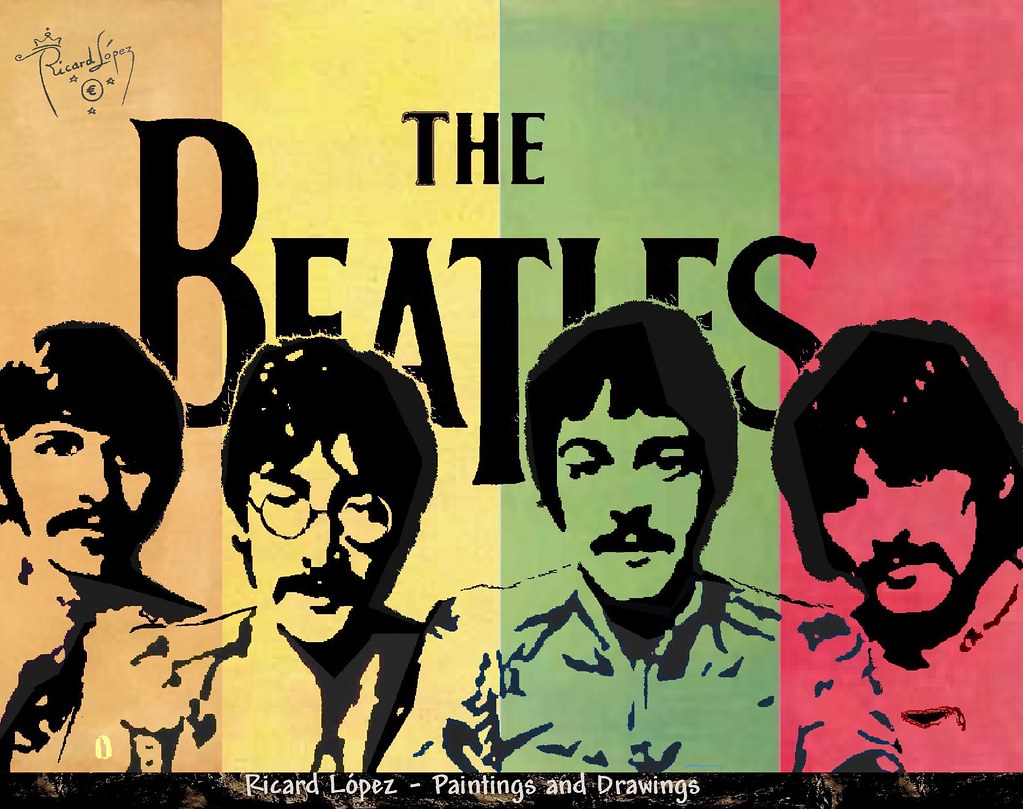
by The Beatles (1964) – <You know I work all day to get you money to buy you things / And it’s worth it just to hear you say you’re going to give me everything>. ASCOLTA SU YOUTUBE. Sul concetto di “lavoro” (inteso come “lavoro su di sé, addestramento”) vedi il termine greco antico <áskēsis>. Photo: “Beatles” by Ricard Lopez 1 is licensed under CC BY-NC 2.0.
AIN’T IT A SHAME
by Fats Domino (1955) – <Oh well goodbye / Although I’ll cry / Ain’t that a shame / My tears fell like rain / Ain’t that a shame / You’re the one to blame>. ASCOLTA SU YOUTUBE. Sul concetto di “emozione”, “sentimento”, “passione” vedi il termine greco antico <páthos>.
ALISON
by Elvis Costello (1977) – <Sometimes I wish that I could stop you from talking / When I hear the silly things that you say / I think somebody better put out the big light / Cause I can’t stand to see you this way>. ASCOLTA SU YOUTUBE. Il termine greco antico per esprimere il concetto di sopportazione è <kartería>.
All along the watchtower
by Jimi Hendrix Experience (1968)
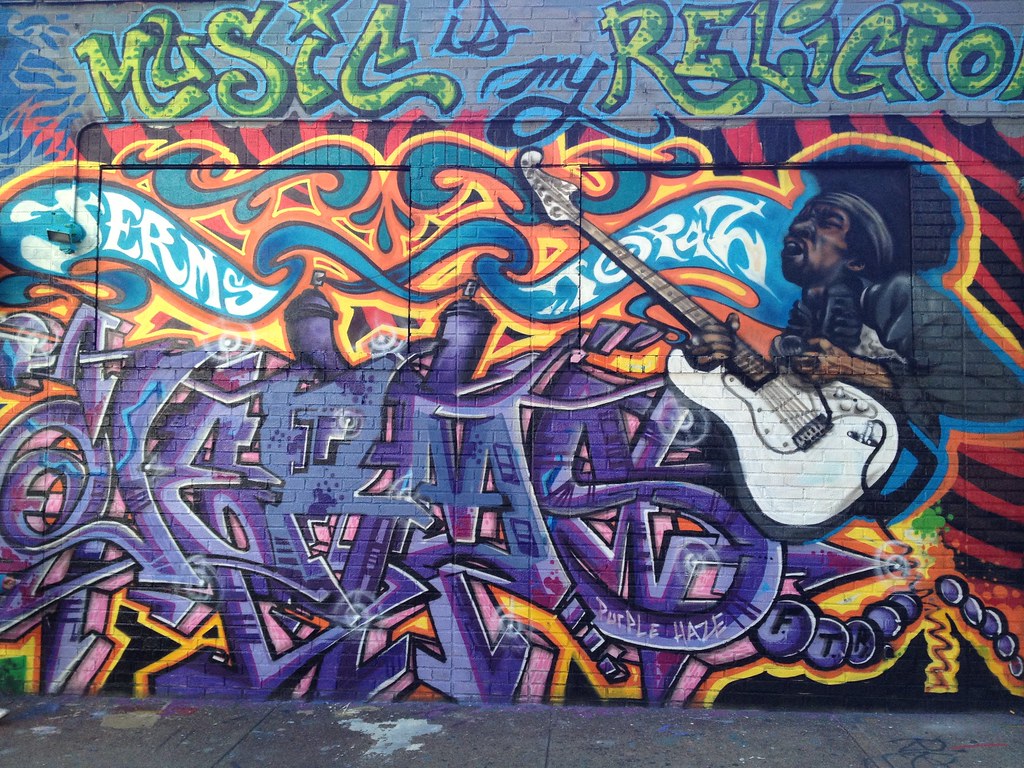
<There are many here among us / Who feel that life is but a joke / But, uh, but you and I, we’ve been through that / And this is not our fate>. ASCOLTA SU YOUTUBE. Sul concetto di “fato”, “destino” vedi il termine greco antico <heimarménē>. Photo: “5 Pointz Graffiti, Jimi Hendrix” by Bryan Pocius is licensed under CC BY 2.0.
ALL APOLOGIES
by Nirvana (1993) – <What else should I be / All apologies / What else could I say / Everyone is gay / What else could I write / I don’t have the right / What else should I be / All apologies>. ASCOLTA SU YOUTUBE. Il termine greco antico per esprimere il concetto di “scuse”, “apologies” è <syngnṓmē>.
ALL SHOOK UP
by Elvis Presley (1957) – <Well, my hands are shaky and my knees are weak / I can’t seem to stand on my own two feet / Who do you think of when you have such luck?>. ASCOLTA SU YOUTUBE. Sul concetto di “fortuna”, “luck” vedi il termine greco antico <eudaimonía>.
ALL THE YOUNG DUDES
by Mott the Hoople (1972) – <And my brother’s back at home with his Beatles and his Stones / We never got it off on that revolution stuff / What a drag, too many snags>. ASCOLTA SU YOUTUBE. Il termine greco antico per esprimere il concetto di “rivoluzione” è <metabolḗ>.
All you need is love
by The Beatles (1967)
<There’s nothing you can do that can’t be done / Nothing you can sing that can’t be sung / Nothing you can say, but you can learn how to play the game / It’s easy>. ASCOLTA SU YOUTUBE. Sul concetto di “affetto”, “amore” “love” vedi il termine latino <affectus>.
da ‘ALONE AGAIN OR’ a ‘A WHITER SHADE OF PALE’
ALONE AGAIN OR
by Love (1968) – <I think that people are the greatest fun / And I will be alone again tonight, my dear>. ASCOLTA SU YOUTUBE. Il termine greco antico per dire “popolo” è <dēmos>.
AMERICAN IDIOT
by Green Day (2004) – <Don’t wanna be an American idiot / One nation controlled by the media / Information age of hysteria / It’s calling out to idiot America>. ASCOLTA SU YOUTUBE. Il termine greco antico per dire “isterico” è <hysterikós>.
ANARCHY IN THE U.K.
by Sex Pistols (1977) – <How many ways to get what you want / I use the best, I use the rest>. ASCOLTA SU YOUTUBE. Sull’idea di “inclinazione”, “tensione”, “voglia”, vedi <órexis>.
ANOTHER BRICK IN THE WALL PART 2
by Pink Floyd (1979) – <We don’t need no education / We don’t need no thought control / No dark sarcasm in the classroom / Teachers leave them kids alone>. ASCOLTA SU YOUTUBE. Sulla nozione di “istruzione” vedi <paideía>.
A WHITER SHADE OF PALE
by Procol Harum (1967) – <And although my eyes were open / They might have just as well’ve been closed>. ASCOLTA SU YOUTUBE. Il termine greco antico per “occhi”, “eyes” è <ophthalmoí>.
Vai alla home page di SOKRATIKO.IT oppure torna in testa alla sezione CANZONI oppure torna all’inizio della lettera A
B – La musica rock è una filosofia di vita
da ‘BABA O’RILEY’ a ‘BLUE SUEDE SHOES’
BABA O’RILEY
by The Who (1971) – <The exodus is here / The happy ones are near / Let’s get together / Before we get much older>. ASCOLTA SU YOUTUBE. La parola “exodus”, “uscita” proviene dal greco antico <éxodos>.
BACK IN BLACK
by Ac/Dc (1980) – <They’ve got to catch me if they want me to hang / ‘Cause I’m back on the track / And I’m beatin’ the flack / Nobody’s gonna get me on another rap>. ASCOLTA SU YOUTUBE. L’espressione greco-antica per “rimettersi in carreggiata” è <analambánein heautón>.
BAD MOON RISING
by Creedence Clearwater Revival (1969) – <I see a bad moon a-rising / I see trouble on the way / I see earthquakes and lightnin’ / I see bad times today / Don’t go ’round tonight / It’s bound to take your life / There’s a bad moon on the rise>. ASCOLTA SU YOUTUBE. Il greco antico per “cattivo presagio”, “bad moon rising” è <kakòs oiōnós>.
BEAST OF BURDEN
by The Rolling Stones (1978) – <I’ll tell ya / You can put me out / On the street / Put me out / With no shoes on my feet / But, put me out, put me out / Put me out of misery, yeah>. ASCOLTA SU YOUTUBE. L’espressione greco-antica per “liberami dal male”, “put me out of misery” è <apalláttō> o anche <eklýō>. Photo: “Ronnie Wood” by Tram Painter is licensed under CC BY-NC-ND 2.0.

BEAT IT
by Michael Jackson (1982) – <You have to show them that you’re really not scared / You’re playin’ with your life, this ain’t no truth or dare>. ASCOLTA SU YOUTUBE. La parola greco-antica per “verità”, “truth” è <alētheia>.
BEAUTIFUL DAY
by U2 (2000) – <What you don’t have you don’t need it now / What you don’t know you can feel it somehow / What you don’t have you don’t need it now / You don’t need it now, you don’t need it now / Beautiful day>. Per dire “bello”, “beautiful” l’aggettivo greco antico in forma neutra è <kalón>. ASCOLTA SU YOUTUBE.
BILLIE JEAN
by Michael Jackson (1983) – <And mother always told me be careful of who you love / And be careful of what you do ’cause the lie becomes the truth>. ASCOLTA SU YOUTUBE. Sul concetto di “allerta”, “vigilanza”, “attenzione”, vedi <prosochḗ>.
Bitter sweet symphony
by The Verve (1997)
<‘Cause it’s a bittersweet symphony this life / Trying to make ends meet, you’re a slave to the money then you die>. ASCOLTA SU YOUTUBE. L’aggettivo greco-antico per “agrodolce”, “bittersweet” è <glykýpikros> unione di <γλυκύς – glykýs> (“dolce”) e <πικρός – pikrós> (“amaro”).
BIZARRE LOVE TRIANGLE
by New Order (1986) – <I feel fine and I feel good / I’m feeling like I never should / Whenever I get this way / I just don’t know what to say / Why can’t we be ourselves like we were yesterday>. ASCOLTA SU YOUTUBE. L’espressione greco-antica per “essere noi stessi”, “be ourselves” è <tē heautōn phýsei chrēsthai>.
BLACK DOG
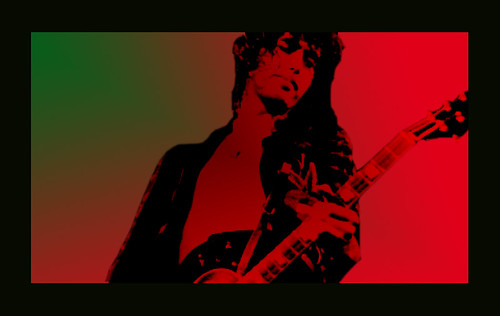
by Led Zeppelin (1971) – <Didn’t take too long ‘fore I found out / What people mean by down and out>. ASCOLTA SU YOUTUBE. Photo: “Jimmy Page” by Mr Bultitude is licensed under CC BY-NC-ND 2.0. La formula tragica greco-antica per “rovinato”, “distrutto”, “down and out” è <exolōlōs>.
BLITZKRIEG BOP
by Ramones (1976) – <They’re piling in the back seat / They’re generating steam heat / Pulsating to the back beat / The blitzkrieg bop>. ASCOLTA SU YOUTUBE. Per dire “calore vaporoso”, “calore umido” l’espressione in greco antico è <atmōdēs thermótēs>.
BLOWIN’ IN THE WIND
by Bob Dylan (1963) – <How many roads must a man walk down / Before you call him a man? / How many seas must a white dove sail / Before she sleeps in the sand?>. ASCOLTA SU YOUTUBE. La parola greco-antica per “colomba” è <peristerá>.
BLUEBERRY HILL
by Fats Domino (1956) – <I found my thrill / On Blueberry Hill / On Blueberry Hill / When I found you>. ASCOLTA SU YOUTUBE. In greco antico il verbo principale per dire “trovare” è <εὑρίσκω – heurískō>.
BLUE SUEDE SHOES
by Elvis Presley (1956) – <Well, you can knock me down / Step in my face / Slander my name / All over the place>. ASCOLTA SU YOUTUBE. “Ovunque”, “dappertutto” corrisponde al greco antico <pántē>.
BLUE SUEDE SHOES
by Carl Perkins (1956) – <You can burn my house / Steal my car / Drink my liquor / From an old fruitjar / Do anything that you want to do, but uh-uh / Honey, lay off of my shoes>. ASCOLTA SU YOUTUBE. L’equivalente in greco antico di “dolcezza”, “tesoro”, “honey” è <μέλι – méli>.
da ‘BO DIDDLEY’ a ‘BYE BYE LOVE’
BO DIDDLEY
by Bo Diddley (1955) – <Bo Diddley, Bo Diddley have you heard? / My pretty baby said she wasn’t for it>. ASCOLTA SU YOUTUBE. Un modo greco antico per dire “la mia dolcezza ha detto di no”, “my pretty baby said she wasn’t for it” è <hē kalē paidískē mou éphē ouk ethélein>.
BOHEMIAN RHAPSODY
by Queen (1975) – <Too late, my time has come / Sends shivers down my spine / Body’s aching all the time / Goodbye everybody, I’ve got to go / Gotta leave you all behind and face the truth>. ASCOLTA SU YOUTUBE. L’espressione “guardare in faccia la realtà”, “to face the truth” in greco antico viene resa con <pròs tēn alētheian blépein>. Photo: “Freddie is alive” by mondopiccolo is licensed under CC BY-NC 2.0.

BOOM BOOM
by John Lee Hooker (1962) – <I love that talk / When you talk like that / You knock me out / Right off my feet / Ho ho ho ho>. ASCOLTA SU YOUTUBE. “Mi stendi”, “mi lasci senza fiato” equivale al greco antico <ekplētteis me>.
BORN IN THE U.S.A.
by Bruce Springsteen (1984) – <The first kick I took was when I hit the ground / You end up like a dog that’s been beat too much / ‘Til you spend half your life just coverin’ up>. ASCOLTA SU YOUTUBE. L’espressione greco-antica per “celare”, “occultare”, “tener nascosto”, “to cover up” è <synkalýptō>.
BORN TO BE WILD
by Steppenwolf (1968) – <Take the world in a love embrace / Fire all of your guns at once / And explode into space>. ASCOLTA SU YOUTUBE. Sul concetto di “esplosione cosmica”, “conflagrazione ciclica” vedi <ekpýrōsis>.
Born to run
by Bruce Springsteen (1975)
<Together we could break this trap. / We’ll run ’til we drop, baby, we’ll never go back>. ASCOLTA SU YOUTUBE. In greco antico <ek tōn diktýōn diapheúgein> è un’espressione molto frequente della tragedia greca (soprattutto in Eschilo ed Euripide) e nei dialoghi di Platone per descrivere chi riesce a districarsi da una situazione senza via d’uscita, da una trappola (‘trap’).
BOTH SIDES NOW
by Joni Mitchell (1969) – <I’ve looked at clouds from both sides now / From up and down and still somehow / It’s cloud’s illusions I recall / I really don’t know clouds at all>. ASCOLTA SU YOUTUBE. Il termine greco antico per dire “nuvole”, “clouds” è <nephélai>.
BRIDGE OVER TROUBLED WATER
by Simon and Garfunkel (1970) – <When you’re down and out / When you’re on the street / When evening falls so hard / I will comfort you (ooo)>. ASCOLTA SU YOUTUBE. “Consolare”, “dare conforto”, “lenire le sofferenze” si dice in greco antico <parēgoréō>.
BRING THE NOISE
by Public Enemy (1988) – <Bass! How low can you go? / Death row, what a brother knows / Once again, back is the incredible / The rhyme animal>. ASCOLTA SU YOUTUBE. In greco antico <en pýlais thanátou> significa “alle porte della morte” (da <πύλη – pýlē>, “porta”), formula epica e tragica per indicare la vicinanza immediata e ineluttabile alla fine (“death row”, “braccio della morte”).
BROWN EYED GIRL
by Van Morrison (1967) – <So hard to find my way / Now that I’m all on my own / I saw you just the other day / My, how you have grown>. ASCOLTA SU YOUTUBE. In greco antico <érēmos eimí> significa “sono solo e abbandonato“, “I’m all on my own“.
BROWN EYED HANDSOME MAN
by Chuck Berry (1956) – <All the way home I held a grudge / For the safety belt that wouldn’t budge / Crusin’ and playin’ the radio / With no particular place to go>. ASCOLTA SU YOUTUBE. In greco antico l’equivalente poetico di “senza meta”, “with no particular place to go” è <πλάνης – plánēs>, “errante”, “vagabondo”, da cui deriva la parola “pianeta”.
BYE BYE LOVE
by The Everly Brothers (1957) – <I’m through with counting the stars above / And here’s the reason that I’m so free>. ASCOLTA SU YOUTUBE. Sul concetto di libertà vedi <eleuthería>.
Vai alla home page di SOKRATIKO.IT oppure torna in testa alla sezione CANZONI oppure torna all’inizio della lettera B
C
da ‘CALIFORNIA DREAMIN’ a ‘CHAIN OF FOOLS’
CALIFORNIA DREAMIN’
by The Mamas and the Papas (1965) – <Stopped into a church I passed along the way / Well I got down on my knees / (got down on my knees) / And I pretend to pray / (I pretend to pray)>. ASCOLTA SU YOUTUBE. In greco antico “pregare”, “to pray” è <eúchomai>.
CALIFORNIA GIRLS
by The Beach Boys (1965) – <I been all around this great big world / And I seen all kinds of girls / Yeah, but I couldn’t wait to get back in the States / Back to the cutest girls in the world / I wish they all could be California girls>. ASCOLTA SU YOUTUBE. Uno dei termini greco-antichi per dire “ragazze”, “girls” è <kórai> (la traslitterazione <kórai> della parola greca <κόραι> con il significato di “ragazze” è la stessa possibile traslitterazione di <χῶραι> con il significato di “regioni”, anche se in quest’ultimo caso la migliore traslitterazione è <chôrai>).
CANDLE IN THE WIND
by Elton John (1973) – <Goodbye Norma Jean / Though I never knew you at all / You had the grace to hold yourself / While those around you crawled>. ASCOLTA SU YOUTUBE. Sul concetto di “grazia”, “grace” vedi <cháris>. Photo: “Sir Elton John, Oslo Spektrum 2014” by NRK P3 is licensed under CC BY-NC-SA 2.0.

CAN’T BUY ME LOVE
by The Beatles (1964) – <Tell me that you want the kind of things / That money just can’t buy / I don’t care too much for money / Money can’t buy me love>. Sulla nozione di “amore”, “love” vedi <affectus>. ASCOLTA SU YOUTUBE.
CAN’T HELP FALLING IN LOVE
by Elvis Presley (1961) – <Wise men say only fools rush in / But I can’t help falling in love with you / Shall I stay? / Would it be a sin / If I can’t help falling in love with you?>. ASCOLTA SU YOUTUBE. “Saggi”, inteso come “uomini saggi”, in greco antico si dice <sophoí>.
CAROLINE, NO
by The Beach Boys (1966) – <Who took that look away / I remember how you used to say / You’d never change, but that’s not true / Oh, Caroline you>. Sull’idea di “cambiamento”, “change” vedi <alloíōsis>. ASCOLTA SU YOUTUBE.
CATHY’S CLOWN
by The Everly Brothers (1960) – <I gotta stand tall / You know a man can’t crawl / When he knows you’re tellin’ lies and he hears ’em passing by / He’s not a man at all>. Il sostantivo neutro plurale in greco antico per dire “bugie”, “lies” è <pseúdē>. ASCOLTA SU YOUTUBE.
CHAIN OF FOOLS
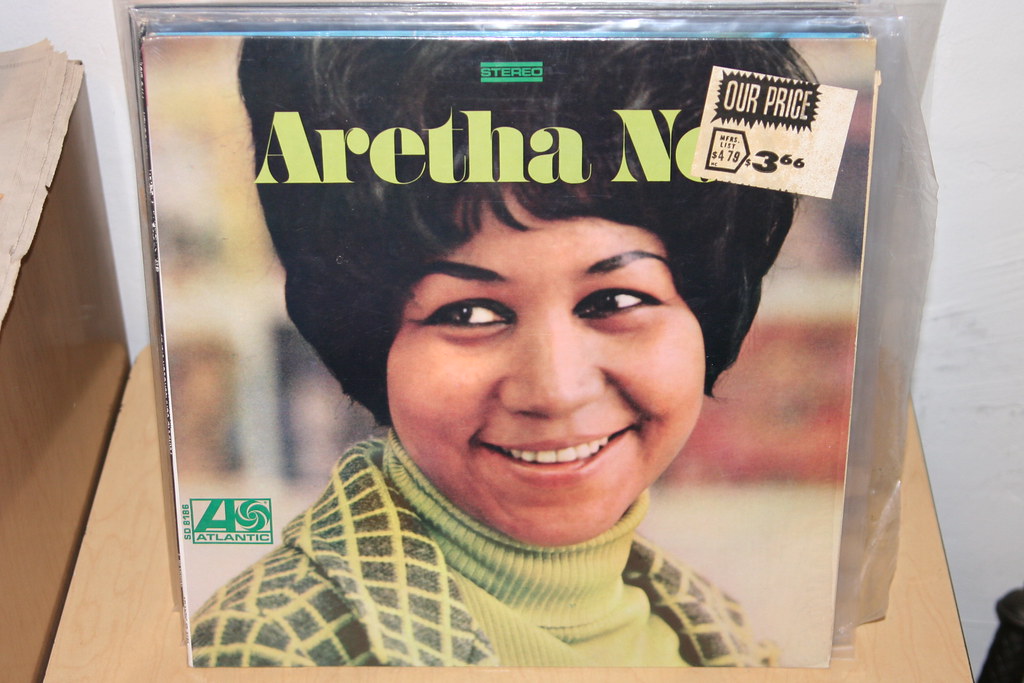
by Aretha Franklin (1967) – <Every chain, has got a weak link / I might be weak yeah / But I’ll give you strength / Oh, hey>. Sul concetto di “forza”, “fortezza d’animo”, “strenght” vedi <andreía>. ASCOLTA SU YOUTUBE. Photo: “IMG_5898” by Public Collectors is licensed under CC BY-NC-SA 2.0.
da ‘CHANGES’ a ‘CORTEZ THE KILLER’
CHANGES
by David Bowie (1971) – <Every time I thought I’d got it made / It seemed the taste was not so sweet / So I turned myself to face me / But I’ve never caught a glimpse>. ASCOLTA SU YOUTUBE. “Dolce”, “sweet”, inteso come gradevole, in greco antico è <hēdýs>.
CLOCKS
by Coldplay (2002) – <The lights go out and I can’t be saved / Tides that I tried to swim against / Have brought me down upon my knees / Oh I beg, I beg and plead, singing>. ASCOLTA SU YOUTUBE. Il verbo greco antico (poetico) per “implorare”, “to beg”, “to plead” è <líssomai>.
C’MON EVERYBODY
by Eddie Cochran (1958) – <Well we’ll really have a party but we gotta put a guard outside / If the folks come home I’m afraid they’re gonna have my hide>. ASCOLTA SU YOUTUBE. Una delle parole greco-antiche per dire “festa”, “party” è <sympósion> (vedi anche il Simposio di Platone.
COME TOGETHER
by The Beatles (1969) – <He say I know you, you know me / One thing I can tell you is / You got to be free / Come together, right now / Over me>. A proposito di “libero”, “free” vedi <eleuthería>. ASCOLTA SU YOUTUBE.
Comfortably numb
by Pink Floyd (1979)
<When I was a child I had a fever / My hands felt just like two balloons / Now I’ve got that feeling once again / I can’t explain you would not understand>. ASCOLTA SU YOUTUBE. A proposito di “sensazione”, “feeling” vedi <páthos>.
COMPLETE CONTROL
by The Clash (1979) – <Ooh ooh ooh have we done something wrong? / Ooh ooh ooh complete control, even over this song>. Sulla nozione di “sbagliato”, “fatto male”, “wrong” vedi <hamártēma>. ASCOLTA SU YOUTUBE.
CORTEZ THE KILLER
by Neil Young (1975) – <Hate was just a legend / And war was never known / The people worked together>. ASCOLTA SU YOUTUBE. Il termine greco antico (di uso poetico) per “odio”, “hate” è <stýgos>.
da ‘CRAZY’ a ‘CUPID’
CRAZY
by Gnarls Barkley (2006) – <I remember when / I remember, I remember when I lost my mind / There was something so pleasant about that place / Even your emotions have an echo in so much space>. ASCOLTA SU YOUTUBE. Il greco antico di “eco”, “echo” è <ēchṓ>.
CRAZY
by Patsy Cline (1961) – <Crazy / I’m crazy for feeling so lonely / I’m crazy / Crazy for feeling so blue>. ASCOLTA SU YOUTUBE. L’equivalente di “pazzo”, “crazy” in greco antico è <manikós> (vedi <manía>).
CRAZY IN LOVE
by Beyonce featuring Jay-Z (2003) – <They can’t figure him out; they like, “hey, is he insane?” / Yes, sir, I’m cut from a different cloth / My texture is the best fur, chinchilla / (Uh oh, uh oh, uh oh, oh, no, no) I been iller than chain smokers>. ASCOLTA SU YOUTUBE. Per dire “malato”, “ill” uno dei termini usati dai greci antichi è <nosôn>.
CRYING
by Roy Orbison (1961) – <Then you said, “So long” / Left me standing all alone / Alone and crying / Crying>. ASCOLTA SU YOUTUBE. Una formula di saluto del greco antico simile ad “addio”, “so long” è <chaîre>.
CUPID
by Sam Cooke (1961) – <Now, I don’t mean to bother you / But I’m in distress / There’s danger of me losing all of my happiness / For I love a girl who doesn’t know I exist / And this you can fix>. ASCOLTA SU YOUTUBE. Sull’idea di “felicità”, “happyness” vedi <eudaimonía>.
Vai alla home page di SOKRATIKO.IT oppure torna in testa alla sezione CANZONI oppure torna all’inizio della lettera C
D – La musica rock è una filosofia di vita
da ‘DANCE TO THE MUSIC’ a ‘DESOLATION ROW’
DANCE TO THE MUSIC
by Sly & the Family Stone (1968) – <All we need is a drummer / For people who only need a beat, yeah>. ASCOLTA SU YOUTUBE. I greci antichi usavano <chrḗzō> come forma poetica (Omero e Sofocle, per esempio) per dire “aver bisogno”, “desiderare vivamente”, “need”.
DANCING BAREFOOT
by Patti Smith (1979) – <I’m dancing barefoot / Heading for a spin / Some strange music draws me in / Makes me come on like some heroine>. ASCOLTA SU YOUTUBE. La parola greco-antica di uso poetico per “eroina”, “heroine” è <hērōḯs>. Photo: “04092011-DSC_1590” by brixton21 is licensed under CC BY-NC-ND 2.0.

DANCING IN THE STREET
by Martha Reeves and the Vandellas (1964) – <Oh, it doesn’t matter what you wear / Just as long as you are there>. ASCOLTA SU YOUTUBE. Sul concetto di “irrilevanza”, “indifferenza”, “it doesn’t matter” vedi <adiáphoron>.
DANCING QUEEN
by Abba (1976) – <Night is young and the music’s high / With a bit of rock music / Everything is fine>. ASCOLTA SU YOUTUBE. L’equivalente greco antico di “va tutto a meraviglia”, “va tutto benissimo”, “everything is fine” è <pánta árista échei>.
DA YA THINK I’M SEXY?
by Rod Stewart (1978) – <Now hold on a minute before we go much further / Give me a dime so I can phone my mother>. ASCOLTA SU YOUTUBE. In greco antico “madre”, “mother” si esprime principalmente con <mḗtēr>.
DESOLATION ROW
by Bob Dylan (1965) – <And someone says, “You’re in the wrong place, my friend, you’d better leave” / And the only sound that’s left after the ambulances go / Is Cinderella sweeping up on Desolation Row>. ASCOLTA SU YOUTUBE. In greco antico l’espressione per indicare un “luogo inopportuno”, un “posto sfavorevole o inadatto al momento e alle circostanze”, “wrong place” si dice <ákairos tópos>.
da ‘DON’T BE CRUEL’ a ‘DREAM ON’
Don’t be cruel
by Elvis Presley (1956)
<I don’t wanna be a tiger / ‘Cause tigers play too rough / I don’t wanna be a lion /‘Cause lions ain’t the kind you love enough>. ASCOLTA SU YOUTUBE. La parola greco-antica per dire “selvatico”, “feroce”, brutale”, “cruel” è <ágrios>.
(DON’T FEAR) THE REAPER
by Blue Oyster Cult (1976) – <All our times have come / Here but now they’re gone / Seasons don’t fear the reaper / Nor do the wind, the sun or the rain, we can be like they are>. ASCOLTA SU YOUTUBE. In greco antico <átropos> è una delle tre Moire (le Parche), colei che “non si può volgere”, incaricata di recidere con le cesoie il filo della vita umana. È la figura mitologica greca più vicina alla funzione della morte mietitrice di anime, “reaper”.
DON’T LET ME BE MISUNDERSTOOD
by The Animals (1965) – <Sometimes I feel a little mad / But don’t you know that no one alive can always be an angel>. ASCOLTA SU YOUTUBE. Sul concetto di “spirito guida”, “angel” vedi <daímōn>.
DO YOU BELIEVE IN MAGIC
by The Lovin’ Spoonful (1965) – <If you believe in magic don’t bother to choose / If it’s jug band music or rhythm and blues / Just go and listen it’ll start with a smile / It won’t wipe off your face no matter how hard you try>. ASCOLTA SU YOUTUBE. “Magia” e “magic” sono parole derivate dal greco antico <mageía>.
DREAM ON
by Aerosmith (1973) – <Half my life / Is books, written pages / Live and learn from fools and / From sages>. ASCOLTA SU YOUTUBE. La parola standard più diffusa nella Grecia antica per indicare “libri”, “pagine scritte”, “books” è <biblía>.
Vai alla home page di SOKRATIKO.IT oppure torna in testa alla sezione CANZONI oppure torna all’inizio della lettera D
E
da ‘EARTH ANGEL’ a ‘ENTER SANDMAN’
EARTH ANGEL
by The Penguins (1954) – <The vision of your loveliness / I hope and I pray, that someday / That I’ll be the vision of your happiness>. ASCOLTA SU YOUTUBE. In greco antico <eúchomai> significa “mi auguro”, “desidero vivamente”, “prego che accada”, “I hope and I pray”.
EIGHT MILES HIGH
by The Byrds (1966) – <Nowhere is / There warmth to be found / Among those afraid / Of losing their ground>. ASCOLTA SU YOUTUBE. Sul concetto di “perdere”, “mancare il bersaglio”, “to lose” vedi <hamartánō>.
ELEANOR RIGBY
by The Beatles (1966) – <All the lonely people / Where do they all come from? / All the lonely people / Where do they all belong?>. ASCOLTA SU YOUTUBE. In greco antico <hoi mónoi> significa “le persone sole”, “the lonely people”.
ENTER SANDMAN
by Metallica (1991) – <Somethings wrong, shut the light / Heavy thoughts tonight / And they aren’t of Snow White / Dreams of war, dreams of liars / Dreams of dragon’s fire>. ASCOLTA SU YOUTUBE. Le parole greche antiche <óneiroi> e <oneírata> (singolare: <óneiros> e <óneiron> sono le parole standard e più diffuse per indicare i sogni notturni. <Óneiroi> è la forma più comune nella prosa e nella poesia epica, mentre <oneírata> sottolinea le singole visioni sognate (da questa radice deriva l’italiano “onirico”).
da ‘EVERYBODY NEEDS SOMEBODY TO LOVE’ a ‘EVERYDAY PEOPLE’
Eberybody needs somebody to love
by Solomon Burke (1964)
<Let me tell you something / Sometimes you get what you want / And you lose what you have / There’s a song I sing / And I believe that if everybody would sing this song you can save the whole world / Listen to me>. ASCOLTA SU YOUTUBE. In greco antico <molpḗ> indica il canto gioioso unito alla danza e al suono degli strumenti, tipico delle celebrazioni e delle feste.
EVERY BREATH YOU TAKE
by The Police (1983) – <Every breath you take and every move you make / Every bond you break, every step you take, I’ll be watching you>. ASCOLTA SU YOUTUBE. Su “respiro”, “breath” vedi <pneûma>.
EVERYDAY
by Buddy Holly & The Crickets (1957) – <Everyday it’s a-getting closer / Going faster than a rollercoaster>. ASCOLTA SU YOUTUBE. In greco antico <parà mikròn érchomai> è l’espressione idiomatica per “andarci vicino per un pelo”, “arrivare a un soffio da”, “getting closer”.
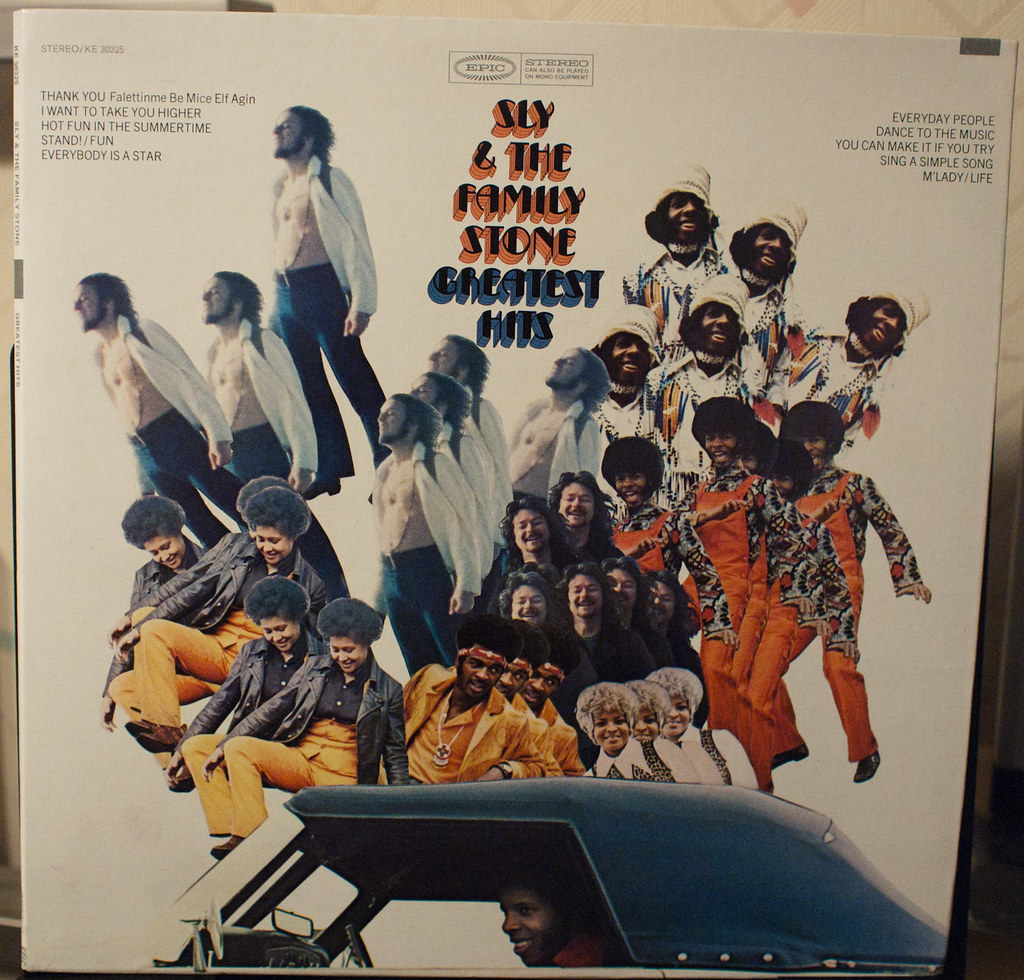
EVERYDAY PEOPLE
by Sly & the Family Stone (1968) – <I am no better and neither are you / We are the same whatever we do / You love me you hate me you know me and then / You can’t figure out the bag I’m in / I am everyday people, yeah yeah>. ASCOLTA SU YOUTUBE. In greco antico <hoi polloí> significa letteralmente “i molti” ed è l’espressione per indicare la “gente comune”, la “maggioranza ordinaria delle persone”, “everyday people”. Photo: “RSD 2011-12” by Mmm…Bacon! is licensed under CC BY-NC-ND 2.0.
Vai alla home page di SOKRATIKO.IT oppure torna in testa alla sezione CANZONI oppure torna all’inizio della lettera E
F – La musica rock è una filosofia di vita
da ‘FAIRGROUND’ a ‘FIRE AND RAIN’
FAIRGROUND
by Simply Red (1995) – <And I love the thought of coming home to you / Even if I know we can’t make it / Yes, I love the thought of giving hope to you / Just a little ray of light shining through>. ASCOLTA SU YOUTUBE. “Raggio di luce”, “ray of light” in greco antico è <aktís>.
FAKE PLASTIC TREES
by Radiohead (1995) – <He used to do surgery / For girls in the eighties / But gravity always wins>. ASCOLTA SU YOUTUBE. In greco antico <cheirourgía> (composto da <cheír> (mano) ed <érgon> (lavoro, opera) significa letteralmente “lavoro manuale”. È la parola da cui deriva l’italiano “chirurgia” (inglese “surgeon”) e indica sia la pratica medica sia il singolo intervento chirurgico.
FAMILY AFFAIR
by Sly & the Family Stone (1971) – <One child grows up to be / Somebody that just loves to learn / And another child grows up to be / Somebody you’d just love to burn>. ASCOLTA SU YOUTUBE. In greco antico <paideúomai> (infinito: <paideúesthai>). significa “essere istruito”, “formarsi”, “imparare attraverso la cultura e l’educazione”, “to learn” (legato al concetto greco di <paideía>).
FAST CAR
by Tracy Chapman (1988) – <You got a fast car / Is it fast enough so we can fly away / We gotta make a decision / Leave tonight or live and die this way>. ASCOLTA SU YOUTUBE. Per dire “spiccare il volo”, “volar via”, “innalzarsi in cielo”, “fly away” i greci antichi usavano <anapétomai> (infinito: anapétesthai>).
FIGHT THE POWER
by Public Enemy (1989) – <People, people we are the same / No we’re not the same / Cause we don’t know the game / What we need is awareness, we can’t get careless>. ASCOLTA SU YOUTUBE. <Epígnōsis> indica, in greco antico, il “riconoscimento chiaro”, la “piena cognizione”, la “presa di coscienza approfondita” di una realtà o di una situazione (il prefisso epi- rafforza l’idea di una conoscenza piena e diretta), la “consapevolezza”, “awareness”. Sul concetto di scelta consapevole vedi <prohaíresis>.
Fire and rain
by James Taylor (1970)
<I’ve seen fire and I’ve seen rain / I’ve seen sunny days that I thought would never end / I’ve seen lonely times when I could not find a friend / But I always thought that I’d see you again>. ASCOLTA SU YOUTUBE. L’espressione “fuoco e pioggia”, “fire and rain” può essere resa in greco antico con <pŷr te kaì ómbros>.
da ‘FLASH LIGHT’ a ‘FREE FALLIN’
FLASH LIGHT
by Parliament (1977) – <Now I lay me down to sleep / I guess I’ll go count the sheep / Ha da da dee da hada hada da da (oh)>. ASCOLTA SU YOUTUBE. <Heúdō> (infinito: <heúdein>) è la forma semplice e prevalentemente poetica (molto usata da Omero e dai tragici) per dire “dormire”, “to sleep” in greco antico.
FOLSOM PRISON BLUES
by Johnny Cash (1956) – <My Mama told me, “son / Always be a good boy / Don’t ever play with guns” / But I shot a man in Reno / Just to watch him die>. ASCOLTA SU YOUTUBE. Nella Grecia antica (ad esempio ad Atene) la “prigione” (“prison”) era intesa soprattutto come il luogo in cui si veniva tenuti in catene in attesa del processo o della condanna: <desmōtḗrion>.
FORTUNATE SON
by Creedence Clearwater Revival (1969) – <Some folks are born silver spoon in hand / Lord, don’t they help themselves, oh / But when the taxman comes to the door / Lord, the house looks like a rummage sale, yes>. ASCOLTA SU YOUTUBE. Sul concetto di “Dio”, “Lord” vedi <theós>.
FOR WHAT IT’S WORTH
by Buffalo Springfield (1967) – <Paranoia strikes deep / Into your life it will creep / It starts when you’re always afraid / You step out of line, the man come and take you away>. ASCOLTA SU YOUTUBE. Il termine greco antico <hypopsía> indica il sospetto, la diffidenza, il timore continuo di un inganno o di un complotto nascosto. È il termine più vicino alla componente persecutoria della “paranoia” moderna.
FOXEY LADY
by Jimi Hendrix Experience (1965) – <Now-a I see you come down on the scene / Oh foxey / You make me want to get up and a scream>. ASCOLTA SU YOUTUBE. <Anakrázō> (infinito: <anakrázein>) significa “mettersi a urlare”, “cacciare un grido improvviso”, “to scream”.
FREE BIRD
by Lynyrd Skynyrd (1973) – <If I leave here tomorrow / Would you still remember me?>. ASCOLTA SU YOUTUBE. <Mimnḗskomai> (infinito: <mimnḗskesthai>) è il verbo più utilizzato dai greci antichi per indicare l’azione di richiamare alla mente (“remember”) o ricordarsi di qualcuno o qualcosa.
FREE FALLIN’
by Tom Petty (1989) – <All the vampires, walkin’ through the valley / Move west down Ventura Boulevard / And all the bad boys are standing in the shadows / And the good girls are home with broken hearts>. ASCOLTA SU YOUTUBE. <Kardíai syntetrimménai> significa letteralmente “cuori frantumati”, “cuori affranti”, “broken hearts”. Deriva dal verbo <syntríbō > (“spezzare”, “schiacciare”, “affliggere profondamente”) ed è un’espressione attestata nel greco ellenistico (come nella traduzione greca dei Salmi) per indicare l’animo distrutto dal dolore.
Photo: “Tom Petty” by Mexicaans fotomagazijn is licensed under CC BY-NC 2.0.

Vai alla home page di SOKRATIKO.IT oppure torna in testa alla sezione CANZONI oppure torna all’inizio della lettera F
G
da ‘GEORGIA ON MY MIND’ a ‘GOD SAVE THE QUEEN’
GEORGIA ON MY MIND
by Ray Charles (1960) – <Other arms reach out to me / Other eyes smile tenderly / Still in peaceful dreams I see / The road leads back to you>. ASCOLTA SU YOUTUBE. <Hē opísō hodós> significa in greco antico “la via all’indietro”, “the road leading back”, cioè il percorso fatto a ritroso per tornare.
GET UP, STAND UP
by Bob Marley and the Wailers (1975) – <It’s not all that glitters is gold / ‘Alf the story has never been told / So now you see the light, eh! / Stand up for your rights, come on!>. ASCOLTA SU YOUTUBE. In greco antico “oro”, “gold” è <chrysós>.
GIMME SHELTER
by The Rolling Stones (1969) – <Oh, a storm is threat’ning / My very life today / If I don’t get some shelter / Oh yeah, I’m gonna fade away>. ASCOLTA SU YOUTUBE. Il termine greco antico per “riparo”, “shelter” è <sképas>.
GIMME SOME LOVIN’
by The Spencer Davis Group (1966) – <Well my temperature’s rising and my feet on the floor / Crazy people knocking ’cause they’re wanting some more>. ASCOLTA SU YOUTUBE. Per indicare “temperatura alta a causa di febbre” i greci antichi usavano il termine <pyretós>.
Gloria
by Them (1965)
<G-L-O-R-I-A / Gloria! / G-L-O-R-I-A / Gloria! / I’m gonna shout it all night / Gloria! / I’m gonna shout it every day / Gloria! / Yeah, yeah, yeah, yeah, yeah>. ASCOLTA SU YOUTUBE. L’equivalente greco antico di “ogni giorno”, “every day” è <kathēméran>.
GOD ONLY KNOWS
by The Beach Boys (1966) – <The world could show nothing to me / So what good would living do me>. ASCOLTA SU YOUTUBE. Sul concetto di “mondo”, “world” vedi <kósmos>.
GOD SAVE THE QUEEN
by Sex Pistols (1977) – <Don’t be told what you want / Don’t be told what you need / There’s no future / No future / No future for you>. ASCOLTA SU YOUTUBE. <Tà méllonta> in greco antico significa letteralmente “le cose che stanno per accadere”, “il futuro”.
da ‘GOODBYE YELLOW BRICK ROAD’ a ‘GREEN ONIONS’
GOODBYE YELLOW BRICK ROAD
by Elton John (1973) – <When are you gonna come down? / When are you going to land? / I should have stayed on the farm / I should have listened to my old man>. ASCOLTA SU YOUTUBE. Nella Grecia antica (specialmente nel teatro comico di Aristofane e Menandro, dove il dialogo familiare era molto vivo) i figli si riferivano spesso al padre anziano chiamandolo affettuosamente “il mio vecchio” <ho emòs gérōn>, proprio come nelle espressioni moderne.
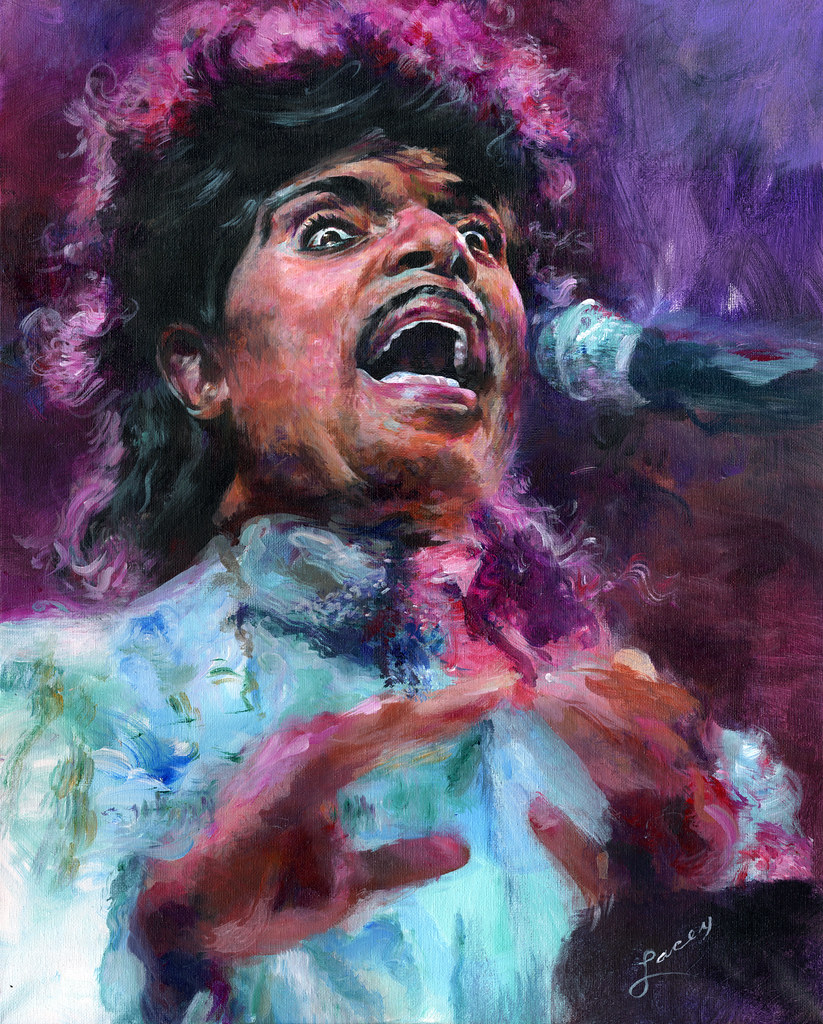
GOOD GOLLY, MISS MOLLY
by Little Richard (1958) – <From the early, early mornin’ till the early, early night / You can see miss Molly rockin’ at the house of blue light>. ASCOLTA SU YOUTUBE. In greco antico <prōí> è il termine base per dire “di buon mattino”, “early morning”. Photo: “Little Richard Tribute Portrait” by Dan Lacey is licensed under CC BY-NC 2.0.
GOOD TIMES
by Chic (1979) – <A rumor has it that it’s getting late / Time marches on, just can’t wait / The clock keeps turning, why hesitate / You silly fool, you can’t change your fate>. ASCOLTA SU YOUTUBE. Sul concetto di “destino”, “fato” vedi <heimarménē>.
GOOD VIBRATIONS
by The Beach Boys (1966) – <I-I love the colorful clothes she wears / And the way the sunlight plays upon her hair / I hear the sound of a gentle word / On the wind that lifts her perfume through the air>. ASCOLTA SU YOUTUBE. Una delle formule poetiche del greco antico per dire “luce solare”, “sunlight” è <hēlíou sélas>.
GO YOUR OWN WAY
by Fleetwood Mac (1977) – <Tell me why / Everything turned around / Packing up / Shacking up is all you want to do>. ASCOLTA SU YOUTUBE. Una formula colloquiale in greco antico per dire “dimmi perché”, “tell me why” è <eipé moi tí>.
GREAT BALLS OF FIRE
by Jerry Lee Lewis (1957) – <You broke my will, but what a thrill / Goodness gracious, great balls of fire>. ASCOLTA SU YOUTUBE. Fra le tante possibili varianti greco-antiche per dire “palle di fuoco”, “sfere infuocate”, “balls of fire” suggeriamo <pyròs sphaîrai> molto frequente in poesia o in contesti più enfatici per dare risalto all’elemento del fuoco.
GREEN ONIONS
by Booker T. & the M.G.s (1962) – <Well people, I’m gonna tell you something / This continent, North America is the stronghold / This is where we’re gonna make our stand in this decade, yeah>. ASCOLTA SU YOUTUBE. <Phroúrion> è il termine militare greco antico più comune per indicare “fortino”, “presidio”, “roccaforte”, “stronghold”.
Vai alla home page di SOKRATIKO.IT oppure torna in testa alla sezione CANZONI oppure torna all’inizio della lettera G
H – La musica rock è una filosofia di vita
da ‘HALLELUJAH’ a ‘HELP ME’
HALLELUJAH
by Jeff Buckley (1994) – <But baby I’ve been here before / I’ve seen this room and I’ve walked this floor / You know, I used to live alone before I knew ya / And I’ve seen your flag on the marble arch / And love is not a victory march / It’s a cold and it’s a broken Hallelujah>. ASCOLTA SU YOUTUBE. In greco antico il concetto di “bandiera, “flag” non corrisponde esattamente alle bandiere nazionali moderne, ma si esprime con termini indicanti insegne militari, vessilli o segnali visivi: <sē̂ma> è il sostantivo più antico (usato già in Omero e nella poesia).
HEARTBREAK HOTEL
by Elvis Presley (1956) – <Oh, although it’s always crowded / You still can find some room / For broken hearted lovers / To cry away their gloom>. ASCOLTA SU YOUTUBE. “Affollato”, “crowded” può essere reso in greco antico dalla perifrasi “pieno di persone” <plḗrēs anthrṓpōn>.
HEARTBREAKER
by Led Zeppelin (1969) – <Some people cry and some people die / By the wicked ways of love / But I’ll just keep on rollin’ along / With the grace of the Lord above>. ASCOLTA SU YOUTUBE. Sul concetto di “Dio”, “Lord” vedi <theós>.
HEART OF GLASS
by Blondie (1978) – <Lost inside / Adorable illusion and I cannot hide / I’m the one you’re using, please don’t push me aside / We coulda made it cruising, yeah>. ASCOLTA SU YOUTUBE. In greco antico <ē̂tor> è uno dei termini poetici ed epici (neutro e indeclinabile) per designare il “cuore”, “heart” in senso figurato, spesso tradotto come “animo”, “petto” o “spirito vitale”.
HEART OF GOLD
by Neil Young (1972) – <I’ve been to Hollywood / I’ve been to Redwood / I crossed the ocean for a heart of gold / I’ve been in my mind / It’s such a fine line / That keeps me searching for a heart of gold>. <Kē̂r> è un sostantivo neutro, contrazione di <kéar>. Viene usato in greco antico quasi esclusivamente in poesia per indicare il “cuore”, “heart” come sede delle passioni, della vita o del destino. ASCOLTA SU YOUTUBE. Photo: “Neil Young” by yle.fi/pop is licensed under CC BY-NC-SA 2.0.

HELP
by The Beatles (1965) – <When I was younger, so much younger than today / I never needed anybody’s help in any way / But now these days are gone, I’m not so self assured / Now I find I’ve changed my mind and opened up the doors>. Per indicare “aiuto”, “help” uno dei termini in greco antico è <boḗtheia>. ASCOLTA SU YOUTUBE.
HELP ME
by Joni Mitchell (1974) – <When I get that crazy feeling, I know / I’m in trouble again / I’m in trouble>. ASCOLTA SU YOUTUBE. Una locuzione idiomatica molto diffusa in greco antico per dire “me la passo male”, “sono nei guai”, “I’m in trouble” è <kakō̂s práttō>.
da ‘HEROES’ a ‘HEY YA!’
Heroes
by David Bowie (1977)
<We’re nothing / And nothing will help us / Maybe we’re lying / Then you better not stay / But we could be safer / Just for one day>. ASCOLTA SU YOUTUBE. Il corrispondente greco antico di “eroi”, “heroes” è <hḗrōes>.
HEROIN
by The Velvet Underground (1967) – <Away from the big city / Where a man cannot be free / Of all the evils of this town / And of himself and those around / Oh, and I guess that I just don’t know / Oh, and I guess that I just don’t know>. ASCOLTA SU YOUTUBE. L’espressione <megálē pólis> è l’equivalente greco antico di “grande città”, “big city”.
HE’S A REBEL
by The Crystals (1962) – <He’s always good to me / Always treats me tenderly / ‘Cause he’s not a rebel, no, no, no / He’s not a rebel, no, no, no, to me>. ASCOLTA SU YOUTUBE. Una delle parole greco-antiche per dire “insubordinato”, “ribelle”, “rebel” è <anypótaktos>.
HE STOPPED LOVING HER TODAY
by George Jones (1980) – <I went to see him just today, oh but I didn’t see no tears / All dressed up to go away, first time I’d seen him smile in years>. ASCOLTA SU YOUTUBE. Lacrime in greco antico è <dákrya>.
HEY JOE
by Jimi Hendrix Experience (1966) – <Hey Joe, where you goin’ with that gun in your hand? / Hey Joe, I said where you goin’ with that gun in your hand?>. ASCOLTA SU YOUTUBE. La domanda “dove stai andando”, “dove te ne vai”, “where [are] you goin[g]” si dice in greco antico <poî dḕ kaì póthen> (formula idiomatica usata spesso da Platone all’inizio dei dialoghi).
HEY JUDE
by The Beatles (1968) – <Hey Jude, don’t make it bad / Take a sad song and make it better / Remember to let her under your skin / Then you’ll begin to make it better / Better better better better better, ah!>. ASCOLTA SU YOUTUBE. <Béltion> indica, in greco antico, “meglio”, “better”, in senso morale o qualitativo (“in maniera più nobile”, “più eccellente”), molto amato nella prosa filosofica e oratoria.
HEY YA!
by Outkast (2003) – <You think you’ve got it / Oh, you think you’ve got it / But got it just don’t get it when there’s nothin’ at all>. ASCOLTA SU YOUTUBE. L’esclamazione “hei tu!”, “hey ya!” equivale al greco antico <ō̂ hoûtos>, molto frequente nella commedia (come in Aristofane) e nei dialoghi vivaci.
da ‘HIGHER GROUND’ a ‘HOT STUFF’
HIGHER GROUND
by Stevie Wonder (1973) – <I’m so darn glad he let me try it again / ‘Cause my last time on earth I lived a whole world of sin / I’m so glad that I know more than I knew then / Gonna keep on tryin’ / Till I reach the highest ground>. ASCOLTA SU YOUTUBE. <Hē akrótēs> indica in greco antico la “sommità”, “il culmine”, “the highest ground”, sia in senso fisico (la cima di un monte) sia in senso figurato (“il grado più alto”, “il vertice” di una virtù o di un’arte).
Photo: “Stevie Wonder” by Worlds Direction is licensed under CC0 1.0.

HIGHWAY 61 REVISITED
by Bob Dylan (1965) – <Oh God said to Abraham, “Kill me a son” / Abe said, “Man, you must be puttin’ me on” / God say, “No” / Abe say, “What?” / God say, “You can do what you want, Abe, but / The next time you see me comin’ you better run” / Well Abe says, “Where you want this killin’ done?” / God says, “Out on Highway 61”>. ASCOLTA SU YOUTUBE. In greco antico <állote> è un avverbio molto comune e significa “un’altra volta”, “the next time”, usato frequentemente nei dialoghi (come in Platone).
HIGHWAY TO HELL
by Ac/Dc (1979) – <No stop signs, speed limit / Nobody’s gonna slow me down / Like a wheel, gonna spin it / Nobody’s gonna mess me around>. ASCOLTA SU YOUTUBE. <Háidēs> indica in greco antico il “regno dei morti”, “hell”, governato dal dio Ade.
HONKY TONK WOMEN
by The Rolling Stones (1969) – <The lady then she covered me with roses / She blew my nose and then she blew my mind>. ASCOLTA SU YOUTUBE. In greco antico, <rhóda> è il plurale del sostantivo neutro <rhódon> con il significato di “rose”, “roses”.
HOOCHIE COOCHIE MAN
by Muddy Waters (1954) – <On the seventh hour / On the seventh day / On the seventh month / The seventh doctor say / He was born for good luck / And that you see / I got seven hundred dollars / And don’t you mess with me>. ASCOLTA SU YOUTUBE. <Hébdomon> è la forma del neutro singolare di “settimo”, “seventh” in greco antico.
Hotel California
by Eagles (1976)
<‘Relax’ said the night man / ‘We are programmed to receive / You can check out any time you like / But you can never leave!’>. ASCOLTA SU YOUTUBE. <Pandocheîon> è il termine più vicino al nostro concetto di “albergo”, “hotel”. Significa letteralmente “luogo che accoglie tutti” – da <pân> (“tutto”) e <déchomai> (“accogliere”) – dove i viaggiatori trovavano alloggio e ristoro a pagamento.
HOT STUFF
by Donna Summer (1979) – <Sittin’ here eating my heart no reason / Won’t spend another night on my own>. ASCOLTA SU YOUTUBE. Il nominativo e vocativo singolare (“la notte”, “night”), in greco antico è <nýx>, usato tanto nella prosa quanto nella poesia epica e tragica (dove personifica anche la dea primordiale Nyx).
da ‘HOUND DOG’ a ‘HURT’
HOUND DOG
by Elvis Presley (1956) – <You ain’t nothin’ but a hound dog / Cryin’ all the time / Well, you ain’t never caught a rabbit / And you ain’t no friend of mine>. ASCOLTA SU YOUTUBE. Il nominativo singolare di “cane”, “dog” in greco antico è <kýōn>.
HOW DEEP IS YOUR LOVE
by The Bee Gees (1977) – <‘Cause we’re living in a world of fools / Breaking us down when they all should let us be>. ASCOLTA SU YOUTUBE. “Un mondo di stolti”, “un mondo di pazzi”, “a world of fools” si dice <kósmos mōrō̂n> soprattutto nel greco ellenistico e letterario.
HOW SOON IS NOW?
by The Smiths (1985) – <I am the son / And the heir / Of a shyness that is criminally vulgar / I am the son and heir / Of nothing in particular>. ASCOLTA SU YOUTUBE. Il sostantivo per “figlio”, “son”, in greco antico è <huiós>.
Hurt
by Johnny Cash (2002)
<What I have become? / My sweetest friend / Everyone I know goes away / In the end>. ASCOLTA SU YOUTUBE. Il sostantivo maschile singolare <beblamménos> viene dal verbo <bláptō>, (“danneggiare”) e si usa sia per un danno fisico sia per indicare chi è stato “ferito”, “hurt” nell’animo, nell’onore o negli interessi.
Vai alla home page di SOKRATIKO.IT oppure torna in testa alla sezione CANZONI oppure torna all’inizio della lettera H
I
da ‘I CAN SEE FOR MILES’ a ‘I FOUGHT THE LAW’
I CAN SEE FOR MILES
by The Who (1967) – <I know you’ve deceived me, now here’s a surprise / I know that you have, cause there’s magic in my eyes / I can see for miles and miles and miles and miles and miles / Oh yeah>. ASCOLTA SU YOUTUBE. “Ingannare”, “to deceive” in greco antico si dice <apatáō>. Photo: “Andrew’s Moon” by Andrés Quiñones Villablanca is licensed under CC BY-NC-ND 2.0.
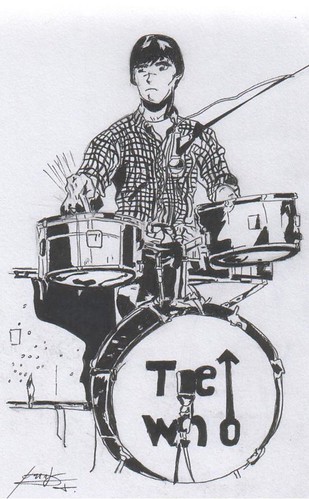
I CAN’T EXPLAIN
by The Who (1965) – <Got a feeling inside (Can’t explain) / It’s a certain kind (Can’t explain) / I feel hot and cold (Can’t explain) / Yeah, down in my soul, yeah (Can’t explain)>. ASCOLTA SU YOUTUBE. Sul concetto di “anima”, “soul” vedi <psychḗ>.
(I CAN’T GET NO) SATISFACTION
by The Rolling Stones (1965) – <When I’m drivin’ in my car, and the man come on the radio / He’s tellin’ me more and more about some useless information / Supposed to fire my imagination>. ASCOLTA SU YOUTUBE. Sull’idea di “immaginazione”, “imagination”, vedi <phantasía>.
I CAN’T HELP MYSELF
by The Four Tops (1965) – <In and out my life (in and out my life) / You come and you go (you come and you go) / Leaving just your picture behind>. ASCOLTA SU YOUTUBE. Il termine greco antico per “ritratto”, “immagine” (soprattutto di una persona), “picture”, è <eikṓn>.
I CAN’T STOP LOVING YOU
by Ray Charles (1962) – <It’s been so lonely without you here / Like a bird without a song / Nothing can stop these lonely tears from falling>. ASCOLTA SU YOUTUBE. La parola più comune in greco antico per dire “uccello”, “bird”, è <órnis>.
I FOUGHT THE LAW
by Bobby Fuller Four (1966) – <I needed money ’cause I had none / I fought the law and the law won / I fought the law and the law won>. ASCOLTA SU YOUTUBE. Sul concetto di “legge”, “law”, vedi <nómos>.
da ‘I GOT YOU BABE’ a ‘I’M WAITING FOR THE MAN’
I GOT YOU BABE
by Sonny & Cher (1965) – <They say we’re young and we don’t know / We won’t find out until we grow / Well I don’t know if all that’s true / ‘Cause you got me, and baby I got you>. ASCOLTA SU YOUTUBE. In greco antico il verbo principale per tradurre “crescere” nel senso di “diventare grandi”, “to grow up” è <αὐξάνομαι> (traslitterazione: <auxánomai>, forma medio-passiva di <αὐξάνω> (<auxánō> “far crescere”).
I HEARD IT THROUGH THE GRAPEVINE
by Marvin Gaye (1968) – <People say, “Believe half of what you see / Son, and none of what you hear”>. ASCOLTA SU YOUTUBE. In greco antico il termine principale per tradurre “vite”, “grapevine” è <ἄμπελος> (traslitterazione: <ámpelos>), sostantivo di genere femminile.
I’LL FEEL A WHOLE LOT BETTER
by The Byrds (1965) – <After what you did / I can’t stay on / And I’ll probably feel a whole lot better when you’re gone>. ASCOLTA SU YOUTUBE. Per dire “restare”, “to stay on”, il greco antico usa <ménō>.
Imagine
by John Lennon (1971)
<You, you may say I’m a dreamer / But I’m not the only one / I hope someday you will join us / And the world will be as one>. ASCOLTA SU YOUTUBE. Il termine greco antico corrispondente a “sognatore ad occhi aperti”, “persona con poco realismo”, “dreamer”, è <phantasiokópos> (vedi <phantasía>).
La musica rock è una filosofia di vita
I’M EIGHTEEN
by Alice Cooper (1971) – <I got a / Baby’s brain and an old man’s heart / Took eight years to get this far / Don’t always know what I’m talkin’ about / Feels like I’m livin’ in the middle of doubt>. ASCOLTA SU YOUTUBE. In greco antico il termine principale per tradurre “dubbio”, “doubt”, è <ἀπορία> (traslitterazione: <aporía>): indica letteralmente la mancanza di una via d’uscita e, per estensione, l’incertezza o la perplessità della mente.
I’M SO LONESOME I COULD CRY
by Hank Williams (1949) – <I’ve never seen a night so long / When time goes crawling by / The moon just went behind the clouds / To hide its face and cry>. ASCOLTA SU YOUTUBE. Nella letteratura greco-antica la parola <prósōpon> è presente nel trattato di Plutarco De facie in orbe lunae (<Περὶ τοῦ ἐμφαινομένου προσώπου τῷ κύκλῳ τῆς σελήνης – Perì toû emphainoménou prosṓpou tō̂i kýklōi tē̂s selḗnēs> ovvero Sul volto che appare nel disco della luna).
I’M WAITING FOR THE MAN
by The Velvet Underground (1967) – <Feel sick and dirty, more dead than alive / I’m waiting for my man>. ASCOLTA SU YOUTUBE. In greco antico “morto”, “dead”, è <nekrós>.
da ‘IN BLOOM’ a ‘INTO THE MYSTIC’
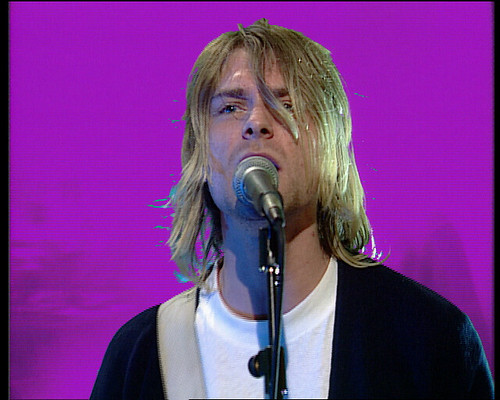
IN BLOOM
by Nirvana (1991) – <He’s the one / Who like all our pretty songs / And he likes to sing along / And he likes to shoot his gun / But he don’t know what it means / Don’t know what it means>. ASCOLTA SU YOUTUBE. “Cantare insieme”, “to sing along” in greco antico è <synā́idō>.Photo: “Screen Grab from The Word” by Catfunt is licensed under CC BY-NC-SA 2.0.
IN DA CLUB
by 50 Cent (2002) – <If you talking ’bout money homie, I ain’t concerned / I’m a tell you what Banks told me ’cause go ‘head switch the style up>. ASCOLTA SU YOUTUBE. <Dialégomai> è l’equivalente greco antico per “parlare”, “conversare”, “to talk” (verbo deponente medio: esprime lo scambio di parole tra due o più persone).
IN DREAMS
by Roy Orbison (1963) – <A candy-colored clown they call the sandman / Tiptoes to my room every night / Just to sprinkle stardust and to whisper / “Go to sleep. Everything is all right.”>. ASCOLTA SU YOUTUBE. <Pánta kalō̂s échei> in greco antico significa “tutto a posto”, “tutto va bene”, “everything is all right”, dove il verbo “essere/stare” <ἔχω – échō> al singolare si accorda con il neutro plurale <πάντα – pánta>.
IN MY LIFE
by The Beatles (1965) – <All these places had their moments / With lovers and friends, I still can recall / Some are dead, and some are living / In my life, I’ve loved them all>. ASCOLTA SU YOUTUBE. “Vita”, “life”, in greco antico è <bíos>.
IN MY ROOM
by The Beach Boys (1963) – <There’s a world where I can go and tell my secrets to / In my room, in my room / In this world I lock out all my worries and my fears / In my room, in my room>. ASCOLTA SU YOUTUBE. “Stanza”, “room” si può dire in greco antico in vari modi: i due più indicati in questa circostanza sono <oíkēma> (termine generico più comune nella prosa classica per indicare una singola stanza) e <dōmátion> (stanzetta, camera, diminutivo di <δῶμα – dō̂ma>, “casa”).
In the midnight hour
by Wilson Pickett (1965)
<I’m gonna wait ’till the midnight hour / When there’ no one else around>. ASCOLTA SU YOUTUBE. <Mésai nýktes> (letteralmente «le notti di mezzo») è la formula, proprio così al plurale, per dire in greco antico “mezzanotte”, “midnight”.
IN THE STILL OF THE NIGHT
by The Five Satins (1956) – <So before the light / Hold me again / With all of your might / In the still of the night / In the still of the night>. ASCOLTA SU YOUTUBE. In greco antico <pantì tō̂i sō̂i sthénei> vuol dire “con tutta la tua forza”, “with all your might”.
INTO THE MYSTIC
by Van Morrison (1970) – <We were born before the wind / Also younger than the sun / Ere the bonnie boat was won / As we sailed into the mystic>. ASCOLTA SU YOUTUBE. Fra le varie parole che in greco antico significano “vento”, “wind”: <ἄνεμος – ánemos> (termine generale e più comune, da cui derivano parole come anemometro e anemone);
<πνεῦμα – pneûma> (soffio di vento, corrente d’aria, respiro).
da ‘IRON MAN’ a ‘IT’S YOUR THING’
IRON MAN
by Black Sabbath (1971) – <Has he lost his mind? / Can he see or is he blind? / Can he walk at all / Or if he moves will he fall?>. ASCOLTA SU YOUTUBE. In greco antico “cieco”, “blind” si dice <typhlós>.
I SAW HER STANDING THERE
by The Beatles (1964) – <Oh we danced through the night / And we held each other tight>. ASCOLTA SU YOUTUBE. <Orchéomai> è l’equivalente greco antico di “ballare”, “to dance”: da questo verbo deriva il termine italiano orchestra (nell’antico teatro greco indicava lo spazio circolare dedicato alle danze del coro).
I SHOT THE SHERIFF
by Bob Marley & the Wailers (1973) – <Sheriff John Brown always hated me / For what, I don’t know / Every time I plant a seed / He said kill it before it grow / He said kill them before they grow / And so, and so / Read it in the news>. ASCOLTA SU YOUTUBE. <Spóros> è il sostantivo maschile greco antico per indicare sia il “seme”, “seed”, da piantare sia l’azione stessa della semina. Photo: “bob marley” by fnswift1 is licensed under CC BY-NC 2.0.

I STILL HAVEN’T FOUND WHAT I’M LOOKING FOR
by U2 (1987) – <I have spoke with the tongue of angels / I have held the hand of a devil / It was warm in the night / I was cold as a stone>. ASCOLTA SU YOUTUBE. <Líthos> è il termine greco antico più generale per indicare “pietra”, “sasso”, “stone”. Al maschile indica solitamente una pietra grezza o comune, mentre al femminile si usa spesso per pietre preziose o lavorate (come il marmo). Da questo termine derivano numerose parole italiane come litografia, monolite, neolitico e aerolito.
IT’S A MAN’S MAN’S MAN’S WORLD
by James Brown (1966) – <This is a man’s world / But it wouldn’t be nothing, nothing, not one little thing, without a woman or a girl>. ASCOLTA SU YOUTUBE. In greco antico il sostantivo principale per “ragazza”, “girl” è <κόρη – kórē>. Da questo termine derivano il nome proprio Cora e la parola italiana pupilla per calco semantico (in greco <kórē> indicava sia la fanciulla sia la pupilla dell’occhio, per via della piccola immagine riflessa al suo interno).
IT’S YOUR THING
by The Isley Brothers (1969) – <It’s your thing, do what you wanna do / I can’t tell you, who to sock it to / It’s your thing, do what you wanna do / I can’t tell you, who to sock it to>. ASCOLTA SU YOUTUBE. <Poíei hó ti boúlei> è in greco antico la forma più colloquiale e comune nella prosa attica classica per dire “fai pure quanto vuoi”, “do what you wanna do”.
da ‘I’VE BEEN LOVING YOU TOO LONG (TO STOP NOW)’ a ‘I WILL SURVIVE’
I’VE BEEN LOVING YOU TOO LONG (TO STOP NOW)
by Otis Redding (1965) – <I’ve been loving you a little too long, long / To stop now / Oh, oh, oh>. ASCOLTA SU YOUTUBE. <Epéchō> in greco antico significa “trattenere”, ma usato in senso intransitivo assume il significato di “fermarsi”, “to stop” (da cui deriva il termine filosofico <epoché>, la sospensione del giudizio).
I wanna be sedated
by Ramones (1978)
<Just get me to the airport, put me on a plane / Hurry hurry hurry, before I go insane / I can’t control my fingers, I can’t control my brain / Oh no oh oh oh oh>. ASCOLTA SU YOUTUBE. <Dáktyloi> è il nominativo plurale del sostantivo maschile <δάκτυλος – dáktylos> (dito), da cui derivano parole italiane come dattilografia, dattilo e pterodattilo.
I WANNA BE YOUR DOG
by The Stooges (1969) – <Now I’m ready to close my eyes / And now I’m ready to close my mind / And now I’m ready to feel your hand / And lose my heart on the burning sands>. ASCOLTA SU YOUTUBE. <Psámathos> è la forma epica e poetica, usata ampiamente da Omero per indicare la “sabbia”, “sands”.
I WANT TO HOLD YOUR HAND
by The Beatles (1963) – <Oh yeah, I’ll tell you something / I think you’ll understand / when I’ll say that something / I want to hold your hand>. ASCOLTA SU YOUTUBE. In greco antico il pronome “qualcosa”, “something”, è <τι – ti>, forma neutra singolare del pronome indefinito enclitico <τις – tis> (qualcuno), distinto per assenza di accento dal pronome interrogativo <τί – tí, (che cosa?).
I WANT TO KNOW WHAT LOVE IS
by Foreigner (1984) – <In my life there’s been heartache and pain / I don’t know if I can face it again / Can’t stop now, I’ve traveled so far / To change this lonely life>. ASCOLTA SU YOUTUBE. Il termine greco antico per dolore è <álgos>. Da esso derivano parole italiane come analgesico, neuralgia e nostalgia.
I WANT YOU BACK
by The Jackson 5 (1969) – <But someone picked you from the bunch / One glance was all it took / Now it’s much too late for me / To take a second look>. ASCOLTA SU YOUTUBE. In greco antico “mucchio”, “bunch” è <σωρός – sōrós>. Da questo termine deriva il nome del celebre paradosso filosofico del sorite (paradosso del mucchio di sabbia).
I WILL SURVIVE
by Gloria Gaynor (1978) – <It took all the strength I had not to fall apart / Kept trying hard to mend the pieces of my broken heart / And I spent oh-so many nights just feeling sorry for myself / I used to cry>. ASCOLTA SU YOUTUBE. <Kαταρρέω – katarrhéō> significa in greco antico “scorrere giù”, ma viene usato in senso figurato e materiale per dire “cade a pezzi”, “fall apart” per esempio a causa di fatica o di debolezza.
Vai alla home page di SOKRATIKO.IT oppure torna in testa alla sezione CANZONI oppure torna all’inizio della lettera I
J – La musica rock è una filosofia di vita
da ‘JAILHOUSE ROCK’ a ‘JOLENE’
JAILHOUSE ROCK
by Elvis Presley (1957) – <The sad sack was a sittin’ on a block of stone / Way over in the corner weepin’ all alone / The warden said, “Hey, buddy, don’t you be no square / If you can’t find a partner use a wooden chair”>. ASCOLTA SU YOUTUBE. In greco antico “angolo”, “corner” è <γωνία – gōnía>. Da questo termine derivano parole italiane come poligono, diagonale, trigonometria e goniometro. Photo: “Elvis Presley” by David Wigforss is licensed under CC BY-NC 4.0.

JESUS WALKS
by Kanye West (2004) – <Order, huh / Yo, we at war / We at war with terrorism, racism, but most of all we at war with ourselves>. ASCOLTA SU YOUTUBE. In greco antico “guerra”, “war” è <πόλεμος – pólemos>. Da questo termine derivano parole italiane come polemica, polemico e polemologia (lo studio dei conflitti armati).
JOHNNY B. GOODE
by Chuck Berry (1958) – <His mother told him “Someday you will be a man / And you will be the leader of a big old band / Many people coming from miles around / To hear you play your music when the sun go down / Maybe someday your name will be in lights / Saying Johnny B. Goode tonight”>. ASCOLTA SU YOUTUBE. In greco antico “numero uno”, “leader” è <ἡγεμών – hēgemṓn>. Da questo termine derivano le parole italiane egemone ed egemonia.
JOLENE
by Dolly Parton (1974) – <I had to have this talk with you / My happiness depends on you / And whatever you decide to do / Jolene>. ASCOLTA SU YOUTUBE. La parola greco-antica per “benessere”, “felicità”, “happiness”, è <eudaimonía>.
da ‘JUICY’ a ‘JUST LIKE HEAVEN’
JUICY
by The Notorious B.I.G. (1994) <You know very well / Who you are / Don’t let ’em hold you down / Reach for the stars / You had a goal / But not that many / ‘Cause you’re the only one / I’ll give you good and plenty>. ASCOLTA SU YOUTUBE. In greco antico “stelle”, “stars” è <ἀστέρες> (nominativo plurale di <ἀστήρ>), reso in traslitterazione come <astéres>. Da questo termine derivano parole italiane come astro, astronomia, asterisco e asteroide.
Jumpin’ Jack Flash
by The Rolling Stones (1968)
<I was drowned, I was washed up and left for dead / I fell down to my feet and I saw they bled , yeah yeah / I frowned at the crumbs of a crust of bread / Yeah, yeah, yeah>. In greco antico “briciole”, “crumbs” è <ψίχες> (nominativo plurale di <ψίξ>), reso in traslitterazione come <psíches>. Da questa stessa radice deriva il diminutivo <ψιχία – psichía>, ben noto nella tradizione evangelica (ad esempio nella parabola del ricco Epulone e Lazzaro). ASCOLTA SU YOUTUBE.
JUST LIKE A WOMAN
by Bob Dylan (1966) – <Yeah, it was raining from the first / And I was dying there of thirst / So I came in here / And your long-time curse hurts / But what’s worse / Is this pain in here / I can’t stay in here>. ASCOLTA SU YOUTUBE. Il termine greco antico per “sete”, “thirst” è <dípsa>. Da questo termine derivano parole italiane di ambito medico come polidipsia (sete eccessiva) e dipsomania (stato morboso caratterizzato da un impulso incontrollabile, periodico e parossistico – a ondate – di bere alcolici).
JUST LIKE HEAVEN
by The Cure (1987) – <You, soft and only, you lost and lonely / You, strange as angels / Dancing in the deepest oceans / Twisting in the water / You’re just like a dream / You’re just like a dream>. ASCOLTA SU YOUTUBE. In greco antico “acqua”, “water” si dice <hýdōr>. Da questo termine derivano numerose parole italiane come idraulica, idrogeno, idratazione e clessidra.
Vai alla home page di SOKRATIKO.IT oppure torna in testa alla sezione CANZONI oppure torna all’inizio della lettera J
K
KASHMIR
by Led Zeppelin (1975) – <I am a traveler of both time and space to be where I have been / To sit with elders of a gentle race this world has seldom seen>. ASCOLTA SU YOUTUBE. In greco antico “anziani”, “elders” è <gérontes>. Da questo termine derivano parole italiane come gerontologia, geriatria e gerusia (il consiglio degli anziani nell’antica Sparta).
KILLING ME SOFTLY WITH HIS SONG
by Roberta Flack (1973) – <I felt all flushed with fever, embarrassed by the crowd / I felt he found my letters and read each one out loud / I prayed that he would finish but he just kept right on / Strumming my pain with his fingers>. ASCOLTA SU YOUTUBE. “Lettere”, “letters”, in greco antico è <epistolaí>. Da questa parola derivano epistola ed epistolario.
Knockin’ on heaven’s door
by Bob Dylan (1973)
<That long black cloud is comin’ down / I feel I’m knockin’ on heaven’s door>. ASCOLTA SU YOUTUBE. Per dire “nero”, “black” i greci antichi usavano <mélas>. Da questo termine derivano parole italiane come melanina, melanoma e malinconia (letteralmente “bile nera”).
Vai alla home page di SOKRATIKO.IT oppure torna in testa alla sezione CANZONI oppure torna all’inizio della lettera K
L – La musica rock è una filosofia di vita
da ‘LADY MARMALADE’ a ‘LEAN ON ME’
LADY MARMALADE
by LaBelle (1975) – <Now he’s back home doing nine-to-five / Living his grey flannel life / But when he turns off to sleep / Old memories creep, more, more, more>. ASCOLTA SU YOUTUBE. Nella Grecia antica la conserva densa di frutta cotta nel miele o nel mosto si chiamava <μελίμηλον – melímēlon>, termine da cui deriva direttamente la parola italiana “marmellata” (inglese: “marmalade”) attraverso il latino <melimelum> e il portoghese ‘marmelada’).
LAYLA
by Derek and the Dominos (1970) – <What’ll you do when you get lonely / And nobody’s waitin’ by your side? / You’ve been runnin’ an’ hidin’ much too long / You know it’s just your foolish pride>. ASCOLTA SU YOUTUBE. <Hýbris> è la parola greco-antica usata per “orgoglio smisurato”, “tracotanza”, “foolish pride” di chi ostinatamente sfida le leggi divine o altrui.
LEADER OF THE PACK
by The Shangri-Las (1964) – <They said he came from the wrong side of town / – What do you mean when you say that he came from the wrong side of town? / They told me he was bad / But I knew he was sad / That’s why I fell for the Leader of the Pack>. ASCOLTA SU YOUTUBE. <Lypērós> (greco antico per “triste”, “sad”) deriva dal sostantivo <λύπη – lýpē>, “dolore dell’animo”, “tristezza”.
LEAN ON ME
by Bill Withers (1972) – <Please swallow your pride / If I have things you need to borrow / For no one can fill those of your needs / That you won’t let show>. ASCOLTA SU YOUTUBE. <Thárrhei> significa “sta’ di buon animo”, “abbi fede”, “lean on me” e veniva usato nella Grecia antica come esclamazione colloquiale per rassicurare l’interlocutore (“non temere, ci penso io”).
da ‘LET IT BE’ a ‘LIKE A ROLLING STONE’
LET IT BE
by The Beatles (1970) – <And when the broken-hearted people living in the world agree / There will be an answer, let it be / For though they may be parted, there is still a chance that they will see / There will be an answer, let it be>. ASCOLTA SU YOUTUBE. <Apókrisis> – “risposta”, “answer” – deriva dal verbo greco antico <apokrínomai> (letteralmente “separare”, “distinguere” un pensiero in replica a una domanda).
LET’S GET IT ON
by Marvin Gaye (1973) – <We’re all sensitive people / With so much to give / Understand me, sugar / Since we’ve got to be here / Let’s live>. ASCOLTA SU YOUTUBE. <Pathētikós> indica in greco antico chi è “sensibile”, “sensitive”, “capace di provare emozioni o passioni”, “facilmente impressionabile e coinvolto emotivamente” (da cui deriva patetico).
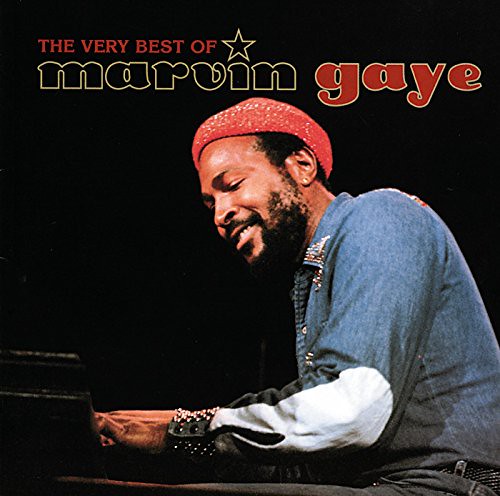
Photo: “The Very Best of Marvin Gaye” by salethleudqq is licensed under CC0 1.0.
LET’S STAY TOGETHER
by Al Green (1971) – <Why, why some people break up / Then turn around and make up / I just can’t see>. ASCOLTA SU YOUTUBE. “Persone”, “people” si dice in greco antico <ánthrōpoi>, nominativo plurale del sostantivo <ἄνθρωπος – ánthrōpos>, “essere umano”, “persona”, da cui derivano parole italiane come antropologia e filantropo.
LIGHT MY FIRE
by The Doors (1967) – <The time to hesitate is through / No time to wallow in the mire / Try now we can only lose / And our love become a funeral pyre>. ASCOLTA SU YOUTUBE. In greco antico “pira funeraria”, “funeral pyre”, è <πυρά – pyrá>. Da questo termine deriva la parola italiana “pira” (nonché piromane e pirotecnico, legati alla radice <pŷr>, “fuoco”).
Like a rolling stone
by Bob Dylan (1965)
<How does it feel, how does it feel? / To be without a home / Like a complete unknown, like a rolling stone>. ASCOLTA SU YOUTUBE. <Pantápasin ágnōstos> è la formula più idiomatica nella prosa classica del greco antico per dire “perfettamente sconosciuto”, “complete unknown”. L’avverbio <pantápasin> significa “del tutto”, “completamente” e rafforza direttamente l’aggettivo <ágnōstos> (“ignoto”).
da ‘LITTLE WING’ a ‘LONG TALL SALLY’
LITTLE WING
by Jimi Hendrix Experience (1968) – <It’s alright, she says / It’s alright / Take anything you want from me / Anything / Fly on, little wing>. ASCOLTA SU YOUTUBE. <Pterón> è un sostantivo neutro del greco antico: indica “piuma”, “penna”, “ala”, “wing”.
LIVING FOR THE CITY
by Stevie Wonder (1973) – <I hope you hear inside my voice of sorrow / And that it motivates you to make a better tomorrow / This place is cruel nowhere could be much colder / If we don’t change, the world will soon be over / Living just enough, stop giving just enough for the city>. ASCOLTA SU YOUTUBE. <Áchos> è un sostantivo prevalentemente poetico ed epico del greco antico, frequentissimo in Omero: indica “pena”, “angoscia”, “strazio”, “sorrow” (<áchos> è presente anche nel nome di Achille, <Achilleús>).
London calling
by The Clash (1980)
<The ice age is coming, the sun is zooming in / Engines stop running, the wheat is growin’ thin / A nuclear era, but I have no fear / ‘Cause London is drowning, and I, I live by the river>. ASCOLTA SU YOUTUBE. “Paura”, “fear”, in greco antico si dice <phóbos>. Da questo termine derivano parole italiane come fobia, claustrofobia e idrofobia, oltre al nome di Fobos, la personificazione divina del panico e una delle due lune di Marte.
LONELY TEARDROPS
by Jackie Wilson (1958) – <Lonely teardrops / My pillow’s never dry of lonely teardrops>. ASCOLTA SU YOUTUBE. “Cuscino”, “pillow” in greco antico è <proskephálaion>: deriva dall’unione di <prós> (presso) e <kephalḗ> (testa), indicando letteralmente l’oggetto posto sotto o accanto al capo per dormire.
LONG TALL SALLY
by Little Richard (1956) – <Gonna tell Aunt Mary ’bout Uncle John / He claim he has the misery but he’s havin’ a lot of fun>. ASCOLTA SU YOUTUBE. “Miseria”, “infelicità”, “sciagura”, “misery” è <ἀθλιότης – athliótēs>: deriva dall’aggettivo <áthlios> (“infelice”, “sventurato”, originariamente “chi sostiene dure prove”).
da ‘LOSER’ a ‘LUST FOR LIFE’
LOSER
by Beck (1993) – <Someone keeps sayin’ I’m insane to complain / About a shotgun wedding and a stain on my shirt>. ASCOLTA SU YOUTUBE. “Perdente”, “loser” in greco antico è <atychḗs> un aggettivo traducibile come “sfortunato” o “sventurato”, usato anche per indicare chi non ha successo nella vita o nelle proprie imprese.
LOSING MY RELIGION
by R.E.M. (1991) – <I thought that I heard you laughing / I thought that I heard you sing / I think I thought I saw you try>. ASCOLTA SU YOUTUBE. “Ridere”, “to laugh” in greco antico è <geláō>: da questo verbo deriva il sostantivo <gélōs> (“riso”, “risata”) e il nome proprio Gelasio.
LOUIE LOUIE
by The Kingsmen (1963) – <Me catch the ship across the sea / Me sailed the ship all alone / Me never think I’ll make it home>. ASCOLTA SU YOUTUBE. In greco antico “nave”, “ship” è <ναῦς – naûs>. Da questo termine derivano numerose parole italiane come nautica, astronauta, naumachia e nausea (in origine il mal di mare).
LOVE & HAPPINESS
by Al Green (1972) – <Well, happiness is when, you really feel good with somebody>. ASCOLTA SU YOUTUBE. Sul concetto di “felicità”, “happiness” vedi <eudaimonía>.
LOVE ME AGAIN
by John Newman (2013) – <Now I’m rising from the ground / Rising up to you / Filled with all the strength I found / There’s nothing I can’t do>. ASCOLTA SU YOUTUBE. In greco antico “terra”, “suolo”, “ground” è <γῆ – gê> da cui derivano parole italiane come geografia, geologia, geometria e ipogeo.
LOVE SHACK
by The B-52’s (1989) – <Sign says, woo, stay away fools / ‘Cause love rules at the love shack / Well it’s set way back in the middle of a field / Just a funky old shack and I gotta get back>. ASCOLTA SU YOUTUBE. “Capanna”, “baracca”, “shack” in greco antico è <καλύβη – kalýbē> da cui deriva il nome della ninfa Calipso (letteralmente «la nasconditrice», in relazione al verbo <kalýptō>, “coprire”, “riparare”).
LOVE WILL TEAR US APART
by Joy Division (1980) – <When routine bites hard / And ambitions are low / And resentment rides high / But emotions won’t grow / And we’re changing our ways / Taking different roads>. ASCOLTA SU YOUTUBE. In greco antico “risentimento”, “rancore”, “resentment” è <μῆνις – mênis>. È celebre perché apre il primo verso dell’Iliade di Omero (<Mênin áeide, theá…>, «Cantami, o Diva, il rancore…»), indicando un risentimento profondo e duraturo.
LUST FOR LIFE
by Iggy Pop (1977) – <Well I am just a modern guy / Of course I’ve had it in the ear before / ‘Cause of a lust for life / ‘Cause of a lust for life / I got a lust for life>. ASCOLTA SU YOUTUBE. “Desiderio ardente”, “brama”, “lust”, in greco antico è <ἐπιθυμία – epithymía>. Photo: “Iggy Pop” by lostintheredwoods is licensed under CC BY-ND 2.0.

Vai alla home page di SOKRATIKO.IT oppure torna in testa alla sezione CANZONI oppure torna all’inizio della lettera L
M
da ‘MAD WORLD’ a ‘MANY RIVERS TO CROSS’
Mad world
by Tears for Fears (1982)
<Hide my head / I wanna drown my sorrow / No tomorrow / No tomorrow>. ASCOLTA SU YOUTUBE.
MAGGIE MAY
by Rod Stewart (1971) – <I suppose I could collect my books and get on back to school / Or steal my daddy’s cue and make a living out of playing pool / Or find myself a rock ‘n’ roll band that needs a helping hand>. ASCOLTA SU YOUTUBE.
MAGNIFICENT
by U2 (2009) – <Only love / Only love can leave such a mark / But only love / Only love can heal such a scar>. ASCOLTA SU YOUTUBE.
MANNISH BOY
by Muddy Waters (1955) – <Oh yeah, yeah / Now when I was a young boy / At the age of five / My mother said I’ll be / The greatest man alive>. ASCOLTA SU YOUTUBE.
MANY RIVERS TO CROSS
by Jimmy Cliff (1969) – <Many rivers to cross / And it’s only my will that keeps me alive / I’ve been licked, washed up for years / And I merely survive because of my pride>. ASCOLTA SU YOUTUBE.
da ‘MARQUEE MOON’ a ‘MAYBELLENE’
MARQUEE MOON
by Television (1977) – <I spoke / To a man down at the tracks / And I ask him / How he don’t go mad / He said “Look here, Junior / Don’t you be so happy / And for Heaven’s sake / Don’t you be so sad”>. ASCOLTA SU YOUTUBE.
MAYBE
by The Chantels (1957) – <Maybe, if I hold your hand / you will understand>. ASCOLTA SU YOUTUBE.
MAYBE I’M AMAZED
by Paul McCartney (1970) – <Maybe I’m a man and maybe I’m a lonely man / Who’s in the middle of something / That he doesn’t really understand>. ASCOLTA SU YOUTUBE.
Maybellene
by Chuck Berry (1955)
<Maybellene, why can’t you be true? / Oh Maybellene, why can’t you be true? / You’ve started back doing the things you used to do>. ASCOLTA SU YOUTUBE.
da ‘ME AND BOBBY MCGEE’ a ‘MOMENT OF SURRENDER’
ME AND BOBBY MCGEE
by Janis Joplin (1971) – <Freedom’s just another word for nothin’ left to lose>. ASCOLTA SU YOUTUBE.
MIDNIGHT TRAIN TO GEORGIA
by Gladys Knight and the Pips (1973) – <He kept dreaming / (Dreaming) / Ooh, that some day he’d be a star / (A superstar, but he didn’t get far) / But he sure found out the hard way / That dreams don’t always come true, oh no, uh uh / (Dreams don’t always come true, uh uh, no, uh uh) / So he pawned all his hopes / (Woo, woo, woo-woo) / And even sold his old car / (Woo, woo, woo-woo) / Bought a one way ticket back to the life he once knew / Oh yes he did, he said he would>. ASCOLTA SU YOUTUBE.
MISSISSIPPI
by Bob Dylan (2001) – <Every step of the way we walk the line / Your days are numbered, so are mine / Time is pilin’ up, we struggle and we scrape / We’re all boxed in, nowhere to escape>. ASCOLTA SU YOUTUBE.
MOMENT OF SURRENDER
by U2 (2009) – <At the moment of surrender / I’m falling to my knees / I did not notice the passers by / And they did not notice me>. ASCOLTA SU YOUTUBE. Photo: “IMG_0176” by elvisripley is licensed under CC BY-NC 2.0.

da ‘MONEY HONEY’ a ‘MR. TAMBOURINE MAN’
MONEY HONEY
by The Drifters (1953) – <Well, I learned my lesson and now I know / The sun may shine and the wind may blow / Women may come, and the women may go / But before I say I love ’em so / I want– money, honey! / Money, honey!>. ASCOLTA SU YOUTUBE.
MONKEY GONE TO HEAVEN
by Pixies (1989) – <The creature in the sky / Got sucked in a hole / Now there’s a hole in the sky / And the ground’s not cold / And if the ground’s not cold / Everything is gonna burn / We’ll all take turns, I’ll get mine too>. ASCOLTA SU YOUTUBE.
MR. TAMBOURINE MAN
by Bob Dylan (1965) – <My senses have been stripped / My hands can’t feel to grip / My toes too numb to step / Wait only for my boot heels to be wandering / I’m ready to go anywhere, I’m ready for to fade / Into my own parade>. ASCOLTA SU YOUTUBE.
da ‘MY GENERATION’ a ‘MY SWEET LORD’
My generation
by The Who (1965)
<People try to put us d-down / (Talkin’ ’bout my generation) / Just because we g-g-get around / (Talkin’ ’bout my generation) / Things they do look awful c-c-cold / (Talkin’ ’bout my generation) / Yeah, I hope I die before I get old / (Talkin’ ’bout my generation)>. ASCOLTA SU YOUTUBE.
MY GIRL
by The Temptations (1965) – <I don’t need no money, fortune, or fame (ooh hey hey hey) / I’ve got all the riches baby one man can claim (oh yes I do)>. ASCOLTA SU YOUTUBE.
MY SWEET LORD
by George Harrison (1970) – <I really want to see you / Really want to be with you / Really want to see you, Lord / But it takes so long, my Lord>. ASCOLTA SU YOUTUBE.
Vai alla home page di SOKRATIKO.IT oppure torna in testa alla sezione CANZONI oppure torna all’inizio della lettera M
N – La musica è rock è una filosofia di vita
da ‘NEW YEAR’S DAY’ a ‘NOTHING COMPARES 2 U’
NEW YEAR’S DAY
by U2 (1983) – <And so we’re told this is the golden age / And gold is the reason for the wars we wage / Though I want to be with you, be with you>. ASCOLTA SU YOUTUBE.
NORWEGIAN WOOD (THIS BIRD HAS FLOWN)
by The Beatles (1965) – <And when I awoke I was alone / This bird had flown / So I lit a fire / Isn’t it good Norwegian wood?>. ASCOLTA SU YOUTUBE.
NOTHING COMPARES 2 U
by Sinead O’Connor (1990) – <It’s been so lonely without you here / Like a bird without a song / Nothing can stop these lonely tears from falling>. ASCOLTA SU YOUTUBE. Photo: “JPA_0121” by jaclinepaskero is licensed under CC BY-NC-ND 2.0.

da ‘NOWHERE TO RUN’ a ‘NUTHIN’ BUT A ‘G’ THANG‘
NOWHERE TO RUN
by Martha & the Vandellas (1965) – <I know you’re no good for me, but free of you I’ll never be / Nowhere to run to baby, nowhere to hide, got nowhere to run to baby>. ASCOLTA SU YOUTUBE.
NO WOMAN, NO CRY
by Bob Marley & the Wailers (1975) – <Good friends we have. Oh / Good friends we have lost along the way / Yeah! / In this great future you can’t forget your past / So dry your tears, I say / Yeah>. ASCOLTA SU YOUTUBE.
NUTHIN’ BUT A ‘G’ THANG
by Dr. Dre (1993) – <Now it’s time for me to make my impression felt / So sit back, relax, and strap on your seatbelt / You never been on a ride like this before / With a producer who can rap and control the maestro>. ASCOLTA SU YOUTUBE.
Vai alla home page di SOKRATIKO.IT oppure torna in testa alla sezione CANZONI oppure torna all’inizio della lettera N
O
Da ‘ODE TO BILLIE JOE’ a ‘ONLY THE LONELY’
ODE TO BILLIE JOE
by Bobbie Gentry (1967) – <There was a virus going ’round; papa caught it, and he died last spring / And now mama doesn’t seem to want to do much of anything / And me, I spend a lot of time pickin’ flowers up on Choctaw Ridge / And drop them into the muddy water off the Tallahatchie Bridge>. ASCOLTA SU YOUTUBE.
Ohio
by Crosby, Stills, Nash & Young (1970)
<Gotta get down to it / Soldiers are gunning us down / Should have been done long ago / What if you knew her and / Found her dead on the ground? / How can you run when you know?>. ASCOLTA SU YOUTUBE.
OH PRETTY WOMAN
by Roy Orbison (1964) – <If that’s the way it must be, OK / I guess I’ll go on home, it’s late / There’ll be tomorrow night, but wait / What do I see? / Is she walkin’ back to me? / Yeah, she’s walkin’ back to me / Oh, oh, pretty woman>. ASCOLTA SU YOUTUBE.
ONE
by U2 (1991) – <Is it getting better / Or do you feel the same? / Will it make it easier on you now? / You got someone to blame>. ASCOLTA SU YOUTUBE.
ONLY THE LONELY
by Roy Orbison (1960) – <Maybe tomorrow / A new romance / No more sorrow / But that’s the chance>. ASCOLTA SU YOUTUBE.
da ‘O-O-H CHILD’ a ‘OOO BABY BABY’
O-O-H CHILD
by The Five Stairsteps (1970) – <Some day, yeah / We’ll put it together and we’ll get it undone / Some day / When your head is much lighter / Some day, yeah / We’ll walk in the rays of a beautiful sun / Some day / When the world is much brighter>. ASCOLTA SU YOUTUBE.
OOO BABY BABY
by The Miracles (1965) – <Mistakes, I know I’ve made a few / But I’m only human / You’ve made mistakes too, I’m crying>. ASCOLTA SU YOUTUBE.
Vai alla home page di SOKRATIKO.IT oppure torna in testa alla sezione CANZONI oppure torna all’inizio della lettera O
P – La musica rock è una filosofia di vita
da ‘PAINT IT BLACK’ a ‘PAPER PLANES’
PAINT IT BLACK
by The Rolling Stones (1966) – <I look inside myself and see my heart is black / I see my red door I must have it painted black / Maybe then I’ll fade away and not have to face the facts / It’s not easy facin’ up, when your whole world is black>. ASCOLTA SU YOUTUBE.
PAPA’S GOT A BRAND NEW BAG
by James Brown (1966) – <He ain’t no drag / Papa’s got a brand new bag>. ASCOLTA SU YOUTUBE. Photo: “James Brown” by Mexicaans fotomagazijn is licensed under CC BY-NC 2.0.
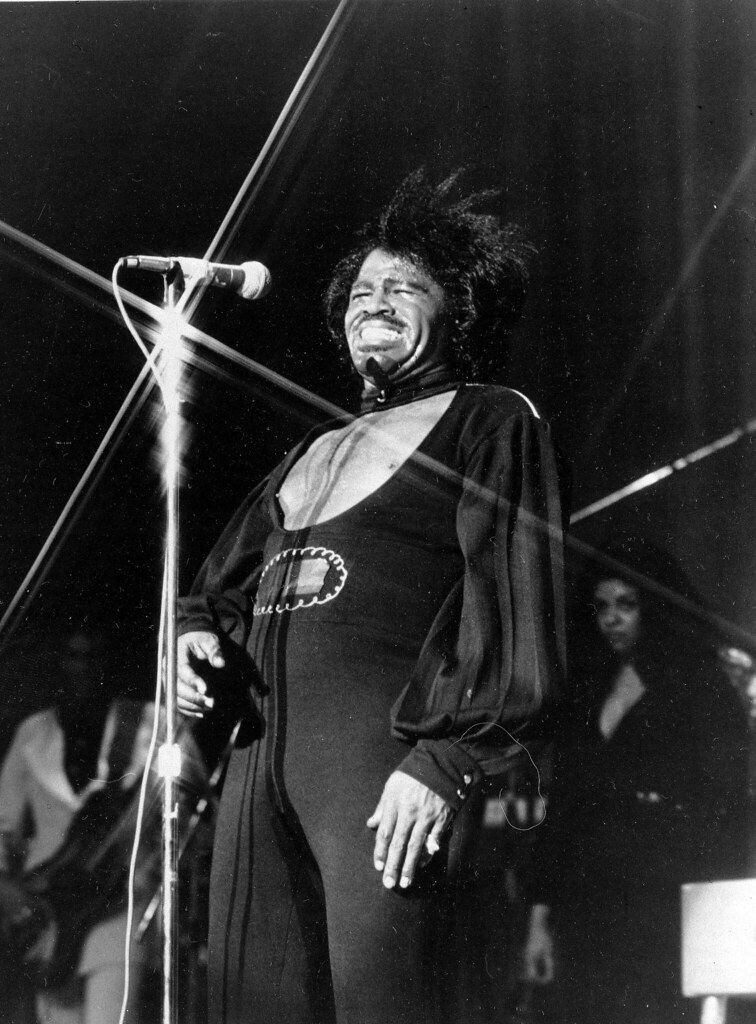
PAPA WAS A ROLLIN’ STONE
by The Temptations (1972) – <Papa was a rolling stone / Wherever he laid his hat was his home / And when he died, all he left us was alone>. ASCOLTA SU YOUTUBE.
PAPER PLANES
by M.I.A. (2007) – <Now one things for certain, and two things for sure / Being poor is a disease, gotta hustle up a cure / Start with your head homie then use your hands / If you try it in reverse, you don’t even have a chance>. ASCOLTA SU YOUTUBE.
da ‘PARANOID’ a ‘PERSONAL JESUS’
PARANOID
by Black Sabbath (1970) – <I need someone to show me / The things in life that I can’t find / I can’t see the things that make true happiness / I must be blind>. ASCOLTA SU YOUTUBE.
PARANOID ANDROID
by Radiohead (1997) – <Please could you stop the noise / I’m trying to get some rest / From all the unborn chicken voices in my head / What’s that?>. ASCOLTA SU YOUTUBE.
Penny Lane
by The Beatles (1967)
<In Penny Lane, there is a barber showing photographs / Of every head he’s had the pleasure to know / And all the people that come and go / Stop and say, “Hello”>. ASCOLTA SU YOUTUBE.
PEOPLE GET READY
by The Impressions (1965) – <People get ready, there’s a train a comin’ / You don’t need no baggage, you just get on board>. ASCOLTA SU YOUTUBE.
PERSONALITY CRISIS
by New York Dolls (1973) – <Personality crisis you got it while it was hot / But now frustration and heartache is what you got / (That’s why they talk about personality)>. ASCOLTA SU YOUTUBE.
PERSONAL JESUS
by Depeche Mode (1989) – <Feeling unknown / And you’re all alone / Flesh and bone / By the telephone / Lift up the receiver / I’ll make you a believer / Take second best / Put me to the test / Things on your chest / You need to confess>. ASCOLTA SU YOUTUBE.
da ‘PIANO MAN’ a ‘PLEASE PLEASE ME’
PIANO MAN
by Billy Joel (1973) – <Son, can you play me a memory / I’m not really sure how it goes / But it’s sad and it’s sweet and I knew it complete / When I wore a younger man’s clothes>. ASCOLTA SU YOUTUBE. Photo: “Billy Joel Live!” by minds-eye is licensed under CC BY-NC-ND 2.0.

PICTURES OF YOU
by The Cure (1989) – <Remembering you running soft through the night / You were bigger and brighter and wider than snow / And screamed at the make-believe / Screamed at the sky / And you finally found all your courage / To let it all go>. ASCOLTA SU YOUTUBE.
PINK HOUSES
by John Cougar Mellencamp (1983) – <And there’s winners, and there’s losers / But they ain’t no big deal / ‘Cause the simple man baby pays the thrills / The bills and the pills that kill>. ASCOLTA SU YOUTUBE.
PLANET ROCK
by Afrika Bambaataa & the Soul Sonic Force (1982) – <Just start to chase your dreams / Up out your seats, make your body sway / Socialize, get down, let your soul lead the way>. ASCOLTA SU YOUTUBE.
PLEASE PLEASE ME
by The Beatles (1964) – <I don’t want to sound complaining / But you know there’s always rain in my heart (in my heart)>. ASCOLTA SU YOUTUBE.
da ‘POSITIVELY 4TH STREET’ a ‘PURPLE RAIN’
POSITIVELY 4TH STREET
by Bob Dylan (1965) – <I wish that for just one time you could stand inside my shoes / And just for that one moment I could be you / Yes, I wish that for just one time you could stand inside my shoes / You’d know what a drag it is to see you>. ASCOLTA SU YOUTUBE.
PRESSURE DROP
by Toots & the Maytals (1973) – <I said a pressure drop / Oh pressure, oh yeah / Pressure’s gonna drop on you / I said pressure drop / Oh pressure, oh yeah / Pressure’s gonna drop on you>. ASCOLTA SU YOUTUBE.
PROUD MARY
by Creedence Clearwater Revival (1969) – <And I never lost one minute of sleepin’ / Worryin’ ’bout the way things might have been>. ASCOLTA SU YOUTUBE.
Purple haze
by Jimi Hendrix Experience (1967)
<Purple haze, all in my brain / Lately things they don’t seem the same / Actin’ funny, but I don’t know why / Excuse me while I kiss the sky>. ASCOLTA SU YOUTUBE.
PURPLE RAIN
by Prince & The Revolution (1984) – <I never meant to cause you any sorrow / I never meant to cause you any pain / I only wanted to one time to see you laughing / I only wanted to see you / Laughing in the purple rain>. ASCOLTA SU YOUTUBE.
Vai alla home page di SOKRATIKO.IT oppure torna in testa alla sezione CANZONI oppure torna all’inizio della lettera P
R
da ‘RAIN’ a ‘REDEMPTION SONG’
RAIN
by The Beatles (1966) – <If the rain comes / They run and hide their heads / They might as well be dead / If the rain comes / If the rain comes>. ASCOLTA SU YOUTUBE.
RAMBLE ON
by Led Zeppelin (1969) – <Leaves are falling all around / It’s time I was on my way / Thanks to you I’m much obliged / For such a pleasant stay / But now it’s time for me to go / The autumn moon lights my way / For now I smell the rain / And with it pain / And it’s headed my way>. ASCOLTA SU YOUTUBE.
RAPPER’S DELIGHT
by The Sugarhill Gang (1979) – <‘Cause you rocked and a rolled with so much soul / You could rock ’til a hundred and one years old / I don’t mean to brag, I don’t mean to boast / But we like hot butter on our breakfast toast>. ASCOLTA SU YOUTUBE.
RAVE ON
by Buddy Holly (1958) – <Rave on, it’s a crazy feelin’ and / I know it’s got me reelin’>. ASCOLTA SU YOUTUBE.
REACH OUT I’LL BE THERE
by Four Tops (1966) – <Now if you feel that you can’t go on / Because all of your hope is gone / And your life is filled with much confusion / Until happiness is just an illusion>. ASCOLTA SU YOUTUBE.
REDEMPTION SONG
by Bob Marley & the Wailers (1980) – <Emancipate yourselves from mental slavery / None but ourselves can free our minds>. ASCOLTA SU YOUTUBE.
da ‘REHAB’ a ‘RING OF FIRE’
REHAB
by Amy Winehouse (2007) – <I don’t ever wanna drink again / I just, oh, I just need a friend / I’m not gonna spend ten weeks / Have everyone think I’m on the mend / And it’s not just my pride / It’s just ’til these tears have dried>. ASCOLTA SU YOUTUBE. Photo: “Amy Winehouse by nerosunero” by nerosunero is licensed under CC BY-NC-SA 2.0.

REMEMBER (WALKIN’ IN THE SAND)
by The Shangri-Las (1964) – <Whatever happened to / The boy that I once knew? / The boy who said he’d be true / Oh, what happened to / The life I gave to you / What will I do with it now?>. ASCOLTA SU YOUTUBE.
RESPECT
by Aretha Franklin (1967) – <All I’m askin’ / Is for a little respect when you get home (just a little bit)>. ASCOLTA SU YOUTUBE.
RESPECT YOURSELF
by The Staple Singers (1971) – <If you disrespect anybody that you run into / How in the world do you think anybody’s s’posed to respect you / If you don’t give a heck ’bout the man with the bible in his hand, y’all / Just get out the way, and let the gentleman do his thing / You the kind of gentleman that want everything your way, yeah / Take the sheet off your face, boy, it’s a brand new day>. ASCOLTA SU YOUTUBE.
RING OF FIRE
by Johnny Cash (1963) – <Bound by wild desire / I fell into a ring of fire>. ASCOLTA SU YOUTUBE.
da ‘ROADRUNNER’ a ‘ROCK LOBSTER’
ROADRUNNER
by The Modern Lovers (1976) – <I’m in love with the radio on / It helps me from being alone late at night / It helps me from being lonely late at night / I don’t feel so bad now in the car / Don’t feel so alone, got the radio on / Like the roadrunner / That’s right>. ASCOLTA SU YOUTUBE.
ROCK & ROLL MUSIC
by Chuck Berry (1957) – <Don’t care to hear ’em play the tango / I’m in no mood to dig a mambo / It’s way too early for the congo>. ASCOLTA SU YOUTUBE. Photo: “Chuck Berry Statue, Delmar Loop” by Brian Weiterman is licensed under CC BY-NC-ND 2.0.
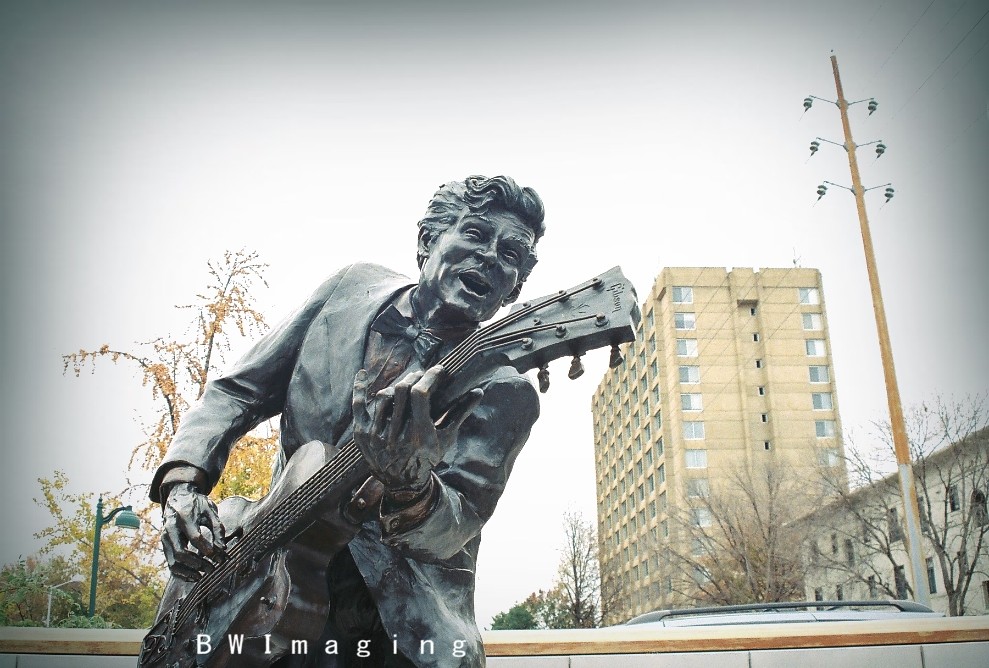
ROCKET MAN
by Elton John (1972) – <And I think it’s gonna be a long long time / ‘Till touch down brings me round again to find / I’m not the man they think I am at home / Oh no no no I’m a rocket man / Rocket man burning out his fuse up here alone>. ASCOLTA SU YOUTUBE.
ROCKIN’ IN THE FREE WORLD
by Neil Young (1989) – <There’s a lot of people sayin’ / we’d be better off dead / Don’t feel like Satan / but I am to them / So I try to forget it / any way I can>. ASCOLTA SU YOUTUBE.
ROCK LOBSTER
by B-52’s (1979) – <Here comes a stingray / There goes a manta-ray / In walked a jelly fish / There goes a dog-fish / Chased by a cat-fish / In flew a sea robin / Watch out for that piranha / There goes a narwhal / Here comes a bikini whale!>. ASCOLTA SU YOUTUBE.
da ‘ROLLIN’ STONE’ a ‘ROXANNE’
ROLLIN’ STONE
by Muddy Waters (1948) – <Well, my mother told my father / Just before hmmm, I was born / “I got a boy child’s comin’ / Gonna be, he gonna be a rollin’ stone / Sure ‘nough, he’s a rollin’ stone / Sure ‘nough, he’s a rollin’ stone”>. ASCOLTA SU YOUTUBE.
ROLL OVER BEETHOVEN
by Chuck Berry (1956) – <I got the rockin’ pneumonia / I need a shot of rhythm and blues / I think I’m rollin’ arthritis / Sittin’ down by the rhythm review / Roll over Beethoven rockin’ in two by two>. ASCOLTA SU YOUTUBE.
Roxanne
by The Police (1979)
<Roxanne / You don’t have to put on the red light / Those days are over / You don’t have to sell your body to the night / Roxanne / You don’t have to wear that dress tonight / Walk the streets for money / You don’t care if it’s wrong or if it’s right>. ASCOLTA SU YOUTUBE.
da ‘RUBY TUESDAY’ a ‘RUNNING ON EMPTY’
RUBY TUESDAY
by The Rolling Stones (1967) – <There’s no time to lose, I heard her say / Catch your dreams before they slip away / Dying all the time / Lose your dreams and you will lose your mind / Ain’t life unkind?>. ASCOLTA SU YOUTUBE.
RUNNING ON EMPTY
by Jackson Browne (1977) – <Looking out at the road rushing under my wheels / Looking back at the years gone by like so many summer fields / In sixty-five I was seventeen and running up one-on-one / I don’t know where I’m running now, I’m just running on>. ASCOLTA SU YOUTUBE.
Vai alla home page di SOKRATIKO.IT oppure torna in testa alla sezione CANZONI oppure torna all’inizio della lettera R
S – La musica rock è una filosofia di vita
da ‘SABOTAGE’ a ‘SCHOOL’S OUT’
SABOTAGE
by Beastie Boys (1994) – <‘Cause what you see, you might not get / And we can bet, so don’t you get souped yet / Scheming on a thing, that’s a mirage / I’m trying to tell you now, it’s sabotage>. ASCOLTA SU YOUTUBE.
SAIL AWAY
by Randy Newman (1972) – <In America every man is free / To take care of his home and his family / You’ll be as happy as a monkey in a monkey tree / You’re all gonna be an American>. ASCOLTA SU YOUTUBE.
SAVE THE LAST DANCE FOR ME
by The Drifters (1960) – <Like sparkling wine go and have your fun / Laugh and sing but while we’re apart / Don’t give your heart to anyone>. ASCOLTA SU YOUTUBE.
SCHOOL’S OUT
by Alice Cooper (1972) – <No more pencils no more books / No more teacher’s dirty looks / Out for summer / Out till fall / We might not come back at all>. ASCOLTA SU YOUTUBE. Photo: “5. ALICE COOPER” by Hot Gossip1 is marked with CC BY-ND 2.0.
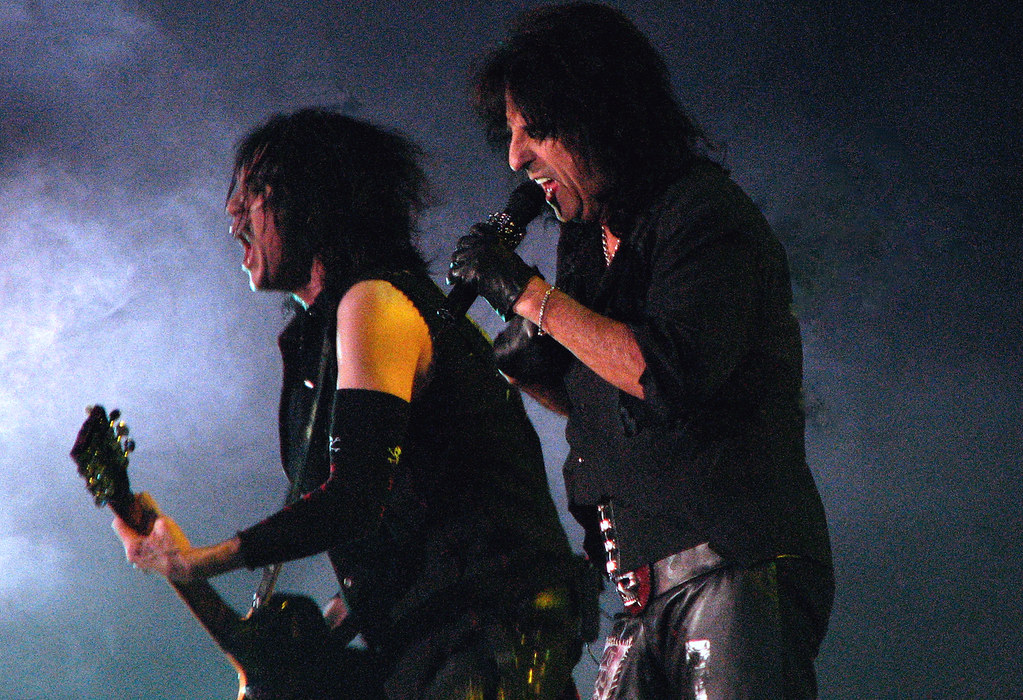
da ‘SEVEN NATION ARMY’ a SHE’S NOT THERE’
SEVEN NATION ARMY
by The White Stripes (2003) – <And I’m talking to myself at night / Because I can’t forget / Back and forth through my mind / Behind a cigarette / And the message coming from my eyes / Says leave it alone>. ASCOLTA SU YOUTUBE.
SEXUAL HEALING
by Marvin Gaye (1982) – <Baby, I got sick this mornin’ / A sea was stormin’ inside of me / Baby, I think I’m capsizin’ / The waves are risin’ and risin’>. ASCOLTA SU YOUTUBE.
SHAKE, RATTLE AND ROLL
by (Big) Joe Turner (1954) – <I believe to my soul you’re the devil and now I know / I believe to my soul you’re the devil and now I know / Well, the more I work, the faster my money goes>. ASCOLTA SU YOUTUBE.
SHE LOVES YOU
by The Beatles (1963) – <You know it’s up to you / I think it’s only fair / Pride can hurt you, too / Apologize to her>. ASCOLTA SU YOUTUBE.
SHE’S NOT THERE
by The Zombies (1964) – <But it’s too late to say you’re sorry / How would I know? Why should I care?>. ASCOLTA SU YOUTUBE.
da ‘SHOULD I STAY OR SHOULD I GO’ a ‘SLOOP JOHN’
SHOULD I STAY OR SHOULD I GO
by The Clash (1982) – <It’s always tease, tease, tease / You’re happy when I’m on my knees / One day it’s fine and next it’s black / So if you want me off your back / Well, come on and let me know / Should I stay or should I go?>. ASCOLTA SU YOUTUBE.
SHOUT
by The Isley Brothers (1959) – <Everybody shout now / Everybody shout now / Everybody, shout, shout / Shout, shout, shout>. ASCOLTA SU YOUTUBE.
SIGN O’ THE TIMES
by Prince (1987) – <Sign o’ the times mess with your mind / Hurry before it’s too late / Let’s fall in love, get married, have a baby / We’ll call him Nate / If it’s a boy>. ASCOLTA SU YOUTUBE. Photo: “Prince-Guitar_pink” by njTare is licensed under CC PDM 1.0.

(SITTIN’ ON) THE DOCK OF THE BAY
by Otis Redding (1968) – <Looks like nothin’s gonna change / Everything seems to stay the same / I can’t do what ten people tell me to do / So I guess I’ll remain the same>. ASCOLTA SU YOUTUBE.
SLOOP JOHN B
by The Beach Boys (1966) – <Let me go home, let me go home / I want to go home, yeah yeah / Well I feel so broke up / I want to go home>. ASCOLTA SU YOUTUBE.
da ‘SMELLS LIKE TEEN SPIRIT’ a ‘SOUL MAN’
SMELLS LIKE TEEN SPIRIT
by Nirvana (1991) – <I’m worse at what I do best / And for this gift I feel blessed / Our little group has always been / And always will until the end>. ASCOLTA SU YOUTUBE.
SOMEBODY TO LOVE
by Jefferson Airplane (1967) – <When the truth is found / To be lies / And all the joy / Within you dies / Don’t you want somebody to love / Don’t you need somebody to love / Wouldn’t you love somebody to love / You better find somebody to love, love>. ASCOLTA SU YOUTUBE.
SON-OF-A PREACHER MAN
by Dusty Springfield (1968) – <The only one who could ever reach me / Was the son of a preacher man / The only boy who could ever teach me / Was the son of a preacher man / Yes, he was, he was, ooh, yes, he was>. ASCOLTA SU YOUTUBE.
Soul man
by Sam & Dave (1967)
<Got what I got the hard way / And I make it better, each and every day / So honey, said don’t you fret / ‘Cause you ain’t seen nothing yet>. ASCOLTA SU YOUTUBE.
da ‘SPANISH HARLEM’ a ‘STANDING IN THE SHADOWS OF LOVE’
SPANISH HARLEM
by Ben E. King (1960) – <There is a rose in Spanish Harlem / A red rose up in Spanish Harlem / It is a special one, it’s never seen the sun / It only comes out when the moon is on the run / And all the stars are gleaming / It’s growing in the street right up through the concrete / But soft and sweet and dreaming>. ASCOLTA SU YOUTUBE.
SPOONFUL
by Howlin’ Wolf (1960) – <Men lie about that spoonful / Some cry about that spoonful / Some die about that spoonful / Everybody fight about a spoonful / That spoon, that spoon, that spoonful>. ASCOLTA SU YOUTUBE.
STAN
by Eminem featuring Dido (2000) – <My tea’s gone cold I’m wondering why I / Got out of bed at all / The morning rain clouds up my window / And I can’t see at all / And even if I could it’ll all be gray>. ASCOLTA SU YOUTUBE.
La musica rock è una filosofia di vita
STAND
by Sly & the Family Stone (1969) – <Stand / In the end you’ll still be you / One that’s done all the things you set out to do / Stand / There’s a cross for you to bear / Things to go through if you’re going anywhere / Stand / For the things you know are right / It’s the truth that the truth makes them so uptight / Stand / All the things you want are real / You have you to complete and there is no deal>. ASCOLTA SU YOUTUBE.
STAND BY ME
by Ben E. King (1961) – <If the sky that we look upon / Should tumble and fall / Or the mountains should crumble to the sea / I won’t cry, I won’t cry, no I won’t shed a tear / Just as long as you stand, stand by me>. ASCOLTA SU YOUTUBE.
STANDING IN THE SHADOWS OF LOVE
by Four Tops (1966) – <All alone / I’m destined to be, with misery my only company / It may come today, it might come tomorrow / But it’s for sure I ain’t got nothing but sorrow>. ASCOLTA SU YOUTUBE.
da ‘STAYIN’ ALIVE’ a ‘SUICIDE BLONDE’
STAYIN’ ALIVE
by Bee Gees (1977) – <Whether you’re a brother or whether you’re a mother / You’re stayin’ alive, stayin’ alive>. ASCOLTA SU YOUTUBE. Photo: “Bee Gees Live” by bestgibb is licensed under CC BY-SA 2.0.
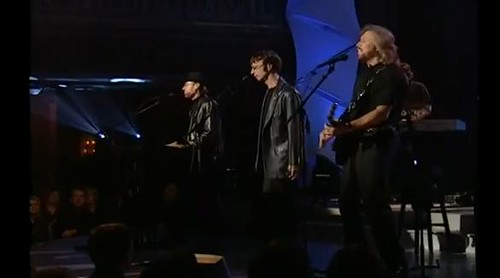
Stairway to heaven
by Led Zeppelin (1971)
<And a new day will dawn / For those who stand long / And the forests will echo with laughter>. ASCOLTA SU YOUTUBE.
STRAWBERRY FIELDS FOREVER
by The Beatles (1967) – <Living is easy with eyes closed / Misunderstanding all you see / It’s getting hard to be someone / But it all works out / It doesn’t matter much to me>. ASCOLTA SU YOUTUBE.
STREET FIGHTING MAN
by The Rolling Stones (1968) – <Hey think the time is right / For a palace revolution / But where I live the game / To play is compromise solution>. ASCOLTA SU YOUTUBE.
SUBTERRANEAN HOMESICK BLUES
by Bob Dylan (1965) – <Try to be a success / Please her, please him, buy gifts / Don’t steal, don’t lift / Twenty years of schoolin’ / And they put you on the day shift>. ASCOLTA SU YOUTUBE.
SUICIDE BLONDE
by INXS (1990) – <Got some revelation / Put into your hands / Save you from your misery like rain across the land / Don’t you see the color of deception / Turning your world around again>. ASCOLTA SU YOUTUBE.
da ‘SUITE: JUDY BLUE EYES’ a ‘SURRENDER’
SUITE: JUDY BLUE EYES
by Crosby, Stills & Nash (1969) – <It’s getting to the point where I’m no fun anymore / I am sorry / Sometimes it hurts so badly, I must cry out loud / “I am lonely”>. ASCOLTA SU YOUTUBE.
SUMMERTIME BLUES
by Eddie Cochran (1958) – <Sometimes I wonder what I’m a-gonna do / But there ain’t no cure for the summertime blues>. ASCOLTA SU YOUTUBE.
Sunday bloody Sunday
by U2 (1983)
<And it’s true we are immune / When fact is fiction and TV reality / And today the millions cry / We eat and drink while tomorrow they die>. ASCOLTA SU YOUTUBE.
SUNSHINE OF YOUR LOVE
by Cream (1968) – <I’ve been waiting so long / To be where I’m going / In the sunshine of your love>. ASCOLTA SU YOUTUBE.
SUPERSTITION
by Stevie Wonder (1972) – <When you believe in things / That you don’t understand / Then you suffer / Superstition ain’t the way>. ASCOLTA SU YOUTUBE.
SURRENDER
by Cheap Trick (1978) – <Whatever happened to all this season’s losers of the year? / Every time I got to thinking, where’d they disappear?>. ASCOLTA SU YOUTUBE.
da ‘SUSPICIOUS MINDS’ a ‘SYMPATHY FOR THE DEVIL’
SUSPICIOUS MINDS
by Elvis Presley (1969) – <We can’t go on together / With suspicious minds (suspicious minds) / And we can’t build our dreams / On suspicious minds>. ASCOLTA SU YOUTUBE.
SWEET CHILD O’ MINE
by Guns n’ Roses (1987) – <And if I’d stare too long / I’d probably break down and cry>. ASCOLTA SU YOUTUBE.
SWEET DREAMS (ARE MADE OF THIS)
by Eurythmics (1983) – <Sweet dreams are made of this / Who am I to disagree? / I travel the world / And the seven seas / Everybody’s looking for something. / Some of them want to use you / Some of them want to get used by you / Some of them want to abuse you / Some of them want to be abused>. ASCOLTA SU YOUTUBE. Photo: “20171221_133034” by capleez is licensed under CC BY-NC-SA 2.0.
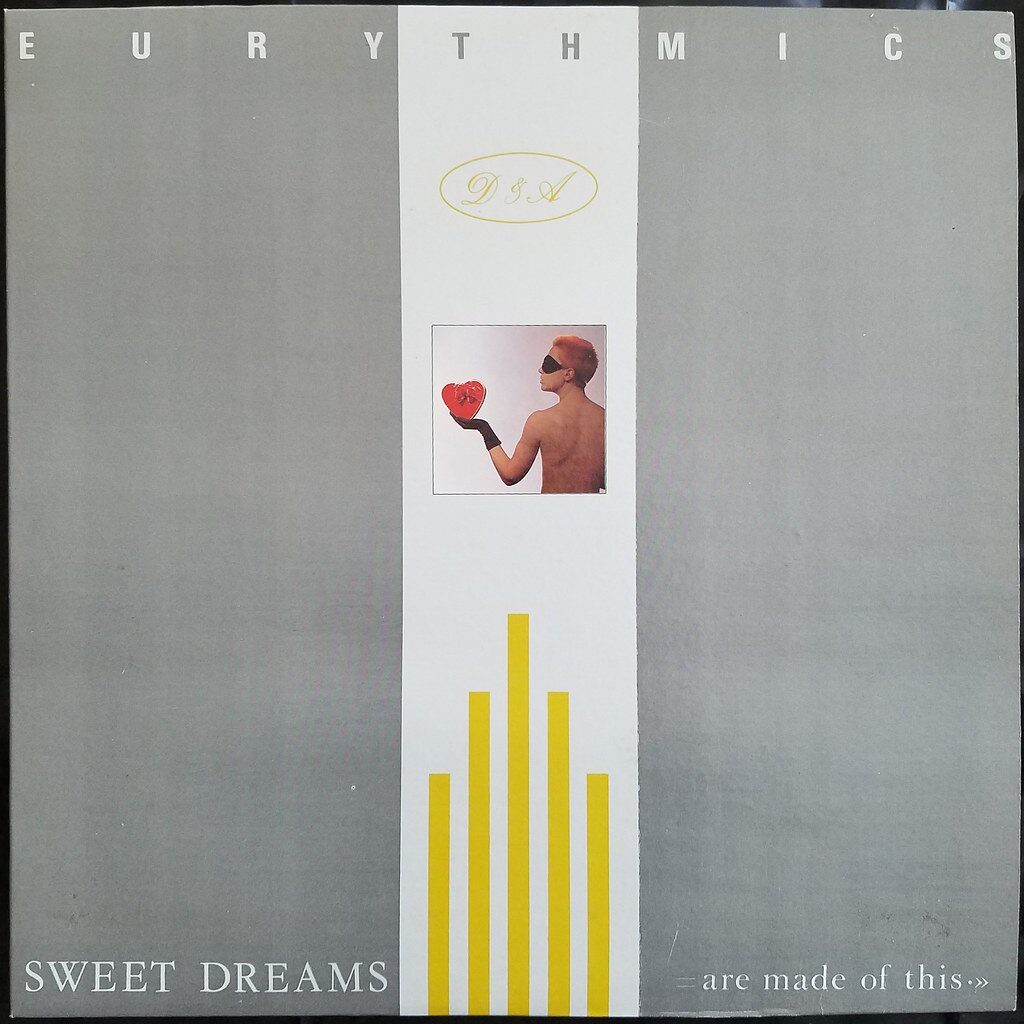
SWEET EMOTION
by Aerosmith (1975) – <You talk about things that nobody cares / You’re wearing out things that nobody wears / You’re calling my name but I gotta make clear / I can’t say baby where I’ll be in a year>. ASCOLTA SU YOUTUBE.
SWEET JANE
by The Velvet Underground (1970) – <They’ll tell you life is full of dirt / And the women never really faint / And the villains always blink their eyes / And the children are the only ones who blush / ‘Cause life is just to die>. ASCOLTA SU YOUTUBE.
Sympathy for the devil
by The Rolling Stones (1968)
<Pleased to meet you / Hope you guess my name / But what’s puzzling you / Is the nature of my game>. ASCOLTA SU YOUTUBE.
Vai alla home page di SOKRATIKO.IT oppure torna in testa alla sezione CANZONI oppure torna all’inizio della lettera S
T
da ‘TAKE ME OUT’ a ‘TELL IT LIKE IT IS’
TAKE ME OUT
by Franz Ferdinand (2004) – <So if you’re lonely / You know I’m here waiting for you / I’m just a cross hair / I’m just a shot away from you>. ASCOLTA SU YOUTUBE.
TAKE ME TO THE RIVER
by Al Green (1974) – <You stole my money and my cigarettes / And I haven’t seen hide nor hair of you yet>. ASCOLTA SU YOUTUBE.
TANGLED UP IN BLUE
by Bob Dylan (1975) – <Then she opened up a book of poems / And handed it to me / Written by an Italian poet / From the thirteenth century / And everyone of them words rang true / And glowed like burnin’ coal / Pourin’ off of every page / Like it was written in my soul / From me to you / Tangled up in blue>. ASCOLTA SU YOUTUBE.
TEARS IN HEAVEN
by Eric Clapton (1992) – <Time can bring you down, time can bend your knees / Time can break your heart, have you begging please, begging please / Beyond the door there’s peace I’m sure / And I know there’ll be no more tears in heaven>. ASCOLTA SU YOUTUBE. Photo: “Clapton” by Jonathan Bayer is licensed under CC BY-NC-SA 2.0.
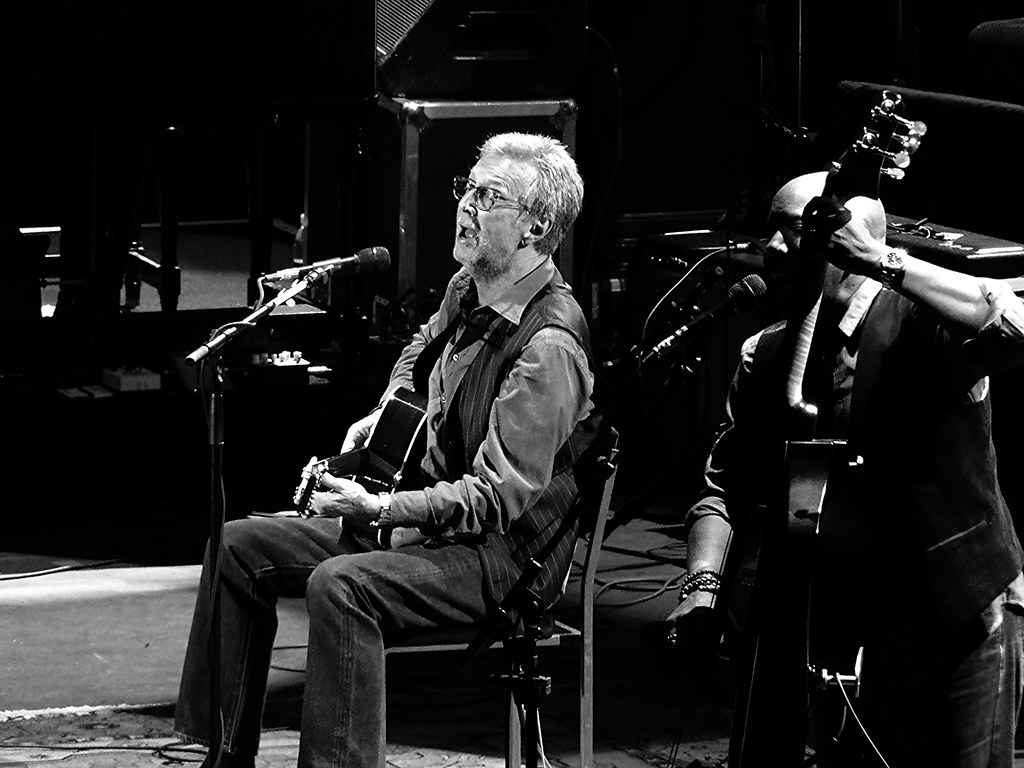
TELL IT LIKE IT IS
by Aaron Neville (1966) – <Life is too short to have sorrow / You may be here today and gone tomorrow / You might as well get what you want / So go on and live, baby, go on and live>. ASCOLTA SU YOUTUBE.
da ‘THANK YOU’ a ‘THAT’S THE WAY OF THE WORLD’
THANK YOU (Falettinme Be Mice Elf Agin)
by Sly & the Family Stone (1970) – <Lookin’ at the devil, grinnin’ at his gun / Fingers start shakin’, I begin to run / Bullets start chasin’ I begin to stop / We begin to wrestle I was on the top>. ASCOLTA SU YOUTUBE.
THAT’LL BE THE DAY
by Buddy Holly (1957) – <You sit and hold me and you tell me boldly / That some day, well I’ll be blue>. ASCOLTA SU YOUTUBE.
That’s all right
by Elvis Presley (1954)
<I’m leaving town for sure / Well, then you won’t be bothered with / Me hanging around your door / Well, that’s all right, that’s all right>. ASCOLTA SU YOUTUBE.
THAT’S ENTERTAINMENT
by The Jam (1980) – <A hot summer’s day and sticky black tarmac / Feeding ducks in the park and wishing you were far away / That’s entertainment, that’s entertainment>. ASCOLTA SU YOUTUBE.
THAT’S THE WAY OF THE WORLD
by Earth, Wind & Fire (1975) – <You will find peace of mind / If you look way down in your heart and soul / Don’t hesitate ’cause the world seems cold / Stay young at heart, ’cause you’re never, never old>. ASCOLTA SU YOUTUBE.
da ‘THE BOXER’ a ‘THE HOUSE OF THE RISING SUN’
THE BOXER
by Simon & Garfunkel (1969) – <I have squandered my resistance / For a pocket full of mumbles, such are promises / All lies and jests / Still a man hears what he wants to hear / And disregards the rest>. ASCOLTA SU YOUTUBE.
THE BOYS OF SUMMER
by Don Henley (1984) – <Out on the road today / I saw a deadhead sticker on a cadillac / A little voice inside my head said: / “Don’t look back, you can never look back”>. ASCOLTA SU YOUTUBE.
THE END
by The Doors (1967) – <It hurts to set you free / But you’ll never follow me / The end of laughter and soft lies / The end of nights we tried to die / This is the end>. ASCOLTA SU YOUTUBE. Photo: “Morrison” by MorrisonXXI is licensed under CC BY-NC-ND 2.0.
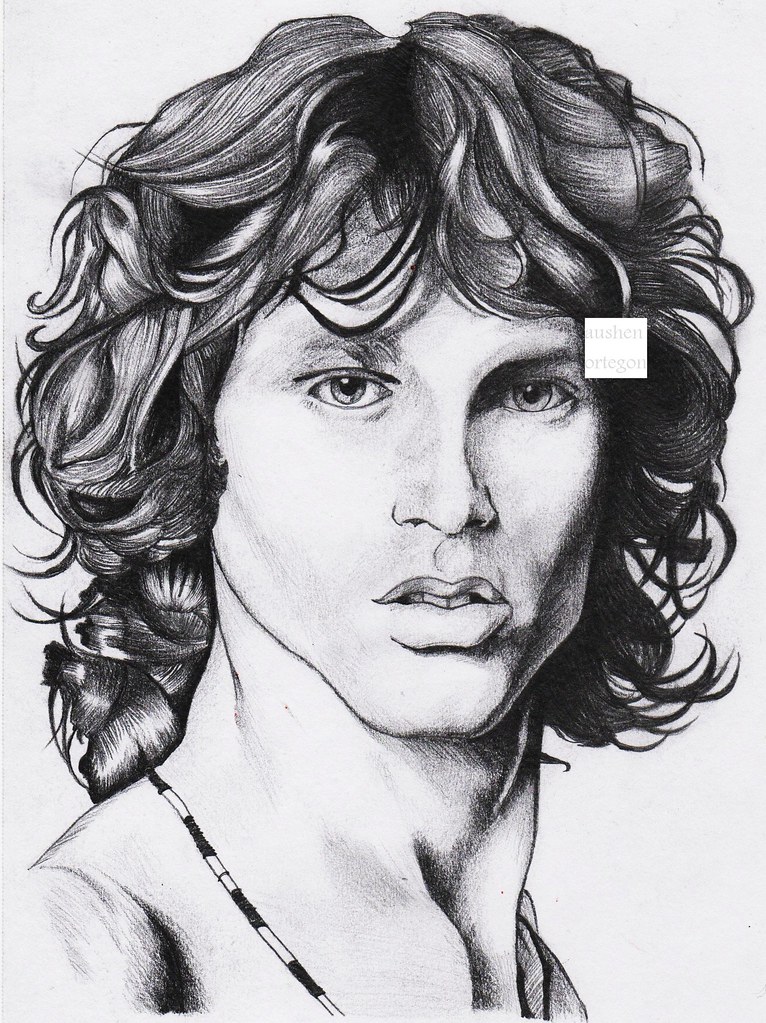
THE GREAT PRETENDER
by The Platters (1955) – <Oh-oh, yes I’m the great pretender / Pretending that I’m doing well / My need is such I pretend too much / I’m lonely but no one can tell>. ASCOLTA SU YOUTUBE.
THE HARDER THEY COME
by Jimmy Cliff (1975) – <So as sure as the sun will shine / I’m gonna get my share now of what’s mine / And then the harder they come / The harder they’ll fall, one and all / Ooh the harder they come / The harder they’ll fall, one and all>. ASCOLTA SU YOUTUBE.
THE HOUSE OF THE RISING SUN
by The Animals (1964) – <Oh mother tell your children / Not to do what I have done / Spend your lives in sin and misery / In the House of the Rising Sun>. ASCOLTA SU YOUTUBE.
da ‘THE LETTER’ a ‘THE RISING’
THE LETTER
by The Box Tops (1967) – <Ain’t got time to take a fast train / Lonely days are gone, I’m a-goin’ home>. ASCOLTA SU YOUTUBE.
La musica rock è una filosofia di vita
THE LOCO-MOTION
by Little Eva (1962) – <Do it nice and easy, now, don’t lose control / A little bit of rhythm and a lot of soul>. ASCOLTA SU YOUTUBE.
THE MESSAGE
by Grandmaster Flash & the Furious Five (1982) – <It’s like a jungle sometimes / It makes me wonder how I keep from goin’ under>. ASCOLTA SU YOUTUBE.
THE NIGHT THEY DROVE OLD DIXIE DOWN
by The Band (1969) – <Now I don’t mind choppin’ wood / And I don’t care if the money’s no good / You take what you need and you leave the rest / But they should never have taken the very best>. ASCOLTA SU YOUTUBE.
THE RISING
by Bruce Springsteen (2002) – <Can’t see nothin’ in front of me / Can’t see nothin’ coming up behind / I make my way through this darkness / I can’t feel nothing but this chain that binds me>. ASCOLTA SU YOUTUBE. Photo: “IMG_1277” by avonea is licensed under CC BY-NC-ND 2.0.
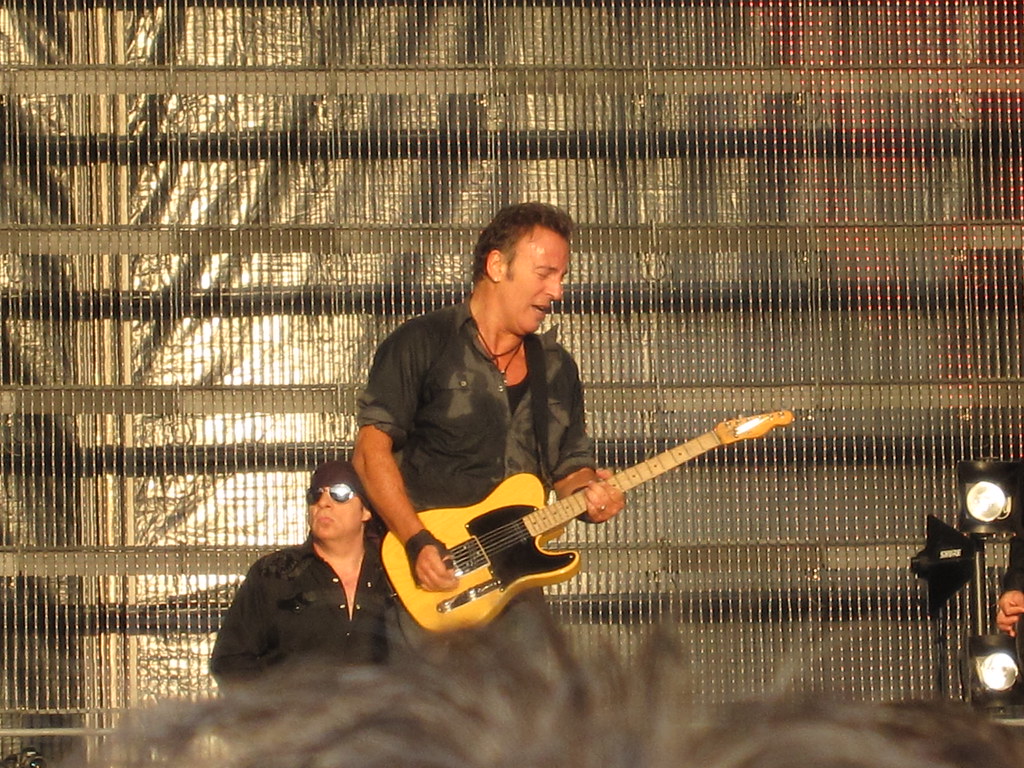
da ‘THE SOUND OF SILENCE’ a ‘THE TRACKS OF MY TEARS’
THE SOUND OF SILENCE
by Simon & Garfunkel (1965) – <And in the naked light I saw / Ten thousand people, maybe more / People talking without speaking / People hearing without listening / People writing songs that voices never share / No one dared / Disturb the sound of silence>. ASCOLTA SU YOUTUBE.
THE TIMES THEY ARE A-CHANGIN’
by Bob Dylan (1964) – <Come writers and critics, prophesize with your pen / And keep your eyes wide, the chance won’t come again / And don’t speak too soon for the wheel’s still in spin / And there’s no tellin’ who that it’s namin’ / For the loser now will be later to win / For the times, they are a-changin’>. ASCOLTA SU YOUTUBE.
THE THRILL IS GONE
by B. B. King (1969) – <I’m free from your spell / And now that it’s all over / All I can do is wish you well>. ASCOLTA SU YOUTUBE.
The tracks of my tears
by The Miracles (1965)
<Although I might be laughing loud and hearty / Deep inside I’m blue / So take a good look at my face / You’ll see my smile looks out of place>. ASCOLTA SU YOUTUBE.
da ‘THE WANDERER’ a ‘THUNDER ROAD’
THE WANDERER
by Dion (1961) – <They call me the wanderer / Yeah, the wanderer / I roam around, around, around>. ASCOLTA SU YOUTUBE.
THE WEIGHT
by The Band (1968) – <I pulled into Nazareth, was feelin’ about half past dead / I just need some place where I can lay my head / “Hey, mister, can you tell me where a man might find a bed?” / He just grinned and shook my hand, “No” was all he said>. ASCOLTA SU YOUTUBE.
THE WIND CRIES MARY
by Jimi Hendrix Experience (1965) – <A broom is drearily sweeping / Up the broken pieces of yesterday’s life / Somewhere a queen is weeping / Somewhere a king has no wife / And the wind, it cries Mary>. ASCOLTA SU YOUTUBE.
THIRTEEN
by Big Star (1972) – <Won’t you let me walk you home from school / Won’t you let me meet you at the pool / Maybe Friday I can get tickets for the dance / And I’ll take you / Ooh>. ASCOLTA SU YOUTUBE.
THUNDER ROAD
by Bruce Springsteen (1975) – <We got one last chance to make it real / To trade in these wings on some wheels / Climb in back, heaven’s waiting on down the tracks>. ASCOLTA SU YOUTUBE.
da ‘TIGHTEN UP’ a ‘TUTTI-FRUTTI’
TIGHTEN UP
by Archie Bell & the Drells (1968) – <Let’s tighten it up now / Do the tighten up / Everybody can do it now>. ASCOLTA SU YOUTUBE.
TIRED OF BEING ALONE
by Al Green (1971) – <Tired of being alone here by myself, now / I tell ya, I’m tired baby / I’m tired of being all wrapped up late at night>. ASCOLTA SU YOUTUBE.
TRAIN IN VAIN
by The Clash (1979) – <So alone I keep the wolves at bay / And there’s only one thing I can say / You didn’t stand by me / No, not at all / You didn’t stand by me / No way / You must explain why this must be / Did you lie when you spoke to me?>. ASCOLTA SU YOUTUBE. Photo: “Placeta Joe Strummer, Joe Strummer Square, The Clash, Spain, Andalucia, Granada” by Jeanne Menjoulet is licensed under CC BY-ND 2.0.

TRY A LITTLE TENDERNESS
by Otis Redding (1966) – <Watch her groove / You got to know what to do, man / Take this advice / You gotta love, squeeze, don’t tease>. ASCOLTA SU YOUTUBE.
TUTTI-FRUTTI
by Little Richard (1955) – <She rocks to the east / She rocks to the west / But she’s the girl that I love best>. ASCOLTA SU YOUTUBE.
Vai alla home page di SOKRATIKO.IT oppure torna in testa alla sezione CANZONI oppure torna all’inizio della lettera T
U – La musica rock è una filosofia di vita
UMBRELLA
by Rihanna featuring Jay-Z (2007) – <These fancy things will never come in between / You’re part of my entity, here for infinity / When the world has took its part / When the world has dealt its cards / If the hand is hard, together we’ll mend your heart>. ASCOLTA SU YOUTUBE.
UNCHAINED MELODY
by The Righteous Brothers (1965) – <Lonely rivers flow / To the sea, to the sea / To the open arms of the sea / Lonely rivers sigh / “Wait for me, wait for me” / I’ll be coming home, wait for me>. ASCOLTA SU YOUTUBE.
UNDER THE MILKY WAY
by The Church (1988) – <And it’s something quite peculiar / Something that’s shimmering and white / It leads you here despite your destination / Under the Milky Way tonight>. ASCOLTA SU YOUTUBE.
UP ON THE ROOF
by The Drifters (1962) – <When this old world starts getting me down / And people are just too much for me to face / I climb way up to the top of the stairs / And all my cares just drift right into space>. ASCOLTA SU YOUTUBE.
Vai alla home page di SOKRATIKO.IT oppure torna in testa alla sezione CANZONI oppure torna all’inizio della lettera U
V
VISIONS OF JOHANNA
by Bob Dylan (1966) – <Inside the museums, infinity goes up on trial / Voices echo this is what salvation must be like after a while / But Mona Lisa musta had the highway blues / You can tell by the way she smiles>. ASCOLTA SU YOUTUBE.
VOODOO CHILD
by Jimi Hendrix Experience (1968) – <I didn’t mean to take you up all your sweet time / I’ll give it right back to you one of these days>. ASCOLTA SU YOUTUBE.
Vai alla home page di SOKRATIKO.IT oppure torna in testa alla sezione CANZONI oppure torna all’inizio della lettera V
W – La musica rock è una filosofia di vita
da ‘WALK AWAY RENEE’ a ‘WAKE UP LITTLE SUSIE’
WALK AWAY RENEE
by The Left Banke (1966) – <The empty sidewalks on my block are not the same / You’re not to blame / From deep inside the tears that I’m forced to cry / From deep inside the pain that I chose to hide>. ASCOLTA SU YOUTUBE.
WALKING IN THE RAIN
by The Ronettes (1964) – <Though sometimes we’ll fight, I won’t really care / And I’ll know it’s gonna be alright ’cause we’ve got so much we share>. ASCOLTA SU YOUTUBE.
WALK ON BY
by Dionne Warwick (1964) – <If you see me walking down the street / And I start to cry each time we meet / Walk on by, walk on by>. ASCOLTA SU YOUTUBE.
WALK ON THE WILD SIDE
by Lou Reed (1972) – <Jackie is just speeding away / Thought she was James Dean for a day / Then I guess she had to crash / Valium would have helped that bash / She said, hey babe, take a walk on the wild side / I said, hey honey, take a walk on the wild side / And the colored girls say / Doo doo doo doo doo doo doo doo doo>. ASCOLTA SU YOUTUBE. Photo: “Lou Reed” by Mexicaans fotomagazijn is licensed under CC BY-NC 2.0.

WALK THIS WAY
by Run-DMC (1986) – <It wasn’t me, she was foolin’ / ‘Cause she knew what was she was doin’ / When she told me how to walk this way / She told me to / Walk this way / Talk this way / Walk this way / Talk this way>. ASCOLTA SU YOUTUBE.
WAKE UP LITTLE SUSIE
by The Everly Brothers (1957) – <The movie wasn’t so hot / It didn’t have much of a plot / We fell asleep / Our goose is cooked / Our reputation is shot>. ASCOLTA SU YOUTUBE.
da ‘WATCHING THE DETECTIVES’ a ‘WE WILL ROCK YOU’
WATCHING THE DETECTIVES
by Elvis Costello (1977) – <You think you’re alone until you realize you’re in it / Now fear is here to stay, love is here for a visit / They call it instant justice when it’s past the legal limit / Someone’s scratching at the window, I wonder who is it?>. ASCOLTA SU YOUTUBE.
WATERLOO SUNSET
by The Kinks (1968) – <Every day I look at the world from my window / Chilly chilly is the evening time, Waterloo sunset’s fine>. ASCOLTA SU YOUTUBE.
WE GOTTA GET OUT OF THIS PLACE
by The Animals (1965) – <We gotta get out of this place / If it’s the last thing we ever do / We gotta get out of this place / ‘Cause girl, there’s a better life for me and you>. ASCOLTA SU YOUTUBE.
WELCOME TO THE JUNGLE
by Guns N’ Roses (1987) – <Welcome to the jungle, we’ve got fun and games / We got everything you want honey, we know the names / We are the people that can find whatever you may need / If you got the money, honey we got your disease>. ASCOLTA SU YOUTUBE.
WE’VE ONLY JUST BEGUN
by Carpenters (1970) – <We’ve only just begun to live / White lace and promises / A kiss for luck and we’re on our way / (We’ve only begun)>. ASCOLTA SU YOUTUBE.
We will rock you
by Queen (1977)
<Buddy, you’re an old man, poor man / Pleading with your eyes, gonna get you some peace someday / You got mud on your face, big disgrace / Somebody better put you back into your place, do it!>. ASCOLTA SU YOUTUBE.
da ‘WHAT’D I SAY’ a ‘WHEN DOVES CRY’
WHAT’D I SAY
by Ray Charles (1959) – <When you see me in misery / Come on baby, see about me / Now yeah, hey hey, all right>. ASCOLTA SU YOUTUBE.
WHAT’S GOING ON
by Marvin Gaye (1971) – <There’s far too many of you dying / You know we’ve got to find a way / To bring some lovin’ here today, eheh>. ASCOLTA SU YOUTUBE.
WHAT’S LOVE GOT TO DO WITH IT
by Tina Turner (1984) – <I’ve been taking on a new direction / But I have to say / I’ve been thinking about my own protection / It scares me to feel this way oh oh oh>. ASCOLTA SU YUOTUBE.
La musica rock è una filosofia di vita
(WHAT’S SO FUNNY ‘BOUT) PEACE, LOVE AND UNDERSTANDING
by Elvis Costello and the Attractions (1979) – <As I walk through / This wicked world / Searchin’ for light in the darkness of insanity / I ask myself / Is all hope lost? / Is there only pain and hatred, and misery?>. ASCOLTA SU YOUTUBE.
WHEN A MAN LOVES A WOMAN
by Percy Sledge (1966) – <He’d give up all his comfort / Sleep out in the rain / If she said that’s the way it ought to>. ASCOLTA SU YOUTUBE.
WHEN DOVES CRY
by Prince (1984) – <Touch if you will my stomach / Feel how it trembles inside / You’ve got the butterflies all tied up / Don’t make me chase you / Even doves have pride>. ASCOLTA SU YOUTUBE.
da ‘WHERE DID OUR LOVE GO’ a ‘WHITE ROOM’
Where did our love go
by The Supremes (1964)
<I’ve got this burning, burning, yearning feelin’ inside me / Ooh, deep inside me, and it hurts so bad>. ASCOLTA SU YOUTUBE.
WHILE MY GUITAR GENTLY WEEPS
by The Beatles (1968) – <I don’t know why nobody told you / How to unfold your love / I don’t know how someone controlled you / They bought and sold you>. ASCOLTA SU YOUTUBE.
WHIPPING POST
by The Allman Brothers Band (1969) – <Drown myself in sorrow as I look at what you’ve done / But nothing seemed to change, the bad times stayed the same / And I can’t run>. ASCOLTA SU YOUTUBE.
(WHITE MAN) IN HAMMERSMITH PALAIS
by The Clash (1979) – <White youth, black youth / Better find another solution / Why not phone up Robin Hood / And ask him for some wealth distribution>. ASCOLTA SU YOUTUBE.
White rabbit
by Jefferson Airplane (1967)
<When logic and proportion have fallen sloppy dead / And the white knight is talking backwards / And the red queen’s off with her head / Remember what the dormouse said / Feed your head, feed your head>. ASCOLTA SU YOUTUBE.
WHITE ROOM
by Cream (1968) – <I’ll wait in this place where the sun never shines / Wait in this place where the shadows run from themselves>. ASCOLTA SU YOUTUBE.
da ‘WHO DO YOU LOVE?’ a ‘WHY DO FOOLS FALL IN LOVE’
WHO DO YOU LOVE?
by Bo Diddley (1957) – <Down below, you used to tell the truth / Now, you’re lookin’ for something to say / You give me those eyes / And then look away>. ASCOLTA SU YOUTUBE. PHOTO: “bo diddley” by masao nakagami is licensed under CC BY-SA 2.0.
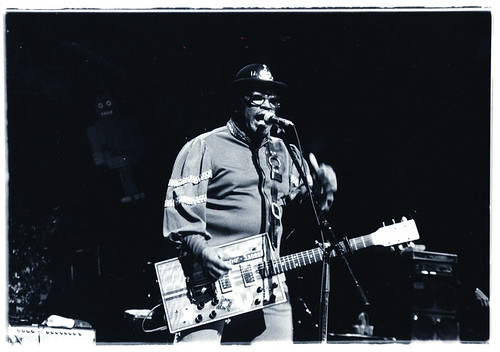
WHOLE LOTTA LOVE
by Led Zeppelin (1969) – <I wanna be your backdoor man / Hey, oh, hey, oh>. ASCOLTA SU YOUTUBE.
WHOLE LOTTA SHAKIN’ GOIN’ ON
by Jerry Lee Lewis (1957) – <Come on over baby / Really got the bull by the horn / We ain’t fakin’ / Whole lotta shakin’ goin’ on>. ASCOLTA SU YOUTUBE.
WHO’LL STOP THE RAIN
by Creedence Clearwater Revival (1970) – <As long as I remember / The rain’s been comin’ down / Clouds of mystery pourin’ / Confusion on the ground>. ASCOLTA SU YOUTUBE.
Who wants to live forever
by Queen (1986)
<There’s no chance for us / It’s all decided for us / This world has only one sweet moment set aside for us>. ASCOLTA SU YOUTUBE.
WHY DO FOOLS FALL IN LOVE
by Frankie Lymon and The Teenagers (1956) – <Why does my heart skip this crazy beat / Because it knows / It will reach defeat / Tell me why, tell me why / Why do fools fall in love?>. ASCOLTA SU YOUTUBE.
da ‘WICHITA LINEMAN’ a ‘WILL YOU LOVE ME TOMORROW’
WICHITA LINEMAN
by Glen Campbel (1968) – <I know I need a small vacation / But it don’t look like rain / And if it snows that stretch down south won’t ever stand the strain>. ASCOLTA SU YOUTUBE.
WILD HORSES
by The Rolling Stones (1971) – <I watched you suffer a dull aching pain / Now you’ve decided to show me the same / No sweeping exit or offstage lines / Could make me feel bitter or treat you unkind / Wild horses couldn’t drag me away / Wild, wild horses couldn’t drag me away>. ASCOLTA SU YOUTUBE.
WILD THING
by The Troggs (1966) – <You make everything groovy, wild thing / Wild thing, I think you move me / But I wanna know for sure / Come on and hold me tight / You move me>. ASCOLTA SU YOUTUBE.
WILLIAM, IT WAS REALLY NOTHING
by The Smiths (1984) – <This town has dragged you down / Oh, no, and everybody’s got to live their life / And God knows I’ve got to live mine / God knows I’ve got to live mine>. ASCOLTA SU YOUTUBE.
WILL YOU LOVE ME TOMORROW
by The Shirelles (1960) – <Is this a lasting treasure / Or just a moment’s pleasure>. ASCOLTA SU YOUTUBE.
da ‘WISH YOU WERE HERE’ a ‘WON’T GET FOOLED AGAIN’
Wish you were here
by Pink Floyd (1975)
<So, so you think you can tell / Heaven from hell / Blue skies from pain / Can you tell a green field / From a cold steel rail? / A smile from a veil? / Do you think you can tell?>. ASCOLTA SU YOUTUBE.
WITH A LITTLE HELP FROM MY FRIENDS
by The Beatles (1967) – <What would you think if I sang out of tune? / Would you stand up and walk out on me? / Lend me your ears and I’ll sing you a song / And I’ll try not to sing out of key>. ASCOLTA SU YOUTUBE.
WITH OR WITHOUT YOU
by U2 (1987) – <See the stone set in your eyes / See the thorn twist in your side>. ASCOLTA SU YOUTUBE.
WONDERFUL WORLD
by Sam Cooke (1960) – <Don’t know much about history / Don’t know much biology / Don’t know much about a science book / Don’t know much about the French I took>. ASCOLTA SU YOUTUBE.
WON’T GET FOOLED AGAIN
by The Who (1971) – <I’ll tip my hat to the new constitution / Take a bow for the new revolution / Smile and grin at the change all around / Pick up my guitar and play / Just like yesterday / Then I’ll get on my knees and pray / We don’t get fooled again / Don’t get fooled again, no no>. ASCOLTA SU YOUTUBE.
Vai alla home page di SOKRATIKO.IT oppure torna in testa alla sezione CANZONI oppure torna all’inizio della lettera W
Y
da ‘YESTERDAY’ a ‘YOU SEND ME’
YESTERDAY
by The Beatles (1965) – <Yesterday, all my troubles seemed so far away / Now it looks as though they’re here to stay / Oh, I believe in yesterday>. ASCOLTA SU YOUTUBE.
YOU ARE THE SUNSHINE OF MY LIFE
by Stevie Wonder (1972) – <You must have known that I was lonely / Because you came to my rescue>. ASCOLTA SU YOUTUBE.
YOU CAN’T ALWAYS GET WHAT YOU WANT
by The Rolling Stones (1969) – <And I went down to the demonstration / To get my fair share of abuse / Singing, “We’re gonna vent our frustration / If we don’t we’re gonna blow a fifty-amp fuse”>. ASCOLTA SU YOUTUBE.
La musica rock è una filosofia di vita
YOUNG AMERICANS
by David Bowie (1975) – <Well, well, well, would you carry a razor (oooh) / In case, just in case of depression? (oooh) / Sit on your hands on a bus of survivors / Blushing at all the Afro-Sheeners>. ASCOLTA SU YOUTUBE.
YOUNG BLOOD
by The Coasters (1957) – <I took one look and I was fractured / I tried to walk but I was lame / I tried to talk but I just stuttered: / What’s your name? What’s your name? / What’s your name? What’s your name?>. ASCOLTA SU YOUTUBE.
YOUR CHEATIN’ HEART
by Hank Williams (1953) – <The time will come / When you’ll be blue / Your cheatin’ heart / Will tell on you>. ASCOLTA SU YOUTUBE.
YOU REALLY GOT ME
by The Kinks (1964) – <See, don’t ever set me free / I always want to be by your side>. ASCOLTA SU YOUTUBE. Photo: “CD Inner 43” by Mark Morgan Trinidad B is licensed under CC BY 2.0.
YOUR SONG
by Elton John (1970) – <It’s a little bit funny this feeling inside / I’m not one of those who can easily hide, I / Don’t have much money but boy if I did / I’d buy a big house where we both could live>. ASCOLTA SU YOUTUBE.
YOU SEND ME
by Sam Cooke (1957) – <You, you, you, you send me / I know you send me / I know you send me / Honest you do>. ASCOLTA SU YOUTUBE.
Vai alla home page di SOKRATIKO.IT oppure torna in testa alla sezione CANZONI oppure torna all’inizio della lettera Y
Titoli con Numeri
99 PROBLEMS
by Jay-Z (2003) – <If you grew up with holes in your zapatos / You’d celebrate the minute you was having dough>. ASCOLTA SU YOUTUBE.
1999
by Prince (1982) – <But life is just a party and parties weren’t meant to last / War is all around us, my mind says prepare to fight / So if I gotta die I’m gonna listen to my body tonight>. ASCOLTA SU YOUTUBE.
Vai alla home page di SOKRATIKO.IT oppure torna in testa alla sezione CANZONI