

Canzoni A-F
La filosofia di vita rock schizza fuori da una gran quantità di brani musicali. Come quelli contenuti in questa sezione CANZONI A-F. Sono tantissimi, ma – per noi – mai troppi. Tanti altri ne arriveranno in futuro. Perché il rock (quello verace) è sempre assai più d’un genere musicale: è un modo di affrontare e intendere l’esistenza quotidiana. La musica rock è una filosofia di vita. Spregiudicata, irriverente, disinvolta. Certamente con limiti e difetti, ma viva, dinamica, potente. Oltre a questa sezione CANZONI A-F, visita anche le sezioni CANZONI G-O e CANZONI P-Z.
A (sei nella sezione A della pagina CANZONI A-F)
da ‘A CHANGE IS GONNA COME’ a ‘ALL YOU NEED IS LOVE’
A CHANGE IS GONNA COME
by Sam Cooke (1964) – <It’s been too hard living, but I’m afraid to die / ‘Cause I don’t know what’s up there, beyond the sky / It’s been a long, a long time coming / But I know a change gonna come, oh yes it will>. ASCOLTA SU YOUTUBE. Sul concetto di “cambiamento” vedi il termine greco antico <alloíōsis>.
A HARD DAY’S NIGHT
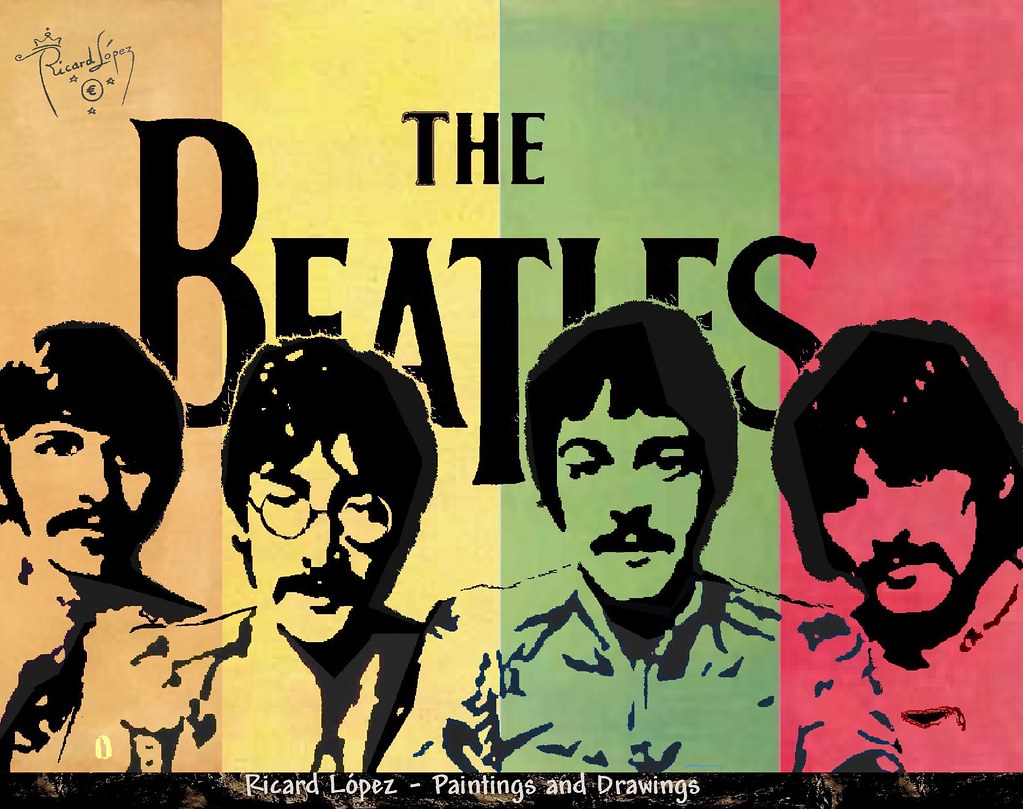
by The Beatles (1964) – <You know I work all day to get you money to buy you things / And it’s worth it just to hear you say you’re going to give me everything>. ASCOLTA SU YOUTUBE. Sul concetto di “lavoro” (inteso come “lavoro su di sé, addestramento”) vedi il termine greco antico <áskēsis>. Photo: “Beatles” by Ricard Lopez 1 is licensed under CC BY-NC 2.0.
AIN’T IT A SHAME
by Fats Domino (1955) – <Oh well goodbye / Although I’ll cry / Ain’t that a shame / My tears fell like rain / Ain’t that a shame / You’re the one to blame>. ASCOLTA SU YOUTUBE. Sul concetto di “emozione”, “sentimento”, “passione” vedi il termine greco antico <páthos>.
ALISON
by Elvis Costello (1977) – <Sometimes I wish that I could stop you from talking / When I hear the silly things that you say / I think somebody better put out the big light / Cause I can’t stand to see you this way>. ASCOLTA SU YOUTUBE. Il termine greco antico per esprimere il concetto di sopportazione è <kartería>.
All along the watchtower – Jimi Hendrix Experience (1968)
<There are many here among us / Who feel that life is but a joke / But, uh, but you and I, we’ve been through that / And this is not our fate>. ASCOLTA SU YOUTUBE. Sul concetto di “fato”, “destino” vedi il termine greco antico <heimarménē>. Photo: “5 Pointz Graffiti, Jimi Hendrix” by Bryan Pocius is licensed under CC BY 2.0.

ALL APOLOGIES
by Nirvana (1993) – <What else should I be / All apologies / What else could I say / Everyone is gay / What else could I write / I don’t have the right / What else should I be / All apologies>. ASCOLTA SU YOUTUBE. Il termine greco antico per esprimere il concetto di “scuse”, “apologies” è <syngnṓmē>.
ALL SHOOK UP
by Elvis Presley (1957) – <Well, my hands are shaky and my knees are weak / I can’t seem to stand on my own two feet / Who do you think of when you have such luck?>. ASCOLTA SU YOUTUBE. Sul concetto di “fortuna”, “luck” vedi il termine greco antico <eudaimonía>.
ALL THE YOUNG DUDES
by Mott the Hoople (1972) – <And my brother’s back at home with his Beatles and his Stones / We never got it off on that revolution stuff / What a drag, too many snags>. ASCOLTA SU YOUTUBE. Il termine greco antico per esprimere il concetto di “rivoluzione” è <metabolḗ>.
All you need is love – The Beatles (1967)
<There’s nothing you can do that can’t be done / Nothing you can sing that can’t be sung / Nothing you can say, but you can learn how to play the game / It’s easy>. ASCOLTA SU YOUTUBE. Sul concetto di “affetto”, “amore” “love” vedi il termine latino <affectus>.
da ‘ALONE AGAIN OR’ a ‘A WHITER SHADE OF PALE’ (sei nella sezione A della pagina CANZONI A-F)
ALONE AGAIN OR
by Love (1968) – <I think that people are the greatest fun / And I will be alone again tonight, my dear>. ASCOLTA SU YOUTUBE. Il termine greco antico per dire “popolo” è <dēmos>.
AMERICAN IDIOT
by Green Day (2004) – <Don’t wanna be an American idiot / One nation controlled by the media / Information age of hysteria / It’s calling out to idiot America>. ASCOLTA SU YOUTUBE. Il termine greco antico per dire “isterico” è <hysterikós>.
ANARCHY IN THE U.K.
by Sex Pistols (1977) – <How many ways to get what you want / I use the best, I use the rest>. ASCOLTA SU YOUTUBE. Sull’idea di “inclinazione”, “tensione”, “voglia”, vedi <órexis>.
ANOTHER BRICK IN THE WALL PART 2
by Pink Floyd (1979) – <We don’t need no education / We don’t need no thought control / No dark sarcasm in the classroom / Teachers leave them kids alone>. ASCOLTA SU YOUTUBE. Sulla nozione di “istruzione” vedi <paideía>.
A WHITER SHADE OF PALE
by Procol Harum (1967) – <And although my eyes were open / They might have just as well’ve been closed>. ASCOLTA SU YOUTUBE. Il termine greco antico per “occhi”, “eyes” è <ophthalmoí>.
Vai alla home page di SOKRATIKO.IT oppure torna in testa alla sezione CANZONI A-F oppure torna all’inizio della lettera A
B – La musica rock è una filosofia di vita (sei nella sezione B della pagina CANZONI A-F)
da ‘BABA O’RILEY’ a ‘BLUE SUEDE SHOES’
BABA O’RILEY
by The Who (1971) – <The exodus is here / The happy ones are near / Let’s get together / Before we get much older>. ASCOLTA SU YOUTUBE. La parola “exodus”, “uscita” proviene dal greco antico <éxodos>.
BACK IN BLACK
by Ac/Dc (1980) – <They’ve got to catch me if they want me to hang / ‘Cause I’m back on the track / And I’m beatin’ the flack / Nobody’s gonna get me on another rap>. ASCOLTA SU YOUTUBE. L’espressione greco-antica per “rimettersi in carreggiata” è <analambánein heautón>.
BAD MOON RISING
by Creedence Clearwater Revival (1969) – <I see a bad moon a-rising / I see trouble on the way / I see earthquakes and lightnin’ / I see bad times today / Don’t go ’round tonight / It’s bound to take your life / There’s a bad moon on the rise>. ASCOLTA SU YOUTUBE. Il greco antico per “cattivo presagio”, “bad moon rising” è <kakòs oiōnós>.
BEAST OF BURDEN
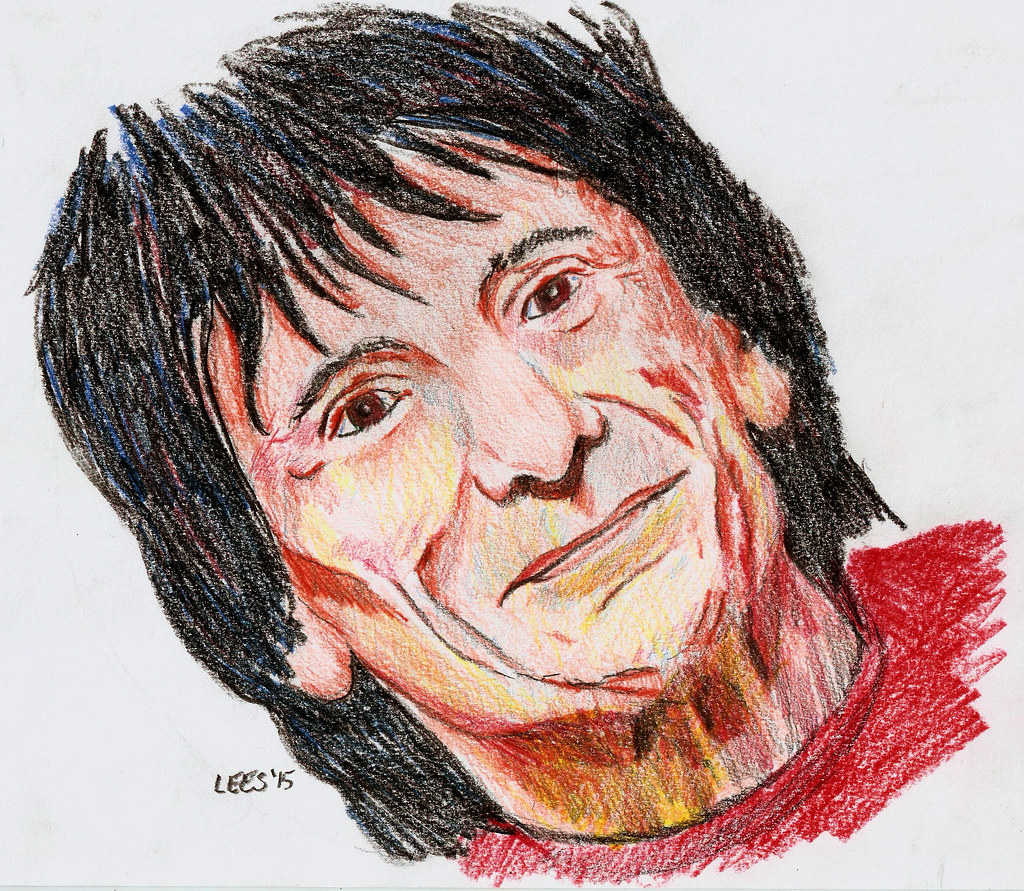
by The Rolling Stones (1978) – <I’ll tell ya / You can put me out / On the street / Put me out / With no shoes on my feet / But, put me out, put me out / Put me out of misery, yeah>. ASCOLTA SU YOUTUBE. L’espressione greco-antica per “liberami dal male”, “put me out of misery” è <apalláttō> o anche <eklýō>. Photo: “Ronnie Wood” by Tram Painter is licensed under CC BY-NC-ND 2.0.
BEAT IT
by Michael Jackson (1982) – <You have to show them that you’re really not scared / You’re playin’ with your life, this ain’t no truth or dare>. ASCOLTA SU YOUTUBE. La parola greco-antica per “verità”, “truth” è <alētheia>.
BEAUTIFUL DAY
by U2 (2000) – <What you don’t have you don’t need it now / What you don’t know you can feel it somehow / What you don’t have you don’t need it now / You don’t need it now, you don’t need it now / Beautiful day>. Per dire “bello”, “beautiful” l’aggettivo greco antico in forma neutra è <kalón>. ASCOLTA SU YOUTUBE.
BILLIE JEAN
by Michael Jackson (1983) – <And mother always told me be careful of who you love / And be careful of what you do ’cause the lie becomes the truth>. ASCOLTA SU YOUTUBE. Sul concetto di “allerta”, “vigilanza”, “attenzione”, vedi <prosochḗ>.
Bitter sweet symphony – The Verve (1997)
<‘Cause it’s a bittersweet symphony this life / Trying to make ends meet, you’re a slave to the money then you die>. ASCOLTA SU YOUTUBE. L’aggettivo greco-antico per “agrodolce”, “bittersweet” è <glykýpikros> unione di <γλυκύς – glykýs> (“dolce”) e <πικρός – pikrós> (“amaro”).
BIZARRE LOVE TRIANGLE
by New Order (1986) – <I feel fine and I feel good / I’m feeling like I never should / Whenever I get this way / I just don’t know what to say / Why can’t we be ourselves like we were yesterday>. ASCOLTA SU YOUTUBE. L’espressione greco-antica per “essere noi stessi”, “be ourselves” è <tē heautōn phýsei chrēsthai>.
BLACK DOG
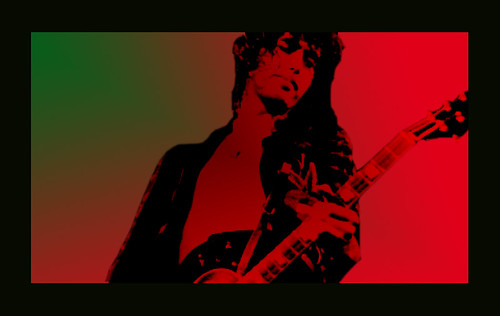
by Led Zeppelin (1971) – <Didn’t take too long ‘fore I found out / What people mean by down and out>. ASCOLTA SU YOUTUBE. Photo: “Jimmy Page” by Mr Bultitude is licensed under CC BY-NC-ND 2.0. La formula tragica greco-antica per “rovinato”, “distrutto”, “down and out” è <exolōlōs>.
BLITZKRIEG BOP
by Ramones (1976) – <They’re piling in the back seat / They’re generating steam heat / Pulsating to the back beat / The blitzkrieg bop>. ASCOLTA SU YOUTUBE. Per dire “calore vaporoso”, “calore umido” l’espressione in greco antico è <atmōdēs thermótēs>.
BLOWIN’ IN THE WIND
by Bob Dylan (1963) – <How many roads must a man walk down / Before you call him a man? / How many seas must a white dove sail / Before she sleeps in the sand?>. ASCOLTA SU YOUTUBE. La parola greco-antica per “colomba” è <peristerá>.
BLUEBERRY HILL
by Fats Domino (1956) – <I found my thrill / On Blueberry Hill / On Blueberry Hill / When I found you>. ASCOLTA SU YOUTUBE. In greco antico il verbo principale per dire “trovare” è <εὑρίσκω – heurískō>.
BLUE SUEDE SHOES
by Elvis Presley (1956) – <Well, you can knock me down / Step in my face / Slander my name / All over the place>. ASCOLTA SU YOUTUBE. “Ovunque”, “dappertutto” corrisponde al greco antico <pántē>.
BLUE SUEDE SHOES
by Carl Perkins (1956) – <You can burn my house / Steal my car / Drink my liquor / From an old fruitjar / Do anything that you want to do, but uh-uh / Honey, lay off of my shoes>. ASCOLTA SU YOUTUBE. L’equivalente in greco antico di “dolcezza”, “tesoro”, “honey” è <μέλι – méli>.
da ‘BO DIDDLEY’ a ‘BYE BYE LOVE’ (sei nella sezione B della pagina CANZONI A-F)
BO DIDDLEY
by Bo Diddley (1955) – <Bo Diddley, Bo Diddley have you heard? / My pretty baby said she wasn’t for it>. ASCOLTA SU YOUTUBE. Un modo greco antico per dire “la mia dolcezza ha detto di no”, “my pretty baby said she wasn’t for it” è <hē kalē paidískē mou éphē ouk ethélein>.
BOHEMIAN RHAPSODY
by Queen (1975) – <Too late, my time has come / Sends shivers down my spine / Body’s aching all the time / Goodbye everybody, I’ve got to go / Gotta leave you all behind and face the truth>. ASCOLTA SU YOUTUBE. L’espressione “guardare in faccia la realtà”, “to face the truth” in greco antico viene resa con <pròs tēn alētheian blépein>. Photo: “Freddie is alive” by mondopiccolo is licensed under CC BY-NC 2.0.

BOOM BOOM
by John Lee Hooker (1962) – <I love that talk / When you talk like that / You knock me out / Right off my feet / Ho ho ho ho>. ASCOLTA SU YOUTUBE. “Mi stendi”, “mi lasci senza fiato” equivale al greco antico <ekplētteis me>.
BORN IN THE U.S.A.
by Bruce Springsteen (1984) – <The first kick I took was when I hit the ground / You end up like a dog that’s been beat too much / ‘Til you spend half your life just coverin’ up>. ASCOLTA SU YOUTUBE. L’espressione greco-antica per “celare”, “occultare”, “tener nascosto”, “to cover up” è <synkalýptō>.
BORN TO BE WILD
by Steppenwolf (1968) – <Take the world in a love embrace / Fire all of your guns at once / And explode into space>. ASCOLTA SU YOUTUBE. Sul concetto di “esplosione cosmica”, “conflagrazione ciclica” vedi <ekpýrōsis>.
Born to run – Bruce Springsteen (1975)
<Together we could break this trap. / We’ll run ’til we drop, baby, we’ll never go back>. ASCOLTA SU YOUTUBE. In greco antico <ek tōn diktýōn diapheúgein> è un’espressione molto frequente della tragedia greca (soprattutto in Eschilo ed Euripide) e nei dialoghi di Platone per descrivere chi riesce a districarsi da una situazione senza via d’uscita, da una trappola (‘trap’).
BOTH SIDES NOW
by Joni Mitchell (1969) – <I’ve looked at clouds from both sides now / From up and down and still somehow / It’s cloud’s illusions I recall / I really don’t know clouds at all>. ASCOLTA SU YOUTUBE. Il termine greco antico per dire “nuvole”, “clouds” è <nephélai>.
BRIDGE OVER TROUBLED WATER
by Simon and Garfunkel (1970) – <When you’re down and out / When you’re on the street / When evening falls so hard / I will comfort you (ooo)>. ASCOLTA SU YOUTUBE. “Consolare”, “dare conforto”, “lenire le sofferenze” si dice in greco antico <parēgoréō>.
BRING THE NOISE
by Public Enemy (1988) – <Bass! How low can you go? / Death row, what a brother knows / Once again, back is the incredible / The rhyme animal>. ASCOLTA SU YOUTUBE. In greco antico <en pýlais thanátou> significa “alle porte della morte” (da <πύλη – pýlē>, “porta”), formula epica e tragica per indicare la vicinanza immediata e ineluttabile alla fine (“death row”, “braccio della morte”).
BROWN EYED GIRL
by Van Morrison (1967) – <So hard to find my way / Now that I’m all on my own / I saw you just the other day / My, how you have grown>. ASCOLTA SU YOUTUBE. In greco antico <érēmos eimí> significa “sono solo e abbandonato“, “I’m all on my own“.
BROWN EYED HANDSOME MAN
by Chuck Berry (1956) – <All the way home I held a grudge / For the safety belt that wouldn’t budge / Crusin’ and playin’ the radio / With no particular place to go>. ASCOLTA SU YOUTUBE. In greco antico l’equivalente poetico di “senza meta”, “with no particular place to go” è <πλάνης – plánēs>, “errante”, “vagabondo”, da cui deriva la parola “pianeta”.
BYE BYE LOVE
by The Everly Brothers (1957) – <I’m through with counting the stars above / And here’s the reason that I’m so free>. ASCOLTA SU YOUTUBE. Sul concetto di libertà vedi <eleuthería>.
Vai alla home page di SOKRATIKO.IT oppure torna in testa alla sezione CANZONI A-F oppure torna all’inizio della lettera B
C (sei nella sezione C della pagina CANZONI A-F)
da ‘CALIFORNIA DREAMIN’ a ‘CHAIN OF FOOLS’
CALIFORNIA DREAMIN’
by The Mamas and the Papas (1965) – <Stopped into a church I passed along the way / Well I got down on my knees / (got down on my knees) / And I pretend to pray / (I pretend to pray)>. ASCOLTA SU YOUTUBE. In greco antico “pregare”, “to pray” è <eúchomai>.
CALIFORNIA GIRLS
by The Beach Boys (1965) – <I been all around this great big world / And I seen all kinds of girls / Yeah, but I couldn’t wait to get back in the States / Back to the cutest girls in the world / I wish they all could be California girls>. ASCOLTA SU YOUTUBE. Uno dei termini greco-antichi per dire “ragazze”, “girls” è <kórai> (la traslitterazione <kórai> della parola greca <κόραι> con il significato di “ragazze” è la stessa possibile traslitterazione di <χῶραι> con il significato di “regioni”, anche se in quest’ultimo caso la migliore traslitterazione è <chôrai>).
CANDLE IN THE WIND
by Elton John (1973) – <Goodbye Norma Jean / Though I never knew you at all / You had the grace to hold yourself / While those around you crawled>. ASCOLTA SU YOUTUBE. Sul concetto di “grazia”, “grace” vedi <cháris>. Photo: “Sir Elton John, Oslo Spektrum 2014” by NRK P3 is licensed under CC BY-NC-SA 2.0.

CAN’T BUY ME LOVE
by The Beatles (1964) – <Tell me that you want the kind of things / That money just can’t buy / I don’t care too much for money / Money can’t buy me love>. Sulla nozione di “amore”, “love” vedi <affectus>. ASCOLTA SU YOUTUBE.
CAN’T HELP FALLING IN LOVE
by Elvis Presley (1961) – <Wise men say only fools rush in / But I can’t help falling in love with you / Shall I stay? / Would it be a sin / If I can’t help falling in love with you?>. ASCOLTA SU YOUTUBE. “Saggi”, inteso come “uomini saggi”, in greco antico si dice <sophoí>.
CAROLINE, NO
by The Beach Boys (1966) – <Who took that look away / I remember how you used to say / You’d never change, but that’s not true / Oh, Caroline you>. Sull’idea di “cambiamento”, “change” vedi <alloíōsis>. ASCOLTA SU YOUTUBE.
CATHY’S CLOWN
by The Everly Brothers (1960) – <I gotta stand tall / You know a man can’t crawl / When he knows you’re tellin’ lies and he hears ’em passing by / He’s not a man at all>. Il sostantivo neutro plurale in greco antico per dire “bugie”, “lies” è <pseúdē>. ASCOLTA SU YOUTUBE.
CHAIN OF FOOLS
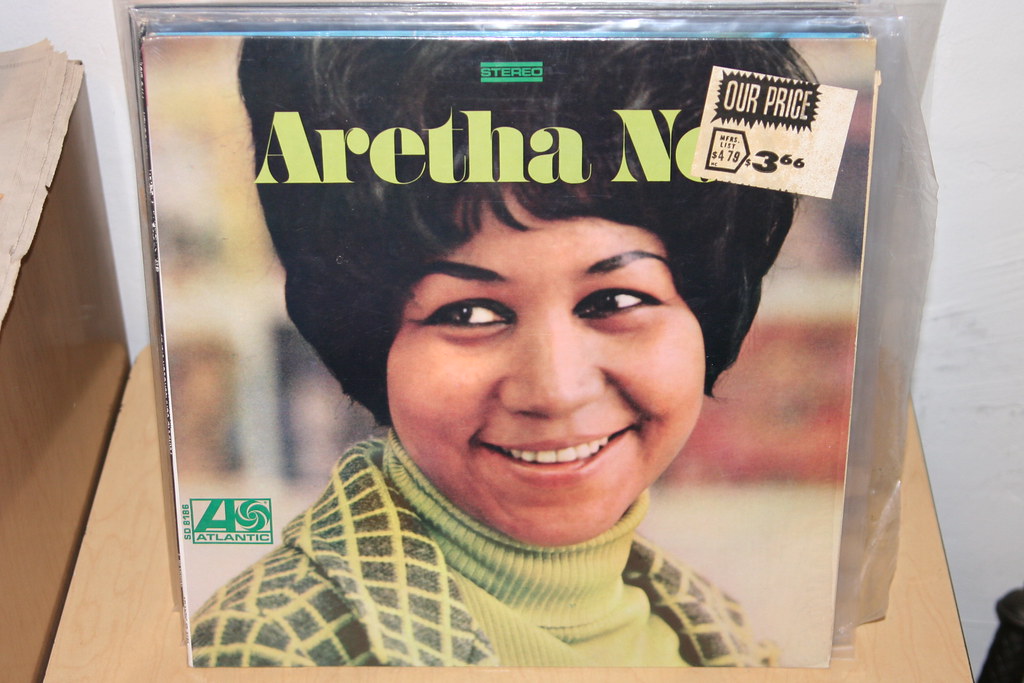
by Aretha Franklin (1967) – <Every chain, has got a weak link / I might be weak yeah / But I’ll give you strength / Oh, hey>. Sul concetto di “forza”, “fortezza d’animo”, “strenght” vedi <andreía>. ASCOLTA SU YOUTUBE. Photo: “IMG_5898” by Public Collectors is licensed under CC BY-NC-SA 2.0.
da ‘CHANGES’ a ‘CORTEZ THE KILLER’ (sei nella sezione C della pagina CANZONI A-F)
CHANGES
by David Bowie (1971) – <Every time I thought I’d got it made / It seemed the taste was not so sweet / So I turned myself to face me / But I’ve never caught a glimpse>. ASCOLTA SU YOUTUBE. “Dolce”, “sweet”, inteso come gradevole, in greco antico è <hēdýs>.
CLOCKS
by Coldplay (2002) – <The lights go out and I can’t be saved / Tides that I tried to swim against / Have brought me down upon my knees / Oh I beg, I beg and plead, singing>. ASCOLTA SU YOUTUBE. Il verbo greco antico (poetico) per “implorare”, “to beg”, “to plead” è <líssomai>.
C’MON EVERYBODY
by Eddie Cochran (1958) – <Well we’ll really have a party but we gotta put a guard outside / If the folks come home I’m afraid they’re gonna have my hide>. ASCOLTA SU YOUTUBE. Una delle parole greco-antiche per dire “festa”, “party” è <sympósion> (vedi anche il Simposio di Platone.
COME TOGETHER
by The Beatles (1969) – <He say I know you, you know me / One thing I can tell you is / You got to be free / Come together, right now / Over me>. A proposito di “libero”, “free” vedi <eleuthería>. ASCOLTA SU YOUTUBE.
Comfortably numb – Pink Floyd (1979)
<When I was a child I had a fever / My hands felt just like two balloons / Now I’ve got that feeling once again / I can’t explain you would not understand>. ASCOLTA SU YOUTUBE. A proposito di “sensazione”, “feeling” vedi <páthos>.
COMPLETE CONTROL
by The Clash (1979) – <Ooh ooh ooh have we done something wrong? / Ooh ooh ooh complete control, even over this song>. Sulla nozione di “sbagliato”, “fatto male”, “wrong” vedi <hamártēma>. ASCOLTA SU YOUTUBE.
CORTEZ THE KILLER
by Neil Young (1975) – <Hate was just a legend / And war was never known / The people worked together>. ASCOLTA SU YOUTUBE. Il termine greco antico (di uso poetico) per “odio”, “hate” è <stýgos>.
da ‘CRAZY’ a ‘CUPID’ (sei nella sezione C della pagina CANZONI A-F)
CRAZY
by Gnarls Barkley (2006) – <I remember when / I remember, I remember when I lost my mind / There was something so pleasant about that place / Even your emotions have an echo in so much space>. ASCOLTA SU YOUTUBE. Il greco antico di “eco”, “echo” è <ēchṓ>.
CRAZY
by Patsy Cline (1961) – <Crazy / I’m crazy for feeling so lonely / I’m crazy / Crazy for feeling so blue>. ASCOLTA SU YOUTUBE. L’equivalente di “pazzo”, “crazy” in greco antico è <manikós> (vedi <manía>).
CRAZY IN LOVE
by Beyonce featuring Jay-Z (2003) – <They can’t figure him out; they like, “hey, is he insane?” / Yes, sir, I’m cut from a different cloth / My texture is the best fur, chinchilla / (Uh oh, uh oh, uh oh, oh, no, no) I been iller than chain smokers>. ASCOLTA SU YOUTUBE. Per dire “malato”, “ill” uno dei termini usati dai greci antichi è <nosôn>.
CRYING
by Roy Orbison (1961) – <Then you said, “So long” / Left me standing all alone / Alone and crying / Crying>. ASCOLTA SU YOUTUBE. Una formula di saluto del greco antico simile ad “addio”, “so long” è <chaîre>.
CUPID
by Sam Cooke (1961) – <Now, I don’t mean to bother you / But I’m in distress / There’s danger of me losing all of my happiness / For I love a girl who doesn’t know I exist / And this you can fix>. ASCOLTA SU YOUTUBE. Sull’idea di “felicità”, “happyness” vedi <eudaimonía>.
Vai alla home page di SOKRATIKO.IT oppure torna in testa alla sezione CANZONI A-F oppure torna all’inizio della lettera C
D – La musica rock è una filosofia di vita (sei nella sezione D della pagina CANZONI A-F)
da ‘DANCE TO THE MUSIC’ a ‘DESOLATION ROW’
DANCE TO THE MUSIC
by Sly & the Family Stone (1968) – <All we need is a drummer / For people who only need a beat, yeah>. ASCOLTA SU YOUTUBE. I greci antichi usavano <chrḗzō> come forma poetica (Omero e Sofocle, per esempio) per dire “aver bisogno”, “desiderare vivamente”, “need”.
DANCING BAREFOOT
by Patti Smith (1979) – <I’m dancing barefoot / Heading for a spin / Some strange music draws me in / Makes me come on like some heroine>. ASCOLTA SU YOUTUBE. La parola greco-antica di uso poetico per “eroina”, “heroine” è <hērōḯs>. Photo: “04092011-DSC_1590” by brixton21 is licensed under CC BY-NC-ND 2.0.

DANCING IN THE STREET
by Martha Reeves and the Vandellas (1964) – <Oh, it doesn’t matter what you wear / Just as long as you are there>. ASCOLTA SU YOUTUBE. Sul concetto di “irrilevanza”, “indifferenza”, “it doesn’t matter” vedi <adiáphoron>.
DANCING QUEEN
by Abba (1976) – <Night is young and the music’s high / With a bit of rock music / Everything is fine>. ASCOLTA SU YOUTUBE. L’equivalente greco antico di “va tutto a meraviglia”, “va tutto benissimo”, “everything is fine” è <pánta árista échei>.
DA YA THINK I’M SEXY?
by Rod Stewart (1978) – <Now hold on a minute before we go much further / Give me a dime so I can phone my mother>. ASCOLTA SU YOUTUBE. In greco antico “madre”, “mother” si esprime principalmente con <mḗtēr>.
DESOLATION ROW
by Bob Dylan (1965) – <And someone says, “You’re in the wrong place, my friend, you’d better leave” / And the only sound that’s left after the ambulances go / Is Cinderella sweeping up on Desolation Row>. ASCOLTA SU YOUTUBE. In greco antico l’espressione per indicare un “luogo inopportuno”, un “posto sfavorevole o inadatto al momento e alle circostanze”, “wrong place” si dice <ákairos tópos>.
da ‘DON’T BE CRUEL’ a ‘DREAM ON’ (sei nella sezione D della pagina CANZONI A-F)
Don’t be cruel – Elvis Presley (1956)
<I don’t wanna be a tiger / ‘Cause tigers play too rough / I don’t wanna be a lion /‘Cause lions ain’t the kind you love enough>. ASCOLTA SU YOUTUBE. La parola greco-antica per dire “selvatico”, “feroce”, brutale”, “cruel” è <ágrios>.
(DON’T FEAR) THE REAPER
by Blue Oyster Cult (1976) – <All our times have come / Here but now they’re gone / Seasons don’t fear the reaper / Nor do the wind, the sun or the rain, we can be like they are>. ASCOLTA SU YOUTUBE. In greco antico <átropos> è una delle tre Moire (le Parche), colei che “non si può volgere”, incaricata di recidere con le cesoie il filo della vita umana. È la figura mitologica greca più vicina alla funzione della morte mietitrice di anime, “reaper”.
DON’T LET ME BE MISUNDERSTOOD
by The Animals (1965) – <Sometimes I feel a little mad / But don’t you know that no one alive can always be an angel>. ASCOLTA SU YOUTUBE. Sul concetto di “spirito guida”, “angel” vedi <daímōn>.
DO YOU BELIEVE IN MAGIC
by The Lovin’ Spoonful (1965) – <If you believe in magic don’t bother to choose / If it’s jug band music or rhythm and blues / Just go and listen it’ll start with a smile / It won’t wipe off your face no matter how hard you try>. ASCOLTA SU YOUTUBE. “Magia” e “magic” sono parole derivate dal greco antico <mageía>.
DREAM ON
by Aerosmith (1973) – <Half my life / Is books, written pages / Live and learn from fools and / From sages>. ASCOLTA SU YOUTUBE. La parola standard più diffusa nella Grecia antica per indicare “libri”, “pagine scritte”, “books” è <biblía>.
Vai alla home page di SOKRATIKO.IT oppure torna in testa alla sezione CANZONI A-F oppure torna all’inizio della lettera D
E (sei nella sezione E della pagina CANZONI A-F)
da ‘EARTH ANGEL’ a ‘ENTER SANDMAN’
EARTH ANGEL
by The Penguins (1954) – <The vision of your loveliness / I hope and I pray, that someday / That I’ll be the vision of your happiness>. ASCOLTA SU YOUTUBE. In greco antico <eúchomai> significa “mi auguro”, “desidero vivamente”, “prego che accada”, “I hope and I pray”.
EIGHT MILES HIGH
by The Byrds (1966) – <Nowhere is / There warmth to be found / Among those afraid / Of losing their ground>. ASCOLTA SU YOUTUBE. Sul concetto di “perdere”, “mancare il bersaglio”, “to lose” vedi <hamartánō>.
ELEANOR RIGBY
by The Beatles (1966) – <All the lonely people / Where do they all come from? / All the lonely people / Where do they all belong?>. ASCOLTA SU YOUTUBE. In greco antico <hoi mónoi> significa “le persone sole”, “the lonely people”.
ENTER SANDMAN
by Metallica (1991) – <Somethings wrong, shut the light / Heavy thoughts tonight / And they aren’t of Snow White / Dreams of war, dreams of liars / Dreams of dragon’s fire>. ASCOLTA SU YOUTUBE. Le parole greche antiche <óneiroi> e <oneírata> (singolare: <óneiros> e <óneiron> sono le parole standard e più diffuse per indicare i sogni notturni. <Óneiroi> è la forma più comune nella prosa e nella poesia epica, mentre <oneírata> sottolinea le singole visioni sognate (da questa radice deriva l’italiano “onirico”).
da ‘EVERYBODY NEEDS SOMEBODY TO LOVE’ a ‘EVERYDAY PEOPLE’ (sei nella sezione E della pagina CANZONI A-F)
Eberybody needs somebody to love – Solomon Burke (1964)
<Let me tell you something / Sometimes you get what you want / And you lose what you have / There’s a song I sing / And I believe that if everybody would sing this song you can save the whole world / Listen to me>. ASCOLTA SU YOUTUBE. In greco antico <molpḗ> indica il canto gioioso unito alla danza e al suono degli strumenti, tipico delle celebrazioni e delle feste.
EVERY BREATH YOU TAKE
by The Police (1983) – <Every breath you take and every move you make / Every bond you break, every step you take, I’ll be watching you>. ASCOLTA SU YOUTUBE. Su “respiro”, “breath” vedi <pneûma>.
EVERYDAY
by Buddy Holly & The Crickets (1957) – <Everyday it’s a-getting closer / Going faster than a rollercoaster>. ASCOLTA SU YOUTUBE. In greco antico <parà mikròn érchomai> è l’espressione idiomatica per “andarci vicino per un pelo”, “arrivare a un soffio da”, “getting closer”.
EVERYDAY PEOPLE
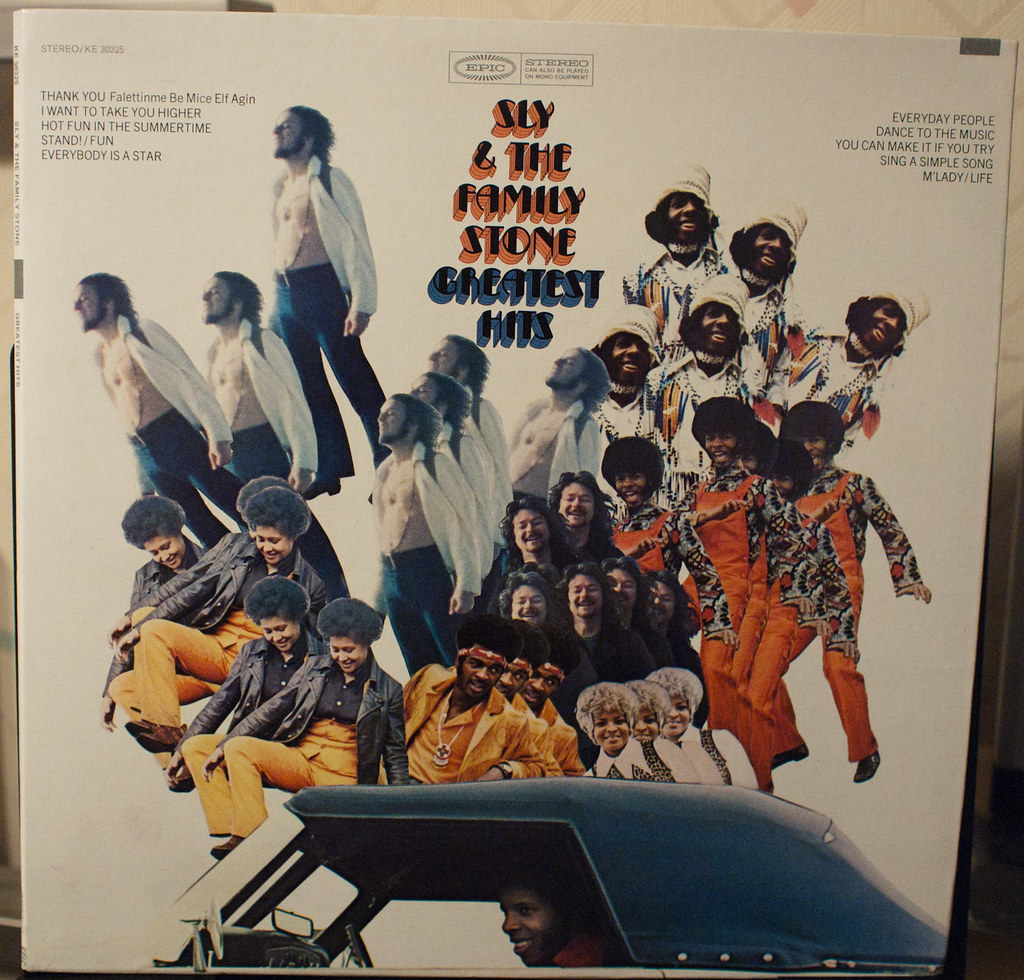
by Sly & the Family Stone (1968) – <I am no better and neither are you / We are the same whatever we do / You love me you hate me you know me and then / You can’t figure out the bag I’m in / I am everyday people, yeah yeah>. ASCOLTA SU YOUTUBE. In greco antico <hoi polloí> significa letteralmente “i molti” ed è l’espressione per indicare la “gente comune”, la “maggioranza ordinaria delle persone”, “everyday people”. Photo: “RSD 2011-12” by Mmm…Bacon! is licensed under CC BY-NC-ND 2.0.
Vai alla home page di SOKRATIKO.IT oppure torna in testa alla sezione CANZONI A-F oppure torna all’inizio della lettera E
F – La musica rock è una filosofia di vita (sei nella sezione F della pagina CANZONI A-F)
da ‘FAIRGROUND’ a ‘FIRE AND RAIN’
FAIRGROUND
by Simply Red (1995) – <And I love the thought of coming home to you / Even if I know we can’t make it / Yes, I love the thought of giving hope to you / Just a little ray of light shining through>. ASCOLTA SU YOUTUBE. “Raggio di luce”, “ray of light” in greco antico è <aktís>.
FAKE PLASTIC TREES
by Radiohead (1995) – <He used to do surgery / For girls in the eighties / But gravity always wins>. ASCOLTA SU YOUTUBE. In greco antico <cheirourgía> (composto da <cheír> (mano) ed <érgon> (lavoro, opera) significa letteralmente “lavoro manuale”. È la parola da cui deriva l’italiano “chirurgia” (inglese “surgeon”) e indica sia la pratica medica sia il singolo intervento chirurgico.
FAMILY AFFAIR
by Sly & the Family Stone (1971) – <One child grows up to be / Somebody that just loves to learn / And another child grows up to be / Somebody you’d just love to burn>. ASCOLTA SU YOUTUBE. In greco antico <paideúomai> (infinito: <paideúesthai>). significa “essere istruito”, “formarsi”, “imparare attraverso la cultura e l’educazione”, “to learn” (legato al concetto greco di <paideía>).
FAST CAR
by Tracy Chapman (1988) – <You got a fast car / Is it fast enough so we can fly away / We gotta make a decision / Leave tonight or live and die this way>. ASCOLTA SU YOUTUBE. Per dire “spiccare il volo”, “volar via”, “innalzarsi in cielo”, “fly away” i greci antichi usavano <anapétomai> (infinito: anapétesthai>).
FIGHT THE POWER
by Public Enemy (1989) – <People, people we are the same / No we’re not the same / Cause we don’t know the game / What we need is awareness, we can’t get careless>. ASCOLTA SU YOUTUBE. <Epígnōsis> indica, in greco antico, il “riconoscimento chiaro”, la “piena cognizione”, la “presa di coscienza approfondita” di una realtà o di una situazione (il prefisso epi- rafforza l’idea di una conoscenza piena e diretta), la “consapevolezza”, “awareness”. Sul concetto di scelta consapevole vedi <prohaíresis>.
Fire and rain – James Taylor (1970)
<I’ve seen fire and I’ve seen rain / I’ve seen sunny days that I thought would never end / I’ve seen lonely times when I could not find a friend / But I always thought that I’d see you again>. ASCOLTA SU YOUTUBE. L’espressione “fuoco e pioggia”, “fire and rain” può essere resa in greco antico con <pŷr te kaì ómbros>.
da ‘FLASH LIGHT’ a ‘FREE FALLIN’ (sei nella sezione F della pagina CANZONI A-F)
FLASH LIGHT
by Parliament (1977) – <Now I lay me down to sleep / I guess I’ll go count the sheep / Ha da da dee da hada hada da da (oh)>. ASCOLTA SU YOUTUBE. <Heúdō> (infinito: <heúdein>) è la forma semplice e prevalentemente poetica (molto usata da Omero e dai tragici) per dire “dormire”, “to sleep” in greco antico.
FOLSOM PRISON BLUES
by Johnny Cash (1956) – <My Mama told me, “son / Always be a good boy / Don’t ever play with guns” / But I shot a man in Reno / Just to watch him die>. ASCOLTA SU YOUTUBE. Nella Grecia antica (ad esempio ad Atene) la “prigione” (“prison”) era intesa soprattutto come il luogo in cui si veniva tenuti in catene in attesa del processo o della condanna: <desmōtḗrion>.
FORTUNATE SON
by Creedence Clearwater Revival (1969) – <Some folks are born silver spoon in hand / Lord, don’t they help themselves, oh / But when the taxman comes to the door / Lord, the house looks like a rummage sale, yes>. ASCOLTA SU YOUTUBE. Sul concetto di “Dio”, “Lord” vedi <theós>.
FOR WHAT IT’S WORTH
by Buffalo Springfield (1967) – <Paranoia strikes deep / Into your life it will creep / It starts when you’re always afraid / You step out of line, the man come and take you away>. ASCOLTA SU YOUTUBE. Il termine greco antico <hypopsía> indica il sospetto, la diffidenza, il timore continuo di un inganno o di un complotto nascosto. È il termine più vicino alla componente persecutoria della “paranoia” moderna.
FOXEY LADY
by Jimi Hendrix Experience (1965) – <Now-a I see you come down on the scene / Oh foxey / You make me want to get up and a scream>. ASCOLTA SU YOUTUBE. <Anakrázō> (infinito: <anakrázein>) significa “mettersi a urlare”, “cacciare un grido improvviso”, “to scream”.
FREE BIRD
by Lynyrd Skynyrd (1973) – <If I leave here tomorrow / Would you still remember me?>. ASCOLTA SU YOUTUBE. <Mimnḗskomai> (infinito: <mimnḗskesthai>) è il verbo più utilizzato dai greci antichi per indicare l’azione di richiamare alla mente (“remember”) o ricordarsi di qualcuno o qualcosa.
FREE FALLIN’
by Tom Petty (1989) – <All the vampires, walkin’ through the valley / Move west down Ventura Boulevard / And all the bad boys are standing in the shadows / And the good girls are home with broken hearts>. ASCOLTA SU YOUTUBE. <Kardíai syntetrimménai> significa letteralmente “cuori frantumati”, “cuori affranti”, “broken hearts”. Deriva dal verbo <syntríbō > (“spezzare”, “schiacciare”, “affliggere profondamente”) ed è un’espressione attestata nel greco ellenistico (come nella traduzione greca dei Salmi) per indicare l’animo distrutto dal dolore.
Photo: “Tom Petty” by Mexicaans fotomagazijn is licensed under CC BY-NC 2.0.

Vai alla home page di SOKRATIKO.IT oppure torna in testa alla sezione CANZONI A-F oppure torna all’inizio della lettera F