

Canzoni G-O
L’autentica vena rock SCORRE in un numero enorme di pezzi musicali. Ce ne sono moltissimi, ma a noi non sembrano mai abbastanza. E tanti altri ne verranno ancora. Il rock autentico, infatti, supera i confini di un semplice stile artistico: è una lente attraverso cui guardare e vivere la quotidianità. Il rock è un vero credo. Sfrontato, provocatorio, spontaneo. Magari pieno di difetti e sbavature, eppure vibrante, inarrestabile, dirompente.
G
da ‘GEORGIA ON MY MIND’ a ‘GOD SAVE THE QUEEN’
GEORGIA ON MY MIND
by Ray Charles (1960) – <Other arms reach out to me / Other eyes smile tenderly / Still in peaceful dreams I see / The road leads back to you>. ASCOLTA SU YOUTUBE. <Hē opísō hodós> significa in greco antico “la via all’indietro”, “the road leading back”, cioè il percorso fatto a ritroso per tornare.
GET UP, STAND UP
by Bob Marley and the Wailers (1975) – <It’s not all that glitters is gold / ‘Alf the story has never been told / So now you see the light, eh! / Stand up for your rights, come on!>. ASCOLTA SU YOUTUBE. In greco antico “oro”, “gold” è <chrysós>.
GIMME SHELTER
by The Rolling Stones (1969) – <Oh, a storm is threat’ning / My very life today / If I don’t get some shelter / Oh yeah, I’m gonna fade away>. ASCOLTA SU YOUTUBE. Il termine greco antico per “riparo”, “shelter” è <sképas>.
GIMME SOME LOVIN’
by The Spencer Davis Group (1966) – <Well my temperature’s rising and my feet on the floor / Crazy people knocking ’cause they’re wanting some more>. ASCOLTA SU YOUTUBE. Per indicare “temperatura alta a causa di febbre” i greci antichi usavano il termine <pyretós>.
Gloria – Them (1965)
<G-L-O-R-I-A / Gloria! / G-L-O-R-I-A / Gloria! / I’m gonna shout it all night / Gloria! / I’m gonna shout it every day / Gloria! / Yeah, yeah, yeah, yeah, yeah>. ASCOLTA SU YOUTUBE. L’equivalente greco antico di “ogni giorno”, “every day” è <kathēméran>.
GOD ONLY KNOWS
by The Beach Boys (1966) – <The world could show nothing to me / So what good would living do me>. ASCOLTA SU YOUTUBE. Sul concetto di “mondo”, “world” vedi <kósmos>.
GOD SAVE THE QUEEN
by Sex Pistols (1977) – <Don’t be told what you want / Don’t be told what you need / There’s no future / No future / No future for you>. ASCOLTA SU YOUTUBE. <Tà méllonta> in greco antico significa letteralmente “le cose che stanno per accadere”, “il futuro”.
da ‘GOODBYE YELLOW BRICK ROAD’ a ‘GREEN ONIONS’
GOODBYE YELLOW BRICK ROAD
by Elton John (1973) – <When are you gonna come down? / When are you going to land? / I should have stayed on the farm / I should have listened to my old man>. ASCOLTA SU YOUTUBE. Nella Grecia antica (specialmente nel teatro comico di Aristofane e Menandro, dove il dialogo familiare era molto vivo) i figli si riferivano spesso al padre anziano chiamandolo affettuosamente “il mio vecchio” <ho emòs gérōn>, proprio come nelle espressioni moderne.
GOOD GOLLY, MISS MOLLY
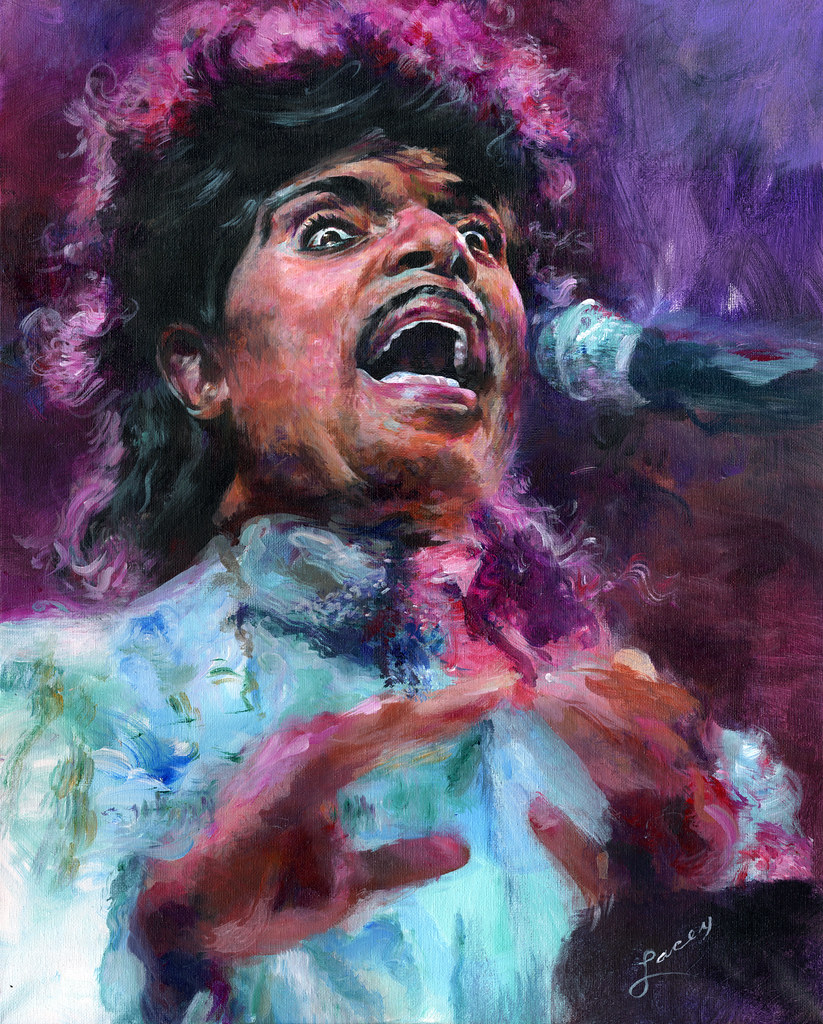
by Little Richard (1958) – <From the early, early mornin’ till the early, early night / You can see miss Molly rockin’ at the house of blue light>. ASCOLTA SU YOUTUBE. In greco antico <prōí> è il termine base per dire “di buon mattino”, “early morning”. Photo: “Little Richard Tribute Portrait” by Dan Lacey is licensed under CC BY-NC 2.0.
GOOD TIMES
by Chic (1979) – <A rumor has it that it’s getting late / Time marches on, just can’t wait / The clock keeps turning, why hesitate / You silly fool, you can’t change your fate>. ASCOLTA SU YOUTUBE. Sul concetto di “destino”, “fato” vedi <heimarménē>.
GOOD VIBRATIONS
by The Beach Boys (1966) – <I-I love the colorful clothes she wears / And the way the sunlight plays upon her hair / I hear the sound of a gentle word / On the wind that lifts her perfume through the air>. ASCOLTA SU YOUTUBE. Una delle formule poetiche del greco antico per dire “luce solare”, “sunlight” è <hēlíou sélas>.
GO YOUR OWN WAY
by Fleetwood Mac (1977) – <Tell me why / Everything turned around / Packing up / Shacking up is all you want to do>. ASCOLTA SU YOUTUBE. Una formula colloquiale in greco antico per dire “dimmi perché”, “tell me why” è <eipé moi tí>.
GREAT BALLS OF FIRE
by Jerry Lee Lewis (1957) – <You broke my will, but what a thrill / Goodness gracious, great balls of fire>. ASCOLTA SU YOUTUBE. Fra le tante possibili varianti greco-antiche per dire “palle di fuoco”, “sfere infuocate”, “balls of fire” suggeriamo <pyròs sphaîrai> molto frequente in poesia o in contesti più enfatici per dare risalto all’elemento del fuoco.
GREEN ONIONS
by Booker T. & the M.G.s (1962) – <Well people, I’m gonna tell you something / This continent, North America is the stronghold / This is where we’re gonna make our stand in this decade, yeah>. ASCOLTA SU YOUTUBE. <Phroúrion> è il termine militare greco antico più comune per indicare “fortino”, “presidio”, “roccaforte”, “stronghold”.
Vai alla home page di SOKRATIKO.IT oppure torna in testa alla sezione CANZONI G-O oppure torna all’inizio della lettera G
H – La musica rock è una filosofia di vita
da ‘HALLELUJAH’ a ‘HELP ME’
HALLELUJAH
by Jeff Buckley (1994) – <But baby I’ve been here before / I’ve seen this room and I’ve walked this floor / You know, I used to live alone before I knew ya / And I’ve seen your flag on the marble arch / And love is not a victory march / It’s a cold and it’s a broken Hallelujah>. ASCOLTA SU YOUTUBE. In greco antico il concetto di “bandiera, “flag” non corrisponde esattamente alle bandiere nazionali moderne, ma si esprime con termini indicanti insegne militari, vessilli o segnali visivi: <sē̂ma> è il sostantivo più antico (usato già in Omero e nella poesia).
HEARTBREAK HOTEL
by Elvis Presley (1956) – <Oh, although it’s always crowded / You still can find some room / For broken hearted lovers / To cry away their gloom>. ASCOLTA SU YOUTUBE. “Affollato”, “crowded” può essere reso in greco antico dalla perifrasi “pieno di persone” <plḗrēs anthrṓpōn>.
HEARTBREAKER
by Led Zeppelin (1969) – <Some people cry and some people die / By the wicked ways of love / But I’ll just keep on rollin’ along / With the grace of the Lord above>. ASCOLTA SU YOUTUBE. Sul concetto di “Dio”, “Lord” vedi <theós>.
HEART OF GLASS
by Blondie (1978) – <Lost inside / Adorable illusion and I cannot hide / I’m the one you’re using, please don’t push me aside / We coulda made it cruising, yeah>. ASCOLTA SU YOUTUBE. In greco antico <ē̂tor> è uno dei termini poetici ed epici (neutro e indeclinabile) per designare il “cuore”, “heart” in senso figurato, spesso tradotto come “animo”, “petto” o “spirito vitale”.
HEART OF GOLD
by Neil Young (1972) – <I’ve been to Hollywood / I’ve been to Redwood / I crossed the ocean for a heart of gold / I’ve been in my mind / It’s such a fine line / That keeps me searching for a heart of gold>. <Kē̂r> è un sostantivo neutro, contrazione di <kéar>. Viene usato in greco antico quasi esclusivamente in poesia per indicare il “cuore”, “heart” come sede delle passioni, della vita o del destino. ASCOLTA SU YOUTUBE. Photo: “Neil Young” by yle.fi/pop is licensed under CC BY-NC-SA 2.0.

HELP
by The Beatles (1965) – <When I was younger, so much younger than today / I never needed anybody’s help in any way / But now these days are gone, I’m not so self assured / Now I find I’ve changed my mind and opened up the doors>. Per indicare “aiuto”, “help” uno dei termini in greco antico è <boḗtheia>. ASCOLTA SU YOUTUBE.
HELP ME
by Joni Mitchell (1974) – <When I get that crazy feeling, I know / I’m in trouble again / I’m in trouble>. ASCOLTA SU YOUTUBE. Una locuzione idiomatica molto diffusa in greco antico per dire “me la passo male”, “sono nei guai”, “I’m in trouble” è <kakō̂s práttō>.
da ‘HEROES’ a ‘HEY YA!’
Heroes – David Bowie (1977)
<We’re nothing / And nothing will help us / Maybe we’re lying / Then you better not stay / But we could be safer / Just for one day>. ASCOLTA SU YOUTUBE. Il corrispondente greco antico di “eroi”, “heroes” è <hḗrōes>.
HEROIN
by The Velvet Underground (1967) – <Away from the big city / Where a man cannot be free / Of all the evils of this town / And of himself and those around / Oh, and I guess that I just don’t know / Oh, and I guess that I just don’t know>. ASCOLTA SU YOUTUBE. L’espressione <megálē pólis> è l’equivalente greco antico di “grande città”, “big city”.
HE’S A REBEL
by The Crystals (1962) – <He’s always good to me / Always treats me tenderly / ‘Cause he’s not a rebel, no, no, no / He’s not a rebel, no, no, no, to me>. ASCOLTA SU YOUTUBE. Una delle parole greco-antiche per dire “insubordinato”, “ribelle”, “rebel” è <anypótaktos>.
HE STOPPED LOVING HER TODAY
by George Jones (1980) – <I went to see him just today, oh but I didn’t see no tears / All dressed up to go away, first time I’d seen him smile in years>. ASCOLTA SU YOUTUBE. Lacrime in greco antico è <dákrya>.
HEY JOE
by Jimi Hendrix Experience (1966) – <Hey Joe, where you goin’ with that gun in your hand? / Hey Joe, I said where you goin’ with that gun in your hand?>. ASCOLTA SU YOUTUBE. La domanda “dove stai andando”, “dove te ne vai”, “where [are] you goin[g]” si dice in greco antico <poî dḕ kaì póthen> (formula idiomatica usata spesso da Platone all’inizio dei dialoghi).
HEY JUDE
by The Beatles (1968) – <Hey Jude, don’t make it bad / Take a sad song and make it better / Remember to let her under your skin / Then you’ll begin to make it better / Better better better better better, ah!>. ASCOLTA SU YOUTUBE. <Béltion> indica, in greco antico, “meglio”, “better”, in senso morale o qualitativo (“in maniera più nobile”, “più eccellente”), molto amato nella prosa filosofica e oratoria.
HEY YA!
by Outkast (2003) – <You think you’ve got it / Oh, you think you’ve got it / But got it just don’t get it when there’s nothin’ at all>. ASCOLTA SU YOUTUBE. L’esclamazione “hei tu!”, “hey ya!” equivale al greco antico <ō̂ hoûtos>, molto frequente nella commedia (come in Aristofane) e nei dialoghi vivaci.
da ‘HIGHER GROUND’ a ‘HOT STUFF’
HIGHER GROUND
by Stevie Wonder (1973) – <I’m so darn glad he let me try it again / ‘Cause my last time on earth I lived a whole world of sin / I’m so glad that I know more than I knew then / Gonna keep on tryin’ / Till I reach the highest ground>. ASCOLTA SU YOUTUBE. <Hē akrótēs> indica in greco antico la “sommità”, “il culmine”, “the highest ground”, sia in senso fisico (la cima di un monte) sia in senso figurato (“il grado più alto”, “il vertice” di una virtù o di un’arte).
Photo: “Stevie Wonder” by Worlds Direction is licensed under CC0 1.0.

HIGHWAY 61 REVISITED
by Bob Dylan (1965) – <Oh God said to Abraham, “Kill me a son” / Abe said, “Man, you must be puttin’ me on” / God say, “No” / Abe say, “What?” / God say, “You can do what you want, Abe, but / The next time you see me comin’ you better run” / Well Abe says, “Where you want this killin’ done?” / God says, “Out on Highway 61”>. ASCOLTA SU YOUTUBE. In greco antico <állote> è un avverbio molto comune e significa “un’altra volta”, “the next time”, usato frequentemente nei dialoghi (come in Platone).
HIGHWAY TO HELL
by Ac/Dc (1979) – <No stop signs, speed limit / Nobody’s gonna slow me down / Like a wheel, gonna spin it / Nobody’s gonna mess me around>. ASCOLTA SU YOUTUBE. <Háidēs> indica in greco antico il “regno dei morti”, “hell”, governato dal dio Ade.
HONKY TONK WOMEN
by The Rolling Stones (1969) – <The lady then she covered me with roses / She blew my nose and then she blew my mind>. ASCOLTA SU YOUTUBE. In greco antico, <rhóda> è il plurale del sostantivo neutro <rhódon> con il significato di “rose”, “roses”.
HOOCHIE COOCHIE MAN
by Muddy Waters (1954) – <On the seventh hour / On the seventh day / On the seventh month / The seventh doctor say / He was born for good luck / And that you see / I got seven hundred dollars / And don’t you mess with me>. ASCOLTA SU YOUTUBE. <Hébdomon> è la forma del neutro singolare di “settimo”, “seventh” in greco antico.
Hotel California – Eagles (1976)
<‘Relax’ said the night man / ‘We are programmed to receive / You can check out any time you like / But you can never leave!’>. ASCOLTA SU YOUTUBE. <Pandocheîon> è il termine più vicino al nostro concetto di “albergo”, “hotel”. Significa letteralmente “luogo che accoglie tutti” – da <pân> (“tutto”) e <déchomai> (“accogliere”) – dove i viaggiatori trovavano alloggio e ristoro a pagamento.
HOT STUFF
by Donna Summer (1979) – <Sittin’ here eating my heart no reason / Won’t spend another night on my own>. ASCOLTA SU YOUTUBE. Il nominativo e vocativo singolare (“la notte”, “night”), in greco antico è <nýx>, usato tanto nella prosa quanto nella poesia epica e tragica (dove personifica anche la dea primordiale Nyx).
da ‘HOUND DOG’ a ‘HURT’
HOUND DOG
by Elvis Presley (1956) – <You ain’t nothin’ but a hound dog / Cryin’ all the time / Well, you ain’t never caught a rabbit / And you ain’t no friend of mine>. ASCOLTA SU YOUTUBE. Il nominativo singolare di “cane”, “dog” in greco antico è <kýōn>.
HOW DEEP IS YOUR LOVE
by The Bee Gees (1977) – <‘Cause we’re living in a world of fools / Breaking us down when they all should let us be>. ASCOLTA SU YOUTUBE. “Un mondo di stolti”, “un mondo di pazzi”, “a world of fools” si dice <kósmos mōrō̂n> soprattutto nel greco ellenistico e letterario.
HOW SOON IS NOW?
by The Smiths (1985) – <I am the son / And the heir / Of a shyness that is criminally vulgar / I am the son and heir / Of nothing in particular>. ASCOLTA SU YOUTUBE. Il sostantivo per “figlio”, “son”, in greco antico è <huiós>.
Hurt – Johnny Cash (2002)
<What I have become? / My sweetest friend / Everyone I know goes away / In the end>. ASCOLTA SU YOUTUBE. Il sostantivo maschile singolare <beblamménos> viene dal verbo <bláptō>, (“danneggiare”) e si usa sia per un danno fisico sia per indicare chi è stato “ferito”, “hurt” nell’animo, nell’onore o negli interessi.
Vai alla home page di SOKRATIKO.IT oppure torna in testa alla sezione CANZONI G-O oppure torna all’inizio della lettera H
I
da ‘I CAN SEE FOR MILES’ a ‘I FOUGHT THE LAW’
I CAN SEE FOR MILES
by The Who (1967) – <I know you’ve deceived me, now here’s a surprise / I know that you have, cause there’s magic in my eyes / I can see for miles and miles and miles and miles and miles / Oh yeah>. ASCOLTA SU YOUTUBE. “Ingannare”, “to deceive” in greco antico si dice <apatáō>. Photo: “Andrew’s Moon” by Andrés Quiñones Villablanca is licensed under CC BY-NC-ND 2.0.
I CAN’T EXPLAIN
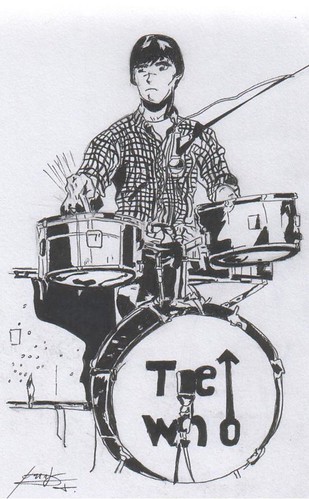
by The Who (1965) – <Got a feeling inside (Can’t explain) / It’s a certain kind (Can’t explain) / I feel hot and cold (Can’t explain) / Yeah, down in my soul, yeah (Can’t explain)>. ASCOLTA SU YOUTUBE. Sul concetto di “anima”, “soul” vedi <psychḗ>.
(I CAN’T GET NO) SATISFACTION
by The Rolling Stones (1965) – <When I’m drivin’ in my car, and the man come on the radio / He’s tellin’ me more and more about some useless information / Supposed to fire my imagination>. ASCOLTA SU YOUTUBE. Sull’idea di “immaginazione”, “imagination”, vedi <phantasía>.
I CAN’T HELP MYSELF
by The Four Tops (1965) – <In and out my life (in and out my life) / You come and you go (you come and you go) / Leaving just your picture behind>. ASCOLTA SU YOUTUBE. Il termine greco antico per “ritratto”, “immagine” (soprattutto di una persona), “picture”, è <eikṓn>.
I CAN’T STOP LOVING YOU
by Ray Charles (1962) – <It’s been so lonely without you here / Like a bird without a song / Nothing can stop these lonely tears from falling>. ASCOLTA SU YOUTUBE. La parola più comune in greco antico per dire “uccello”, “bird”, è <órnis>.
I FOUGHT THE LAW
by Bobby Fuller Four (1966) – <I needed money ’cause I had none / I fought the law and the law won / I fought the law and the law won>. ASCOLTA SU YOUTUBE. Sul concetto di “legge”, “law”, vedi <nómos>.
da ‘I GOT YOU BABE’ a ‘I’M WAITING FOR THE MAN’
I GOT YOU BABE
by Sonny & Cher (1965) – <They say we’re young and we don’t know / We won’t find out until we grow / Well I don’t know if all that’s true / ‘Cause you got me, and baby I got you>. ASCOLTA SU YOUTUBE. In greco antico il verbo principale per tradurre “crescere” nel senso di “diventare grandi”, “to grow up” è <αὐξάνομαι> (traslitterazione: <auxánomai>, forma medio-passiva di <αὐξάνω> (<auxánō> “far crescere”).
I HEARD IT THROUGH THE GRAPEVINE
by Marvin Gaye (1968) – <People say, “Believe half of what you see / Son, and none of what you hear”>. ASCOLTA SU YOUTUBE. In greco antico il termine principale per tradurre “vite”, “grapevine” è <ἄμπελος> (traslitterazione: <ámpelos>), sostantivo di genere femminile.
I’LL FEEL A WHOLE LOT BETTER
by The Byrds (1965) – <After what you did / I can’t stay on / And I’ll probably feel a whole lot better when you’re gone>. ASCOLTA SU YOUTUBE. Per dire “restare”, “to stay on”, il greco antico usa <ménō>.
Imagine – John Lennon (1971)
<You, you may say I’m a dreamer / But I’m not the only one / I hope someday you will join us / And the world will be as one>. ASCOLTA SU YOUTUBE. Il termine greco antico corrispondente a “sognatore ad occhi aperti”, “persona con poco realismo”, “dreamer”, è <phantasiokópos> (vedi <phantasía>).
La musica rock è una filosofia di vita
I’M EIGHTEEN
by Alice Cooper (1971) – <I got a / Baby’s brain and an old man’s heart / Took eight years to get this far / Don’t always know what I’m talkin’ about / Feels like I’m livin’ in the middle of doubt>. ASCOLTA SU YOUTUBE. In greco antico il termine principale per tradurre “dubbio”, “doubt”, è <ἀπορία> (traslitterazione: <aporía>): indica letteralmente la mancanza di una via d’uscita e, per estensione, l’incertezza o la perplessità della mente.
I’M SO LONESOME I COULD CRY
by Hank Williams (1949) – <I’ve never seen a night so long / When time goes crawling by / The moon just went behind the clouds / To hide its face and cry>. ASCOLTA SU YOUTUBE. Nella letteratura greco-antica la parola <prósōpon> è presente nel trattato di Plutarco De facie in orbe lunae (<Περὶ τοῦ ἐμφαινομένου προσώπου τῷ κύκλῳ τῆς σελήνης – Perì toû emphainoménou prosṓpou tō̂i kýklōi tē̂s selḗnēs> ovvero Sul volto che appare nel disco della luna).
I’M WAITING FOR THE MAN
by The Velvet Underground (1967) – <Feel sick and dirty, more dead than alive / I’m waiting for my man>. ASCOLTA SU YOUTUBE. In greco antico “morto”, “dead”, è <nekrós>.
da ‘IN BLOOM’ a ‘INTO THE MYSTIC’
IN BLOOM
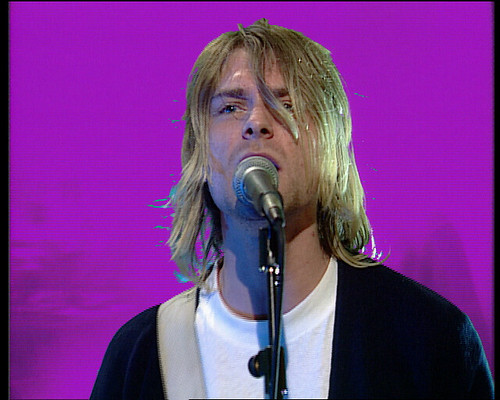
by Nirvana (1991) – <He’s the one / Who like all our pretty songs / And he likes to sing along / And he likes to shoot his gun / But he don’t know what it means / Don’t know what it means>. ASCOLTA SU YOUTUBE. “Cantare insieme”, “to sing along” in greco antico è <synā́idō>.Photo: “Screen Grab from The Word” by Catfunt is licensed under CC BY-NC-SA 2.0.
IN DA CLUB
by 50 Cent (2002) – <If you talking ’bout money homie, I ain’t concerned / I’m a tell you what Banks told me ’cause go ‘head switch the style up>. ASCOLTA SU YOUTUBE. <Dialégomai> è l’equivalente greco antico per “parlare”, “conversare”, “to talk” (verbo deponente medio: esprime lo scambio di parole tra due o più persone).
IN DREAMS
by Roy Orbison (1963) – <A candy-colored clown they call the sandman / Tiptoes to my room every night / Just to sprinkle stardust and to whisper / “Go to sleep. Everything is all right.”>. ASCOLTA SU YOUTUBE. <Pánta kalō̂s échei> in greco antico significa “tutto a posto”, “tutto va bene”, “everything is all right”, dove il verbo “essere/stare” <ἔχω – échō> al singolare si accorda con il neutro plurale <πάντα – pánta>.
IN MY LIFE
by The Beatles (1965) – <All these places had their moments / With lovers and friends, I still can recall / Some are dead, and some are living / In my life, I’ve loved them all>. ASCOLTA SU YOUTUBE. “Vita”, “life”, in greco antico è <bíos>.
IN MY ROOM
by The Beach Boys (1963) – <There’s a world where I can go and tell my secrets to / In my room, in my room / In this world I lock out all my worries and my fears / In my room, in my room>. ASCOLTA SU YOUTUBE. “Stanza”, “room” si può dire in greco antico in vari modi: i due più indicati in questa circostanza sono <oíkēma> (termine generico più comune nella prosa classica per indicare una singola stanza) e <dōmátion> (stanzetta, camera, diminutivo di <δῶμα – dō̂ma>, “casa”).
In the midnight hour – Wilson Pickett (1965)
<I’m gonna wait ’till the midnight hour / When there’ no one else around>. ASCOLTA SU YOUTUBE. <Mésai nýktes> (letteralmente «le notti di mezzo») è la formula, proprio così al plurale, per dire in greco antico “mezzanotte”, “midnight”.
IN THE STILL OF THE NIGHT
by The Five Satins (1956) – <So before the light / Hold me again / With all of your might / In the still of the night / In the still of the night>. ASCOLTA SU YOUTUBE. In greco antico <pantì tō̂i sō̂i sthénei> vuol dire “con tutta la tua forza”, “with all your might”.
INTO THE MYSTIC
by Van Morrison (1970) – <We were born before the wind / Also younger than the sun / Ere the bonnie boat was won / As we sailed into the mystic>. ASCOLTA SU YOUTUBE. Fra le varie parole che in greco antico significano “vento”, “wind”: <ἄνεμος – ánemos> (termine generale e più comune, da cui derivano parole come anemometro e anemone);
<πνεῦμα – pneûma> (soffio di vento, corrente d’aria, respiro).
da ‘IRON MAN’ a ‘IT’S YOUR THING’
IRON MAN
by Black Sabbath (1971) – <Has he lost his mind? / Can he see or is he blind? / Can he walk at all / Or if he moves will he fall?>. ASCOLTA SU YOUTUBE. In greco antico “cieco”, “blind” si dice <typhlós>.
I SAW HER STANDING THERE
by The Beatles (1964) – <Oh we danced through the night / And we held each other tight>. ASCOLTA SU YOUTUBE. <Orchéomai> è l’equivalente greco antico di “ballare”, “to dance”: da questo verbo deriva il termine italiano orchestra (nell’antico teatro greco indicava lo spazio circolare dedicato alle danze del coro).
I SHOT THE SHERIFF
by Bob Marley & the Wailers (1973) – <Sheriff John Brown always hated me / For what, I don’t know / Every time I plant a seed / He said kill it before it grow / He said kill them before they grow / And so, and so / Read it in the news>. ASCOLTA SU YOUTUBE. <Spóros> è il sostantivo maschile greco antico per indicare sia il “seme”, “seed”, da piantare sia l’azione stessa della semina. Photo: “bob marley” by fnswift1 is licensed under CC BY-NC 2.0.

I STILL HAVEN’T FOUND WHAT I’M LOOKING FOR
by U2 (1987) – <I have spoke with the tongue of angels / I have held the hand of a devil / It was warm in the night / I was cold as a stone>. ASCOLTA SU YOUTUBE. <Líthos> è il termine greco antico più generale per indicare “pietra”, “sasso”, “stone”. Al maschile indica solitamente una pietra grezza o comune, mentre al femminile si usa spesso per pietre preziose o lavorate (come il marmo). Da questo termine derivano numerose parole italiane come litografia, monolite, neolitico e aerolito.
IT’S A MAN’S MAN’S MAN’S WORLD
by James Brown (1966) – <This is a man’s world / But it wouldn’t be nothing, nothing, not one little thing, without a woman or a girl>. ASCOLTA SU YOUTUBE. In greco antico il sostantivo principale per “ragazza”, “girl” è <κόρη – kórē>. Da questo termine derivano il nome proprio Cora e la parola italiana pupilla per calco semantico (in greco <kórē> indicava sia la fanciulla sia la pupilla dell’occhio, per via della piccola immagine riflessa al suo interno).
IT’S YOUR THING
by The Isley Brothers (1969) – <It’s your thing, do what you wanna do / I can’t tell you, who to sock it to / It’s your thing, do what you wanna do / I can’t tell you, who to sock it to>. ASCOLTA SU YOUTUBE. <Poíei hó ti boúlei> è in greco antico la forma più colloquiale e comune nella prosa attica classica per dire “fai pure quanto vuoi”, “do what you wanna do”.
da ‘I’VE BEEN LOVING YOU TOO LONG (TO STOP NOW)’ a ‘I WILL SURVIVE’
I’VE BEEN LOVING YOU TOO LONG (TO STOP NOW)
by Otis Redding (1965) – <I’ve been loving you a little too long, long / To stop now / Oh, oh, oh>. ASCOLTA SU YOUTUBE. <Epéchō> in greco antico significa “trattenere”, ma usato in senso intransitivo assume il significato di “fermarsi”, “to stop” (da cui deriva il termine filosofico <epoché>, la sospensione del giudizio).
I wanna be sedated – Ramones (1978)
<Just get me to the airport, put me on a plane / Hurry hurry hurry, before I go insane / I can’t control my fingers, I can’t control my brain / Oh no oh oh oh oh>. ASCOLTA SU YOUTUBE. <Dáktyloi> è il nominativo plurale del sostantivo maschile <δάκτυλος – dáktylos> (dito), da cui derivano parole italiane come dattilografia, dattilo e pterodattilo.
I WANNA BE YOUR DOG
by The Stooges (1969) – <Now I’m ready to close my eyes / And now I’m ready to close my mind / And now I’m ready to feel your hand / And lose my heart on the burning sands>. ASCOLTA SU YOUTUBE. <Psámathos> è la forma epica e poetica, usata ampiamente da Omero per indicare la “sabbia”, “sands”.
I WANT TO HOLD YOUR HAND
by The Beatles (1963) – <Oh yeah, I’ll tell you something / I think you’ll understand / when I’ll say that something / I want to hold your hand>. ASCOLTA SU YOUTUBE. In greco antico il pronome “qualcosa”, “something”, è <τι – ti>, forma neutra singolare del pronome indefinito enclitico <τις – tis> (qualcuno), distinto per assenza di accento dal pronome interrogativo <τί – tí, (che cosa?).
I WANT TO KNOW WHAT LOVE IS
by Foreigner (1984) – <In my life there’s been heartache and pain / I don’t know if I can face it again / Can’t stop now, I’ve traveled so far / To change this lonely life>. ASCOLTA SU YOUTUBE. Il termine greco antico per dolore è <álgos>. Da esso derivano parole italiane come analgesico, neuralgia e nostalgia.
I WANT YOU BACK
by The Jackson 5 (1969) – <But someone picked you from the bunch / One glance was all it took / Now it’s much too late for me / To take a second look>. ASCOLTA SU YOUTUBE. In greco antico “mucchio”, “bunch” è <σωρός – sōrós>. Da questo termine deriva il nome del celebre paradosso filosofico del sorite (paradosso del mucchio di sabbia).
I WILL SURVIVE
by Gloria Gaynor (1978) – <It took all the strength I had not to fall apart / Kept trying hard to mend the pieces of my broken heart / And I spent oh-so many nights just feeling sorry for myself / I used to cry>. ASCOLTA SU YOUTUBE. <Kαταρρέω – katarrhéō> significa in greco antico “scorrere giù”, ma viene usato in senso figurato e materiale per dire “cade a pezzi”, “fall apart” per esempio a causa di fatica o di debolezza.
Vai alla home page di SOKRATIKO.IT oppure torna in testa alla sezione CANZONI G-O oppure torna all’inizio della lettera I
J – La musica rock è una filosofia di vita
da ‘JAILHOUSE ROCK’ a ‘JOLENE’
JAILHOUSE ROCK
by Elvis Presley (1957) – <The sad sack was a sittin’ on a block of stone / Way over in the corner weepin’ all alone / The warden said, “Hey, buddy, don’t you be no square / If you can’t find a partner use a wooden chair”>. ASCOLTA SU YOUTUBE. In greco antico “angolo”, “corner” è <γωνία – gōnía>. Da questo termine derivano parole italiane come poligono, diagonale, trigonometria e goniometro. Photo: “Elvis Presley” by David Wigforss is licensed under CC BY-NC 4.0.

JESUS WALKS
by Kanye West (2004) – <Order, huh / Yo, we at war / We at war with terrorism, racism, but most of all we at war with ourselves>. ASCOLTA SU YOUTUBE. In greco antico “guerra”, “war” è <πόλεμος – pólemos>. Da questo termine derivano parole italiane come polemica, polemico e polemologia (lo studio dei conflitti armati).
JOHNNY B. GOODE
by Chuck Berry (1958) – <His mother told him “Someday you will be a man / And you will be the leader of a big old band / Many people coming from miles around / To hear you play your music when the sun go down / Maybe someday your name will be in lights / Saying Johnny B. Goode tonight”>. ASCOLTA SU YOUTUBE. In greco antico “numero uno”, “leader” è <ἡγεμών – hēgemṓn>. Da questo termine derivano le parole italiane egemone ed egemonia.
JOLENE
by Dolly Parton (1974) – <I had to have this talk with you / My happiness depends on you / And whatever you decide to do / Jolene>. ASCOLTA SU YOUTUBE. La parola greco-antica per “benessere”, “felicità”, “happiness”, è <eudaimonía>.
da ‘JUICY’ a ‘JUST LIKE HEAVEN’
JUICY
by The Notorious B.I.G. (1994) <You know very well / Who you are / Don’t let ’em hold you down / Reach for the stars / You had a goal / But not that many / ‘Cause you’re the only one / I’ll give you good and plenty>. ASCOLTA SU YOUTUBE. In greco antico “stelle”, “stars” è <ἀστέρες> (nominativo plurale di <ἀστήρ>), reso in traslitterazione come <astéres>. Da questo termine derivano parole italiane come astro, astronomia, asterisco e asteroide.
Jumpin’ Jack Flash – The Rolling Stones (1968)
<I was drowned, I was washed up and left for dead / I fell down to my feet and I saw they bled , yeah yeah / I frowned at the crumbs of a crust of bread / Yeah, yeah, yeah>. In greco antico “briciole”, “crumbs” è <ψίχες> (nominativo plurale di <ψίξ>), reso in traslitterazione come <psíches>. Da questa stessa radice deriva il diminutivo <ψιχία – psichía>, ben noto nella tradizione evangelica (ad esempio nella parabola del ricco Epulone e Lazzaro). ASCOLTA SU YOUTUBE.
JUST LIKE A WOMAN
by Bob Dylan (1966) – <Yeah, it was raining from the first / And I was dying there of thirst / So I came in here / And your long-time curse hurts / But what’s worse / Is this pain in here / I can’t stay in here>. ASCOLTA SU YOUTUBE. Il termine greco antico per “sete”, “thirst” è <dípsa>. Da questo termine derivano parole italiane di ambito medico come polidipsia (sete eccessiva) e dipsomania (stato morboso caratterizzato da un impulso incontrollabile, periodico e parossistico – a ondate – di bere alcolici).
JUST LIKE HEAVEN
by The Cure (1987) – <You, soft and only, you lost and lonely / You, strange as angels / Dancing in the deepest oceans / Twisting in the water / You’re just like a dream / You’re just like a dream>. ASCOLTA SU YOUTUBE. In greco antico “acqua”, “water” si dice <hýdōr>. Da questo termine derivano numerose parole italiane come idraulica, idrogeno, idratazione e clessidra.
Vai alla home page di SOKRATIKO.IT oppure torna in testa alla sezione CANZONI G-O oppure torna all’inizio della lettera J
K
KASHMIR
by Led Zeppelin (1975) – <I am a traveler of both time and space to be where I have been / To sit with elders of a gentle race this world has seldom seen>. ASCOLTA SU YOUTUBE. In greco antico “anziani”, “elders” è <gérontes>. Da questo termine derivano parole italiane come gerontologia, geriatria e gerusia (il consiglio degli anziani nell’antica Sparta).
KILLING ME SOFTLY WITH HIS SONG
by Roberta Flack (1973) – <I felt all flushed with fever, embarrassed by the crowd / I felt he found my letters and read each one out loud / I prayed that he would finish but he just kept right on / Strumming my pain with his fingers>. ASCOLTA SU YOUTUBE. “Lettere”, “letters”, in greco antico è <epistolaí>. Da questa parola derivano epistola ed epistolario.
Knockin’ on heaven’s door – Bob Dylan (1973)
<That long black cloud is comin’ down / I feel I’m knockin’ on heaven’s door>. ASCOLTA SU YOUTUBE. Per dire “nero”, “black” i greci antichi usavano <mélas>. Da questo termine derivano parole italiane come melanina, melanoma e malinconia (letteralmente “bile nera”).
Vai alla home page di SOKRATIKO.IT oppure torna in testa alla sezione CANZONI G-O oppure torna all’inizio della lettera K
L – La musica rock è una filosofia di vita
da ‘LADY MARMALADE’ a ‘LEAN ON ME’
LADY MARMALADE
by LaBelle (1975) – <Now he’s back home doing nine-to-five / Living his grey flannel life / But when he turns off to sleep / Old memories creep, more, more, more>. ASCOLTA SU YOUTUBE. Nella Grecia antica la conserva densa di frutta cotta nel miele o nel mosto si chiamava <μελίμηλον – melímēlon>, termine da cui deriva direttamente la parola italiana “marmellata” (inglese: “marmalade”) attraverso il latino <melimelum> e il portoghese ‘marmelada’).
LAYLA
by Derek and the Dominos (1970) – <What’ll you do when you get lonely / And nobody’s waitin’ by your side? / You’ve been runnin’ an’ hidin’ much too long / You know it’s just your foolish pride>. ASCOLTA SU YOUTUBE. <Hýbris> è la parola greco-antica usata per “orgoglio smisurato”, “tracotanza”, “foolish pride” di chi ostinatamente sfida le leggi divine o altrui.
LEADER OF THE PACK
by The Shangri-Las (1964) – <They said he came from the wrong side of town / – What do you mean when you say that he came from the wrong side of town? / They told me he was bad / But I knew he was sad / That’s why I fell for the Leader of the Pack>. ASCOLTA SU YOUTUBE. <Lypērós> (greco antico per “triste”, “sad”) deriva dal sostantivo <λύπη – lýpē>, “dolore dell’animo”, “tristezza”.
LEAN ON ME
by Bill Withers (1972) – <Please swallow your pride / If I have things you need to borrow / For no one can fill those of your needs / That you won’t let show>. ASCOLTA SU YOUTUBE. <Thárrhei> significa “sta’ di buon animo”, “abbi fede”, “lean on me” e veniva usato nella Grecia antica come esclamazione colloquiale per rassicurare l’interlocutore (“non temere, ci penso io”).
da ‘LET IT BE’ a ‘LIKE A ROLLING STONE’
LET IT BE
by The Beatles (1970) – <And when the broken-hearted people living in the world agree / There will be an answer, let it be / For though they may be parted, there is still a chance that they will see / There will be an answer, let it be>. ASCOLTA SU YOUTUBE. <Apókrisis> – “risposta”, “answer” – deriva dal verbo greco antico <apokrínomai> (letteralmente “separare”, “distinguere” un pensiero in replica a una domanda).
LET’S GET IT ON
by Marvin Gaye (1973) – <We’re all sensitive people / With so much to give / Understand me, sugar / Since we’ve got to be here / Let’s live>. ASCOLTA SU YOUTUBE. <Pathētikós> indica in greco antico chi è “sensibile”, “sensitive”, “capace di provare emozioni o passioni”, “facilmente impressionabile e coinvolto emotivamente” (da cui deriva patetico).
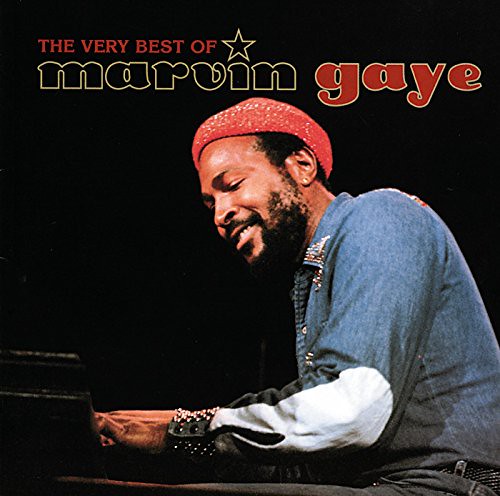
Photo: “The Very Best of Marvin Gaye” by salethleudqq is licensed under CC0 1.0.
LET’S STAY TOGETHER
by Al Green (1971) – <Why, why some people break up / Then turn around and make up / I just can’t see>. ASCOLTA SU YOUTUBE. “Persone”, “people” si dice in greco antico <ánthrōpoi>, nominativo plurale del sostantivo <ἄνθρωπος – ánthrōpos>, “essere umano”, “persona”, da cui derivano parole italiane come antropologia e filantropo.
LIGHT MY FIRE
by The Doors (1967) – <The time to hesitate is through / No time to wallow in the mire / Try now we can only lose / And our love become a funeral pyre>. ASCOLTA SU YOUTUBE. In greco antico “pira funeraria”, “funeral pyre”, è <πυρά – pyrá>. Da questo termine deriva la parola italiana “pira” (nonché piromane e pirotecnico, legati alla radice <pŷr>, “fuoco”).
Like a rolling stone – Bob Dylan (1965)
<How does it feel, how does it feel? / To be without a home / Like a complete unknown, like a rolling stone>. ASCOLTA SU YOUTUBE. <Pantápasin ágnōstos> è la formula più idiomatica nella prosa classica del greco antico per dire “perfettamente sconosciuto”, “complete unknown”. L’avverbio <pantápasin> significa “del tutto”, “completamente” e rafforza direttamente l’aggettivo <ágnōstos> (“ignoto”).
da ‘LITTLE WING’ a ‘LONG TALL SALLY’
LITTLE WING
by Jimi Hendrix Experience (1968) – <It’s alright, she says / It’s alright / Take anything you want from me / Anything / Fly on, little wing>. ASCOLTA SU YOUTUBE. <Pterón> è un sostantivo neutro del greco antico: indica “piuma”, “penna”, “ala”, “wing”.
LIVING FOR THE CITY
by Stevie Wonder (1973) – <I hope you hear inside my voice of sorrow / And that it motivates you to make a better tomorrow / This place is cruel nowhere could be much colder / If we don’t change, the world will soon be over / Living just enough, stop giving just enough for the city>. ASCOLTA SU YOUTUBE. <Áchos> è un sostantivo prevalentemente poetico ed epico del greco antico, frequentissimo in Omero: indica “pena”, “angoscia”, “strazio”, “sorrow” (<áchos> è presente anche nel nome di Achille, <Achilleús>).
London calling – The Clash (1980)
<The ice age is coming, the sun is zooming in / Engines stop running, the wheat is growin’ thin / A nuclear era, but I have no fear / ‘Cause London is drowning, and I, I live by the river>. ASCOLTA SU YOUTUBE. “Paura”, “fear”, in greco antico si dice <phóbos>. Da questo termine derivano parole italiane come fobia, claustrofobia e idrofobia, oltre al nome di Fobos, la personificazione divina del panico e una delle due lune di Marte.
LONELY TEARDROPS
by Jackie Wilson (1958) – <Lonely teardrops / My pillow’s never dry of lonely teardrops>. ASCOLTA SU YOUTUBE. “Cuscino”, “pillow” in greco antico è <proskephálaion>: deriva dall’unione di <prós> (presso) e <kephalḗ> (testa), indicando letteralmente l’oggetto posto sotto o accanto al capo per dormire.
LONG TALL SALLY
by Little Richard (1956) – <Gonna tell Aunt Mary ’bout Uncle John / He claim he has the misery but he’s havin’ a lot of fun>. ASCOLTA SU YOUTUBE. “Miseria”, “infelicità”, “sciagura”, “misery” è <ἀθλιότης – athliótēs>: deriva dall’aggettivo <áthlios> (“infelice”, “sventurato”, originariamente “chi sostiene dure prove”).
da ‘LOSER’ a ‘LUST FOR LIFE’
LOSER
by Beck (1993) – <Someone keeps sayin’ I’m insane to complain / About a shotgun wedding and a stain on my shirt>. ASCOLTA SU YOUTUBE. “Perdente”, “loser” in greco antico è <atychḗs> un aggettivo traducibile come “sfortunato” o “sventurato”, usato anche per indicare chi non ha successo nella vita o nelle proprie imprese.
LOSING MY RELIGION
by R.E.M. (1991) – <I thought that I heard you laughing / I thought that I heard you sing / I think I thought I saw you try>. ASCOLTA SU YOUTUBE. “Ridere”, “to laugh” in greco antico è <geláō>: da questo verbo deriva il sostantivo <gélōs> (“riso”, “risata”) e il nome proprio Gelasio.
LOUIE LOUIE
by The Kingsmen (1963) – <Me catch the ship across the sea / Me sailed the ship all alone / Me never think I’ll make it home>. ASCOLTA SU YOUTUBE. In greco antico “nave”, “ship” è <ναῦς – naûs>. Da questo termine derivano numerose parole italiane come nautica, astronauta, naumachia e nausea (in origine il mal di mare).
LOVE & HAPPINESS
by Al Green (1972) – <Well, happiness is when, you really feel good with somebody>. ASCOLTA SU YOUTUBE. Sul concetto di “felicità”, “happiness” vedi <eudaimonía>.
LOVE ME AGAIN
by John Newman (2013) – <Now I’m rising from the ground / Rising up to you / Filled with all the strength I found / There’s nothing I can’t do>. ASCOLTA SU YOUTUBE. In greco antico “terra”, “suolo”, “ground” è <γῆ – gê> da cui derivano parole italiane come geografia, geologia, geometria e ipogeo.
LOVE SHACK
by The B-52’s (1989) – <Sign says, woo, stay away fools / ‘Cause love rules at the love shack / Well it’s set way back in the middle of a field / Just a funky old shack and I gotta get back>. ASCOLTA SU YOUTUBE. “Capanna”, “baracca”, “shack” in greco antico è <καλύβη – kalýbē> da cui deriva il nome della ninfa Calipso (letteralmente «la nasconditrice», in relazione al verbo <kalýptō>, “coprire”, “riparare”).
LOVE WILL TEAR US APART
by Joy Division (1980) – <When routine bites hard / And ambitions are low / And resentment rides high / But emotions won’t grow / And we’re changing our ways / Taking different roads>. ASCOLTA SU YOUTUBE. In greco antico “risentimento”, “rancore”, “resentment” è <μῆνις – mênis>. È celebre perché apre il primo verso dell’Iliade di Omero (<Mênin áeide, theá…>, «Cantami, o Diva, il rancore…»), indicando un risentimento profondo e duraturo.
LUST FOR LIFE
by Iggy Pop (1977) – <Well I am just a modern guy / Of course I’ve had it in the ear before / ‘Cause of a lust for life / ‘Cause of a lust for life / I got a lust for life>. ASCOLTA SU YOUTUBE. “Desiderio ardente”, “brama”, “lust”, in greco antico è <ἐπιθυμία – epithymía>. Photo: “Iggy Pop” by lostintheredwoods is licensed under CC BY-ND 2.0.

Vai alla home page di SOKRATIKO.IT oppure torna in testa alla sezione CANZONI G-O oppure torna all’inizio della lettera L
M
da ‘MAD WORLD’ a ‘MANY RIVERS TO CROSS’
Mad world – Tears for Fears (1982)
<Hide my head / I wanna drown my sorrow / No tomorrow / No tomorrow>. ASCOLTA SU YOUTUBE. In greco antico “domani”, “tomorrow”, si dice <αὔριον – aúrion>.
MAGGIE MAY
by Rod Stewart (1971) – <I suppose I could collect my books and get on back to school / Or steal my daddy’s cue and make a living out of playing pool / Or find myself a rock ‘n’ roll band that needs a helping hand>. ASCOLTA SU YOUTUBE. <Skholḗ>, con il significato originario di “tempo libero”, “ozio” (inteso come pausa dal lavoro fisico dedicata allo studio), è la parola greco-antica per “scuola”, “school”. Indicava la scuola filosofica o un gruppo di discepoli riuniti attorno a un maestro (come l’Accademia <Ăkădḗmeiă> di Platone o il Liceo <Lýkeion> di Aristotele).
MAGNIFICENT
by U2 (2009) – <Only love / Only love can leave such a mark / But only love / Only love can heal such a scar>. ASCOLTA SU YOUTUBE. <Oulḗ> è il termine greco antico usato già da Omero per la celebre “cicatrice”, “scar”, di Ulisse, e poi da Ippocrate per indicare la ferita rimarginata sulla pelle. Viene utilizzato anche in senso metaforico (ad esempio in Platone e nei tragici) per indicare la traccia lasciata da un dolore o da una colpa sull’anima. In Gorgia (524e), Platone descrive le anime dei defunti piene di “cicatrici” <οὐλῶν μεστὴν τὴν ψυχήν> causate dagli spergiuri e dalle ingiustizie commesse in vita.
MANNISH BOY
by Muddy Waters (1955) – <Oh yeah, yeah / Now when I was a young boy / At the age of five / My mother said I’ll be / The greatest man alive>. ASCOLTA SU YOUTUBE. “Il più grande”, “the greatest” in greco antico si dice <ho mégistos>.
MANY RIVERS TO CROSS
by Jimmy Cliff (1969) – <Many rivers to cross / And it’s only my will that keeps me alive / I’ve been licked, washed up for years / And I merely survive because of my pride>. ASCOLTA SU YOUTUBE. <Diasṓizomai> è uno dei modi del greco antico per dire “sopravvivere”, “to survive”.
da ‘MARQUEE MOON’ a ‘MAYBELLENE’
MARQUEE MOON
by Television (1977) – <I spoke / To a man down at the tracks / And I ask him / How he don’t go mad / He said “Look here, Junior / Don’t you be so happy / And for Heaven’s sake / Don’t you be so sad”>. ASCOLTA SU YOUTUBE. <Exístamai tôn phrenôn> è un’espressione greco-antica molto frequente, nei tragici (come Euripide) e in autori come Erodoto, per significare “diventare pazzi”, “uscir fuori di testa”, “to go mad”.
MAYBE
by The Chantels (1957) – <Maybe, if I hold your hand / you will understand>. ASCOLTA SU YOUTUBE. In ambito filosofico (soprattutto stoico) ed ellenistico, un verbo greco antico per “capire”, “comprendere”, “to understand” è <katalambánō>.
MAYBE I’M AMAZED
by Paul McCartney (1970) – <Maybe I’m a man and maybe I’m a lonely man / Who’s in the middle of something / That he doesn’t really understand>. ASCOLTA SU YOUTUBE. <Manthánō> è uno dei verbi del greco antico per “imparare”, “apprendere”, “understand”. Nella lingua parlata e nei dialoghi (specialmente in Platone e nei tragici) è usatissimo con il senso di “capire”, “rendersi conto”.
Maybellene – Chuck Berry (1955)
<Maybellene, why can’t you be true? / Oh Maybellene, why can’t you be true? / You’ve started back doing the things you used to do>. ASCOLTA SU YOUTUBE. Uno dei modi per dire “vera”, “true” in greco antico è <alēthinḗ>.
da ‘ME AND BOBBY MCGEE’ a ‘MOMENT OF SURRENDER’
ME AND BOBBY MCGEE
by Janis Joplin (1971) – <Freedom’s just another word for nothin’ left to lose>. ASCOLTA SU YOUTUBE. Sul concetto di “libertà”, “freedom” vedi <eleuthería>.
MIDNIGHT TRAIN TO GEORGIA
by Gladys Knight and the Pips (1973) – <He kept dreaming / (Dreaming) / Ooh, that some day he’d be a star / (A superstar, but he didn’t get far) / But he sure found out the hard way / That dreams don’t always come true, oh no, uh uh / (Dreams don’t always come true, uh uh, no, uh uh) / So he pawned all his hopes / (Woo, woo, woo-woo) / And even sold his old car / (Woo, woo, woo-woo) / Bought a one way ticket back to the life he once knew / Oh yes he did, he said he would>. ASCOLTA SU YOUTUBE. <Prokóptō> è il verbo più idiomatico nella prosa classica ed ellenistica per dire “andare avanti”, “fare progressi”, “raggiungere grandi risultati”, “to get far” (spesso accompagnato da <ἐπὶ μέγα – epì méga>, (“molto in alto” / “molto lontano”): <ἐπὶ μέγα προκόπτω – epì méga prokóptō>.
MISSISSIPPI
by Bob Dylan (2001) – <Every step of the way we walk the line / Your days are numbered, so are mine / Time is pilin’ up, we struggle and we scrape / We’re all boxed in, nowhere to escape>. ASCOLTA SU YOUTUBE. “Tempo”, “time”, in greco antico si può dire: <khrónos> (il tempo cronologico, misurabile e lineare); <kairós> (il tempo opportuno, il momento giusto, l’occasione propizia); <aiṓn> (il tempo della vita, l’epoca, l’eternità).
MOMENT OF SURRENDER
by U2 (2009) – <At the moment of surrender / I’m falling to my knees / I did not notice the passers by / And they did not notice me>. ASCOLTA SU YOUTUBE. In greco antico “resa”, “surrender” è <éndosis>.Photo: “IMG_0176” by elvisripley is licensed under CC BY-NC 2.0.

da ‘MONEY HONEY’ a ‘MR. TAMBOURINE MAN’
MONEY HONEY
by The Drifters (1953) – <Well, I learned my lesson and now I know / The sun may shine and the wind may blow / Women may come, and the women may go / But before I say I love ’em so / I want– money, honey! / Money, honey!>. ASCOLTA SU YOUTUBE. “Denaro”, “money”, in greco antico è <chrḗmata>.
MONKEY GONE TO HEAVEN
by Pixies (1989) – <The creature in the sky / Got sucked in a hole / Now there’s a hole in the sky / And the ground’s not cold / And if the ground’s not cold / Everything is gonna burn / We’ll all take turns, I’ll get mine too>. ASCOLTA SU YOUTUBE. “Buco”, “apertura”, “spiraglio”, “hole”, in greco antico è <opḗ>.
MR. TAMBOURINE MAN
by Bob Dylan (1965) – <My senses have been stripped / My hands can’t feel to grip / My toes too numb to step / Wait only for my boot heels to be wandering / I’m ready to go anywhere, I’m ready for to fade / Into my own parade>. ASCOLTA SU YOUTUBE. <Narkṓdēs> è il termine greco antico per “intorpidito”, “paralizzato”, “addormentato”, “numb”, riferito specialmente all’intorpidimento fisico, per esempio di un arto addormentato.
da ‘MY GENERATION’ a ‘MY SWEET LORD’
My generation – The Who (1965)
<People try to put us d-down / (Talkin’ ’bout my generation) / Just because we g-g-get around / (Talkin’ ’bout my generation) / Things they do look awful c-c-cold / (Talkin’ ’bout my generation) / Yeah, I hope I die before I get old / (Talkin’ ’bout my generation)>. ASCOLTA SU YOUTUBE. <Geneá> (per “generazione”, “insieme di persone nate nella stessa epoca”, “generation”) è un termine greco antico usatissimo fin da Omero: celebre la similitudine delle generazioni umane paragonate alle foglie (<οἵη περ φύλλων γενεή, τοίη δὲ καὶ ἀνδρῶν>, “quale è la stirpe [generazione] delle foglie, tale è anche quella degli uomini“).
MY GIRL
by The Temptations (1965) – <I don’t need no money, fortune, or fame (ooh hey hey hey) / I’ve got all the riches baby one man can claim (oh yes I do)>. ASCOLTA SU YOUTUBE. Sul concetto di “popolarità”, “fame”, vedi <dóxa>.
MY SWEET LORD
by George Harrison (1970) – <I really want to see you / Really want to be with you / Really want to see you, Lord / But it takes so long, my Lord>. ASCOLTA SU YOUTUBE. Sulla nozione di “Dio”, “Lord” vedi <theós>.
Vai alla home page di SOKRATIKO.IT oppure torna in testa alla sezione CANZONI G-O oppure torna all’inizio della lettera M
N – La musica è rock è una filosofia di vita
da ‘NEW YEAR’S DAY’ a ‘NOTHING COMPARES 2 U’
NEW YEAR’S DAY
by U2 (1983) – <And so we’re told this is the golden age / And gold is the reason for the wars we wage / Though I want to be with you, be with you>. ASCOLTA SU YOUTUBE. In greco antico “anno”, “year”, si dice <étos>.
NORWEGIAN WOOD (THIS BIRD HAS FLOWN)
by The Beatles (1965) – <And when I awoke I was alone / This bird had flown / So I lit a fire / Isn’t it good Norwegian wood?>. ASCOLTA SU YOUTUBE. <Hýlē> è il sostantivo femminile greco antico per indicare in origine il bosco, la foresta o la legna ancora da tagliare; in filosofia (es. in Aristotele) assume poi il significato astratto di “materia” prima.
NOTHING COMPARES 2 U
by Sinead O’Connor (1990) – <It’s been so lonely without you here / Like a bird without a song / Nothing can stop these lonely tears from falling>. ASCOLTA SU YOUTUBE. In greco antico “nessuna cosa”, “niente”, “nothing” è <oudén>. Photo: “JPA_0121” by jaclinepaskero is licensed under CC BY-NC-ND 2.0.

da ‘NOWHERE TO RUN’ a ‘NUTHIN’ BUT A ‘G’ THANG‘
NOWHERE TO RUN
by Martha & the Vandellas (1965) – <I know you’re no good for me, but free of you I’ll never be / Nowhere to run to baby, nowhere to hide, got nowhere to run to baby>. ASCOLTA SU YOUTUBE. In greco antico la forma avverbiale corretta per il moto a luogo è <οὐδαμόσε – oudamóse> oppure si può ricorrere al sostantivo <οὐδεὶς τόπος – oudeìs tópos> (“nessun luogo”, “nowhere”).
NO WOMAN, NO CRY
by Bob Marley & the Wailers (1975) – <Good friends we have. Oh / Good friends we have lost along the way / Yeah! / In this great future you can’t forget your past / So dry your tears, I say / Yeah>. ASCOLTA SU YOUTUBE. In greco antico “passato”, “past”, si può rendere con il plurale neutro <τὰ παρελθόντα – tà parelthónta> (“i fatti passati”, “le vicende trascorse”).
NUTHIN’ BUT A ‘G’ THANG
by Dr. Dre (1993) – <Now it’s time for me to make my impression felt / So sit back, relax, and strap on your seatbelt / You never been on a ride like this before / With a producer who can rap and control the maestro>. ASCOLTA SU YOUTUBE. <Thársei> – dal verbo <θαρσέω – tharséō> – significa in greco antico “fatti coraggio”, “sta’ sereno”, “non preoccuparti”, “relax”. È l’espressione più usata nei dialoghi classici (da Omero a Platone) per tranquillizzare qualcuno in ansia.
Vai alla home page di SOKRATIKO.IT oppure torna in testa alla sezione CANZONI G-O oppure torna all’inizio della lettera N
O
Da ‘ODE TO BILLIE JOE’ a ‘ONLY THE LONELY’
ODE TO BILLIE JOE
by Bobbie Gentry (1967) – <There was a virus going ’round; papa caught it, and he died last spring / And now mama doesn’t seem to want to do much of anything / And me, I spend a lot of time pickin’ flowers up on Choctaw Ridge / And drop them into the muddy water off the Tallahatchie Bridge>. ASCOLTA SU YOUTUBE. <Ánthē> è il nominativo, accusativo e vocativo plurale del greco antico <τὸ ἄνθος, –ους – tò ánthos, –ous>. Da questa radice derivano parole italiane come antologia (raccolta di “fiori”, “flowers”) o crisantemo (“fiore” d’oro).
Ohio – Crosby, Stills, Nash & Young (1970)
<Gotta get down to it / Soldiers are gunning us down / Should have been done long ago / What if you knew her and / Found her dead on the ground? / How can you run when you know?>. ASCOLTA SU YOUTUBE. In greco antico “soldati”, “soldiers”, si dice <stratiôtai>, plurale del sostantivo maschile <στρατιώτης – stratiṓtēs, “soldato”).
OH PRETTY WOMAN
by Roy Orbison (1964) – <If that’s the way it must be, OK / I guess I’ll go on home, it’s late / There’ll be tomorrow night, but wait / What do I see? / Is she walkin’ back to me? / Yeah, she’s walkin’ back to me / Oh, oh, pretty woman>. ASCOLTA SU YOUTUBE. <Gynḕ kalḗ> è uno dei modi per dire “bella donna”, “pretty woman” in greco antico. Vedi anche <kalόn>.
ONE
by U2 (1991) – <Is it getting better / Or do you feel the same? / Will it make it easier on you now? / You got someone to blame>. ASCOLTA SU YOUTUBE. “Biasimare”, “incolpare”, “rimproverare”, “to blame”, in greco antico è <mémphomai>.
ONLY THE LONELY
by Roy Orbison (1960) – <Maybe tomorrow / A new romance / No more sorrow / But that’s the chance>. ASCOLTA SU YOUTUBE. Sul concetto di “occasione”, “opportunità”, “chance”, vedi <kairós>.
da ‘O-O-H CHILD’ a ‘OOO BABY BABY’
O-O-H CHILD
by The Five Stairsteps (1970) – <Some day, yeah / We’ll put it together and we’ll get it undone / Some day / When your head is much lighter / Some day, yeah / We’ll walk in the rays of a beautiful sun / Some day / When the world is much brighter>. ASCOLTA SU YOUTUBE. In greco antico “qualche giorno”, “qualche volta”, “some day” si dice <ποτέ – poté>.
OOO BABY BABY
by The Miracles (1965) – <Mistakes, I know I’ve made a few / But I’m only human / You’ve made mistakes too, I’m crying>. ASCOLTA SU YOUTUBE. Sulla nozione di “errore”, “mistake” vedi <hamartánō>.
Vai alla home page di SOKRATIKO.IT oppure torna in testa alla sezione CANZONI G-O oppure torna all’inizio della lettera O