

Canzoni P-Z
Lo spirito rock emerge con forza da un’infinità di canzoni. Sono innumerevoli, eppure per noi non bastano mai. Molte altre ne nasceranno in futuro. Perché il vero rock va ben oltre le semplici note: rappresenta un autentico approccio alla realtà di tutti i giorni. Questa musica è una vera scuola di pensiero. Audace, ribelle, libera. Sicuramente imperfetta e piena di contraddizioni, ma pulsante, vitale, travolgente.
P R S T U V W Y TITOLI CON NUMERI
P – La musica rock è una filosofia di vita
da ‘PAINT IT BLACK’ a ‘PAPER PLANES’
PAINT IT BLACK
by The Rolling Stones (1966) – <I look inside myself and see my heart is black / I see my red door I must have it painted black / Maybe then I’ll fade away and not have to face the facts / It’s not easy facin’ up, when your whole world is black>. ASCOLTA SU YOUTUBE. In greco antico “nero”, “black”, è <mélas>.
PAPA’S GOT A BRAND NEW BAG
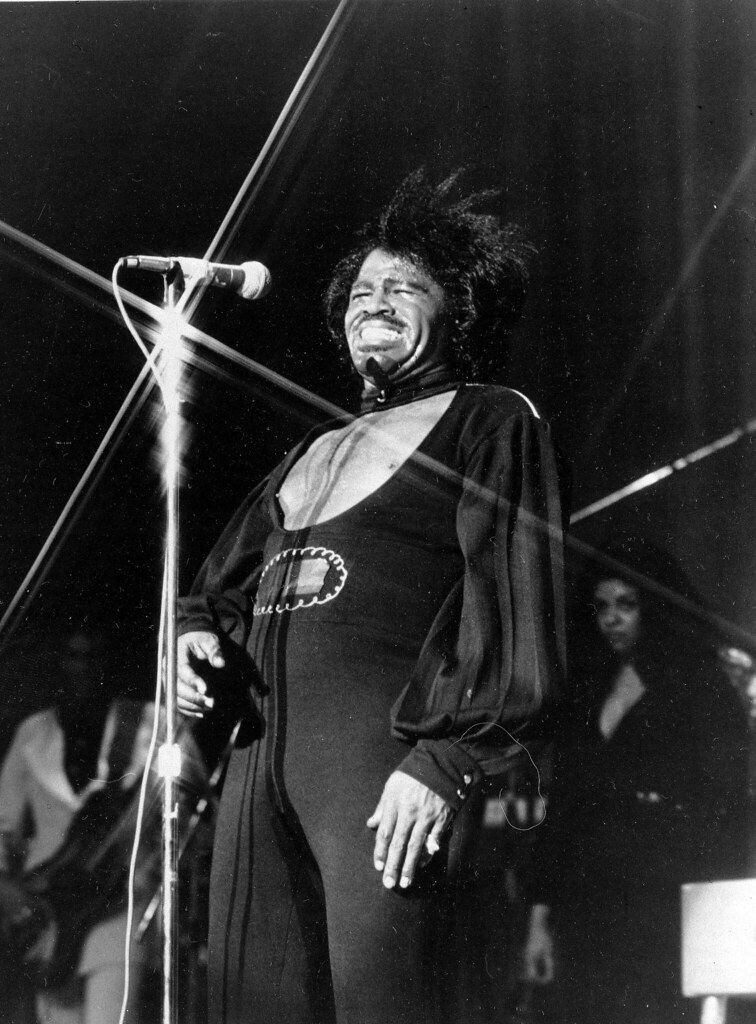
by James Brown (1966) – <He ain’t no drag / Papa’s got a brand new bag>. ASCOLTA SU YOUTUBE. La forma colloquiale per dire <babbo>, <papa> (inglese slang), in greco antico è <pâ>. Photo: “James Brown” by Mexicaans fotomagazijn is licensed under CC BY-NC 2.0.
PAPA WAS A ROLLIN’ STONE
by The Temptations (1972) – <Papa was a rolling stone / Wherever he laid his hat was his home / And when he died, all he left us was alone>. ASCOLTA SU YOUTUBE. Le due parole più usate in greco antico per dire “cappello”, “hat”, sono <pétasos> e <pîlos>.
PAPER PLANES
by M.I.A. (2007) – <Now one things for certain, and two things for sure / Being poor is a disease, gotta hustle up a cure / Start with your head homie then use your hands / If you try it in reverse, you don’t even have a chance>. ASCOLTA SU YOUTUBE. <Áporos> in greco antico significa letteralmente “senza risorse”, “privo di mezzi”, “poor”, molto usato nella prosa classica per indicare chi si trova in difficoltà economica o in stato di bisogno.
da ‘PARANOID’ a ‘PERSONAL JESUS’
PARANOID
by Black Sabbath (1970) – <I need someone to show me / The things in life that I can’t find / I can’t see the things that make true happiness / I must be blind>. ASCOLTA SU YOUTUBE. <Alaós> in greco antico è un aggettivo poetico ed epico (usato da Omero e dai tragici, ad esempio per descrivere l’indovino Tiresia o il ciclope Polifemo accecato): significa “cieco”, “privo della luce degli occhi”, “blind”.
PARANOID ANDROID
by Radiohead (1997) – <Please could you stop the noise / I’m trying to get some rest / From all the unborn chicken voices in my head / What’s that?>. ASCOLTA SU YOUTUBE. Una delle parole del greco antico per dire “rumore”, “noise”, è <thórybos>.
Penny Lane – The Beatles (1967)
<In Penny Lane, there is a barber showing photographs / Of every head he’s had the pleasure to know / And all the people that come and go / Stop and say, “Hello”>. ASCOLTA SU YOUTUBE. <Chaîre> è l’imperativo presente del verbo <χαίρω – chaírō> (“rallegrarsi”, “gioire”) e significa letteralmente “gioisci!”, “sta’ bene!”. Era il saluto quotidiano universale dei Greci, usato sia quando ci si incontrava (“salve”, “buongiorno”, “ciao”, “hello”) sia quando ci si separava (“addio”, “stammi bene”), nonché all’inizio delle lettere.
PEOPLE GET READY
by The Impressions (1965) – <People get ready, there’s a train a comin’ / You don’t need no baggage, you just get on board>. ASCOLTA SU YOUTUBE. La parola “bagaglio”, “baggage”, in greco antico si traduce principalmente al plurale con <σκευή – skeuḗ> (singolare: <skeûos>).
PERSONALITY CRISIS
by New York Dolls (1973) – <Personality crisis you got it while it was hot / But now frustration and heartache is what you got / (That’s why they talk about personality)>. ASCOLTA SU YOUTUBE. Sul concetto di “personalità”, “carattere”, “personality”, vedi <êthos>.
PERSONAL JESUS
by Depeche Mode (1989) – <Feeling unknown / And you’re all alone / Flesh and bone / By the telephone / Lift up the receiver / I’ll make you a believer / Take second best / Put me to the test / Things on your chest / You need to confess>. ASCOLTA SU YOUTUBE. “Confessare”, “ammettere”, “to confess”, in greco antico (attico) è <homologô>.
da ‘PIANO MAN’ a ‘PLEASE PLEASE ME’
PIANO MAN
by Billy Joel (1973) – <Son, can you play me a memory / I’m not really sure how it goes / But it’s sad and it’s sweet and I knew it complete / When I wore a younger man’s clothes>. ASCOLTA SU YOUTUBE. “Abiti”, “vestiti”, “clothes”, in greco antico si dice <himátia> (singolare: <himátion>. Photo: “Billy Joel Live!” by minds-eye is licensed under CC BY-NC-ND 2.0.

PICTURES OF YOU
by The Cure (1989) – <Remembering you running soft through the night / You were bigger and brighter and wider than snow / And screamed at the make-believe / Screamed at the sky / And you finally found all your courage / To let it all go>. ASCOLTA SU YOUTUBE. Sull’idea di “coraggio”, “courage”, vedi <andreía>.
PINK HOUSES
by John Cougar Mellencamp (1983) – <And there’s winners, and there’s losers / But they ain’t no big deal / ‘Cause the simple man baby pays the thrills / The bills and the pills that kill>. ASCOLTA SU YOUTUBE. Uno dei verbi del greco antico corrispondenti a “uccidere”, “to kill”, è <apokteínō>.
PLANET ROCK
by Afrika Bambaataa & the Soul Sonic Force (1982) – <Just start to chase your dreams / Up out your seats, make your body sway / Socialize, get down, let your soul lead the way>. ASCOLTA SU YOUTUBE. Sul concetto di “anima”, “soul”, vedi <psychḗ>.
PLEASE PLEASE ME
by The Beatles (1964) – <I don’t want to sound complaining / But you know there’s always rain in my heart (in my heart)>. ASCOLTA SU YOUTUBE. In greco antico “lamentarsi”, “to complain” è <odýromai>.
da ‘POSITIVELY 4TH STREET’ a ‘PURPLE RAIN’
POSITIVELY 4TH STREET
by Bob Dylan (1965) – <I wish that for just one time you could stand inside my shoes / And just for that one moment I could be you / Yes, I wish that for just one time you could stand inside my shoes / You’d know what a drag it is to see you>. ASCOLTA SU YOUTUBE. <Tà autá tini páschein> in greco antico significa subire o provare le stesse cose di qualcuno, trovarsi nella medesima situazione emotiva o pratica, “essere al posto di qualcuno”, “to be in someone’s shoes”.
PRESSURE DROP
by Toots & the Maytals (1973) – <I said a pressure drop / Oh pressure, oh yeah / Pressure’s gonna drop on you / I said pressure drop / Oh pressure, oh yeah / Pressure’s gonna drop on you>. ASCOLTA SU YOUTUBE. “Pressione”, “pressure” in greco antico è <thlîpsis> (sia in senso fisico sia in senso figurato).
PROUD MARY
by Creedence Clearwater Revival (1969) – <And I never lost one minute of sleepin’ / Worryin’ ’bout the way things might have been>. ASCOLTA SU YOUTUBE. <olígon chrónon> era il modo in greco antico per dire “un breve tempo”, “un momento” [un minuto, one minute], poiché non esisteva il concetto moderno di “minuto” come unità di misura fissa di 60 secondi.
Purple haze – Jimi Hendrix Experience (1967)
<Purple haze, all in my brain / Lately things they don’t seem the same / Actin’ funny, but I don’t know why / Excuse me while I kiss the sky>. ASCOLTA SU YOUTUBE. <Achlýs> è una delle parole del greco antico per dire “nebbia”, “foschia”, “haze”, anche in senso figurato.
PURPLE RAIN
by Prince & The Revolution (1984) – <I never meant to cause you any sorrow / I never meant to cause you any pain / I only wanted to one time to see you laughing / I only wanted to see you / Laughing in the purple rain>. ASCOLTA SU YOUTUBE. “Porpora”, “purple”, inteso come colore, in greco antico è <πορφυροῦς – porphyroûs>.
Vai alla home page di SOKRATIKO.IT oppure torna in testa alla sezione CANZONI P-Z oppure torna all’inizio della lettera P
R
da ‘RAIN’ a ‘REDEMPTION SONG’
RAIN
by The Beatles (1966) – <If the rain comes / They run and hide their heads / They might as well be dead / If the rain comes / If the rain comes>. ASCOLTA SU YOUTUBE. <Hyetós> (una precipitazione continua), <ómbros> (un acquazzone, un temporale o un rovescio forte) e <psakás> (una pioviggine o le singole gocce di pioggia) sono tre dei termini usati nell’antica Grecia per indicare la “pioggia”, “rain”.
RAMBLE ON
by Led Zeppelin (1969) – <Leaves are falling all around / It’s time I was on my way / Thanks to you I’m much obliged / For such a pleasant stay / But now it’s time for me to go / The autumn moon lights my way / For now I smell the rain / And with it pain / And it’s headed my way>. ASCOLTA SU YOUTUBE. <Pollḕn chárin soi échō> significa “ti porto molta gratitudine” in greco antico. È la formula standard e più naturale nella prosa attica per dire “ti ringrazio molto”, “ti sono molto obbligato”, “thanks to you I’m much obliged”.
RAPPER’S DELIGHT
by The Sugarhill Gang (1979) – <‘Cause you rocked and a rolled with so much soul / You could rock ’til a hundred and one years old / I don’t mean to brag, I don’t mean to boast / But we like hot butter on our breakfast toast>. ASCOLTA SU YOUTUBE. Nell’antica Grecia il burro veniva considerato un alimento tipico dei popoli “barbari” del Nord (come gli Sciti o i Traci). I Greci usavano quasi esclusivamente l’olio d’oliva <ἔλαιον – élaion> in cucina, mentre impiegavano il <boútyron> (“burro, “butter”) soprattutto come unguento medicinale o cosmetico
RAVE ON
by Buddy Holly (1958) – <Rave on, it’s a crazy feelin’ and / I know it’s got me reelin’>. ASCOLTA SU YOUTUBE. Sul concetto di “sentimento”, “feeling” vedi <páthos>.
REACH OUT I’LL BE THERE
by Four Tops (1966) – <Now if you feel that you can’t go on / Because all of your hope is gone / And your life is filled with much confusion / Until happiness is just an illusion>. ASCOLTA SU YOUTUBE. Sull’idea di “apparenza”, “illusion” vedi <phantasía>.
REDEMPTION SONG
by Bob Marley & the Wailers (1980) – <Emancipate yourselves from mental slavery / None but ourselves can free our minds>. ASCOLTA SU YOUTUBE. “Redenzione!, “redemption”, in greco antico è <apolýtrōsis>. Deriva dal verbo <apolytróō>, composto da <apó> (“da”, “via da”) e <lýtron> (“riscatto”, “prezzo pagato per liberare un prigioniero o uno schiavo”). Il suo significato originario è quindi “liberazione dietro pagamento di un riscatto”, da cui deriva il senso figurato e teologico di “redenzione” o “salvezza”.
da ‘REHAB’ a ‘RING OF FIRE’
REHAB
by Amy Winehouse (2007) – <I don’t ever wanna drink again / I just, oh, I just need a friend / I’m not gonna spend ten weeks / Have everyone think I’m on the mend / And it’s not just my pride / It’s just ’til these tears have dried>. ASCOLTA SU YOUTUBE. In greco antico “amico”, “friend” si dice <phílos> (femminile “amica”: <phílē>). Photo: “Amy Winehouse by nerosunero” by nerosunero is licensed under CC BY-NC-SA 2.0.

REMEMBER (WALKIN’ IN THE SAND)
by The Shangri-Las (1964) – <Whatever happened to / The boy that I once knew? / The boy who said he’d be true / Oh, what happened to / The life I gave to you / What will I do with it now?>. ASCOLTA SU YOUTUBE. In greco antico “ragazzo”, “boy”, è <παῖς – paîs> (fanciullo o ragazzo fino all’adolescenza), mentre per un ragazzo più grande, nell’età della giovinezza, si usa <νεανίας – νεανίας>.
RESPECT
by Aretha Franklin (1967) – <All I’m askin’ / Is for a little respect when you get home (just a little bit)>. ASCOLTA SU YOUTUBE. In greco antico <Aidṓs> indica il “rispetto”, “respect”, verso gli dèi, le leggi, gli ospiti, gli anziani e la dignità altrui, unito a un senso di pudore e ritegno morale. Inoltre, <timḗ> indica la stima pubblica, l’onore, il prestigio e il riconoscimento del merito o del valore di una persona
RESPECT YOURSELF
by The Staple Singers (1971) – <If you disrespect anybody that you run into / How in the world do you think anybody’s s’posed to respect you / If you don’t give a heck ’bout the man with the bible in his hand, y’all / Just get out the way, and let the gentleman do his thing / You the kind of gentleman that want everything your way, yeah / Take the sheet off your face, boy, it’s a brand new day>. ASCOLTA SU YOUTUBE. In greco antico <καλὸς κἀγαθός – kalòs kagathós> (crasi di <καλὸς καὶ ἀγαθός>) indica una “persona rispettabile”, una “persona integerrima”, un “gentleman”. Vedi <agathós>
RING OF FIRE
by Johnny Cash (1963) – <Bound by wild desire / I fell into a ring of fire>. ASCOLTA SU YOUTUBE. Sul concetto di “desiderio ardente”, “wild desire”, vedi <hímeros>.
da ‘ROADRUNNER’ a ‘ROCK LOBSTER’
ROADRUNNER
by The Modern Lovers (1976) – <I’m in love with the radio on / It helps me from being alone late at night / It helps me from being lonely late at night / I don’t feel so bad now in the car / Don’t feel so alone, got the radio on / Like the roadrunner / That’s right>. ASCOLTA SU YOUTUBE. In greco antico “a notte fonda”, “late at night”, si dice <batheías nyktós> (nel profondo della notte) oppure <pórrō tôn nyktôn> (a notte molto inoltrata).
ROCK & ROLL MUSIC
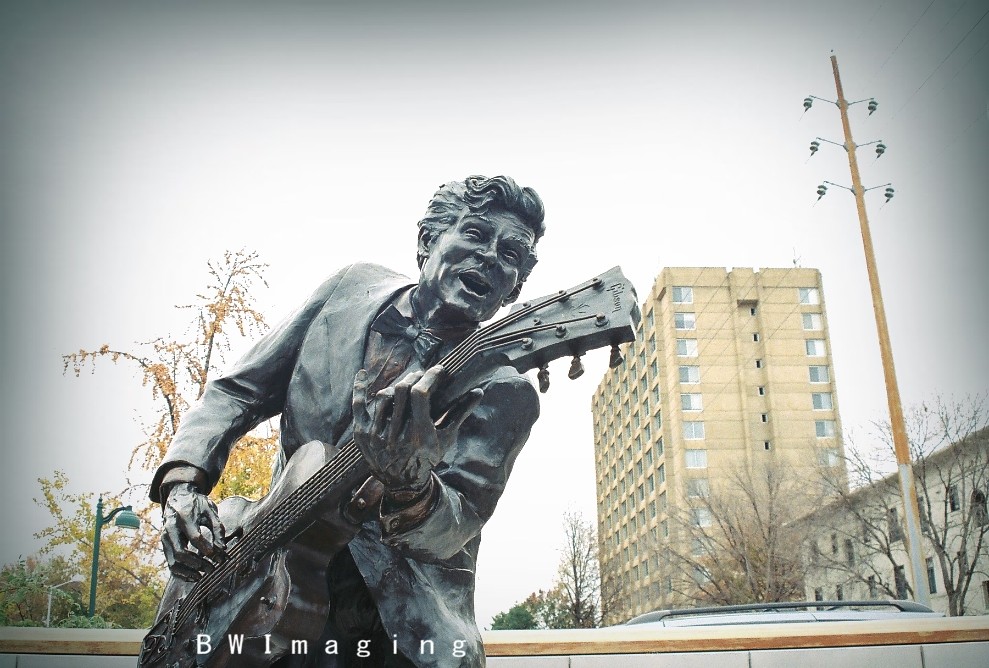
by Chuck Berry (1957) – <Don’t care to hear ’em play the tango / I’m in no mood to dig a mambo / It’s way too early for the congo>. ASCOLTA SU YOUTUBE. In greco antico “troppo presto”, “too early”, si dice <prò kairoû> (letteralmente “prima del momento opportuno”), Vedi <kairós>. Photo: “Chuck Berry Statue, Delmar Loop” by Brian Weiterman is licensed under CC BY-NC-ND 2.0.
ROCKET MAN
by Elton John (1972) – <And I think it’s gonna be a long long time / ‘Till touch down brings me round again to find / I’m not the man they think I am at home / Oh no no no I’m a rocket man / Rocket man burning out his fuse up here alone>. ASCOLTA SU YOUTUBE. <Apokalýptō> in greco antico significa letteralmente “togliere il velo” (opposto a <kalýptō>, “nascondere”). Si usa sia in senso fisico (scoprire il capo) sia in senso figurato (“scoprire”, “to find”, “svelare un segreto”, da cui “apocalisse”).
ROCKIN’ IN THE FREE WORLD
by Neil Young (1989) – <There’s a lot of people sayin’ / we’d be better off dead / Don’t feel like Satan / but I am to them / So I try to forget it / any way I can>. ASCOLTA SU YOUTUBE. In greco antico “dimenticare”, “to forget”, è <epilanthánomai>.
ROCK LOBSTER
by B-52’s (1979) – <Here comes a stingray / There goes a manta-ray / In walked a jelly fish / There goes a dog-fish / Chased by a cat-fish / In flew a sea robin / Watch out for that piranha / There goes a narwhal / Here comes a bikini whale!>. ASCOLTA SU YOUTUBE. “Inseguito”, “chased” in greco antico si dice <diōkómenos>.
da ‘ROLLIN’ STONE’ a ‘ROXANNE’
ROLLIN’ STONE
by Muddy Waters (1948) – <Well, my mother told my father / Just before hmmm, I was born / “I got a boy child’s comin’ / Gonna be, he gonna be a rollin’ stone / Sure ‘nough, he’s a rollin’ stone / Sure ‘nough, he’s a rollin’ stone”>. ASCOLTA SU YOUTUBE. <Líthos kylindómenos> è parte del celebre proverbio greco <Λίθος κυλινδόμενος τὸ φῦκος οὐ ποιεῖ – Líthos kylindómenos tò phŷkos ou poieî> (“pietra rotolante” non fa muschio), da cui deriva direttamente il modo di dire inglese “a rolling stone gathers no moss”.
ROLL OVER BEETHOVEN
by Chuck Berry (1956) – <I got the rockin’ pneumonia / I need a shot of rhythm and blues / I think I’m rollin’ arthritis / Sittin’ down by the rhythm review / Roll over Beethoven rockin’ in two by two>. ASCOLTA SU YOUTUBE. La parola greco-antica <peripneumonía> deriva da <perí> (“intorno”, “completamente”) e <pneúmōn> (“polmone”). Nei trattati medici di Ippocrate e Galeno è il termine tecnico standard per indicare l’infiammazione acuta dei polmoni (“polmonite”, “pneumonia”).
Roxanne – The Police (1979)
<Roxanne / You don’t have to put on the red light / Those days are over / You don’t have to sell your body to the night / Roxanne / You don’t have to wear that dress tonight / Walk the streets for money / You don’t care if it’s wrong or if it’s right>. ASCOLTA SU YOUTUBE. In greco antico “corpo”, “body” è <sôma>.
da ‘RUBY TUESDAY’ a ‘RUNNING ON EMPTY’
RUBY TUESDAY
by The Rolling Stones (1967) – <There’s no time to lose, I heard her say / Catch your dreams before they slip away / Dying all the time / Lose your dreams and you will lose your mind / Ain’t life unkind?>. ASCOLTA SU YOUTUBE. In greco antico <apēnḗs> vuol dire “dura”, “aspra”, “unkind”.
RUNNING ON EMPTY
by Jackson Browne (1977) – <Looking out at the road rushing under my wheels / Looking back at the years gone by like so many summer fields / In sixty-five I was seventeen and running up one-on-one / I don’t know where I’m running now, I’m just running on>. ASCOLTA SU YOUTUBE. Per dire “distese di terra”, “terreni”, “campi”, “fields”, i greci antichi usavano la parola <pedía>.
Vai alla home page di SOKRATIKO.IT oppure torna in testa alla sezione CANZONI P-Z oppure torna all’inizio della lettera R
S – La musica rock è una filosofia di vita
da ‘SABOTAGE’ a ‘SCHOOL’S OUT’
SABOTAGE
by Beastie Boys (1994) – <‘Cause what you see, you might not get / And we can bet, so don’t you get souped yet / Scheming on a thing, that’s a mirage / I’m trying to tell you now, it’s sabotage>. ASCOLTA SU YOUTUBE. In greco antico <kakourgía> indica un “atto doloso”, un “danneggiamento fraudolento”, un “sabotaggio”, “sabotage”.
SAIL AWAY
by Randy Newman (1972) – <In America every man is free / To take care of his home and his family / You’ll be as happy as a monkey in a monkey tree / You’re all gonna be an American>. ASCOLTA SU YOUTUBE. Nella società greco-antica <oîkos> indicava l’unità fondamentale della famiglia: i genitori, i figli, la casa fisica, i beni e tutti i membri del nucleo familiare (da cui deriva la parola italiana economia, da <oikonomía>, “amministrazione della casa/famiglia”).
SAVE THE LAST DANCE FOR ME
by The Drifters (1960) – <Like sparkling wine go and have your fun / Laugh and sing but while we’re apart / Don’t give your heart to anyone>. ASCOLTA SU YOUTUBE. In greco antico “ridere”, “to laugh”, è <γελάω (forma non contratta) – geláō> oppure <γελῶ (forma contratta attica) – gelô>.
SCHOOL’S OUT
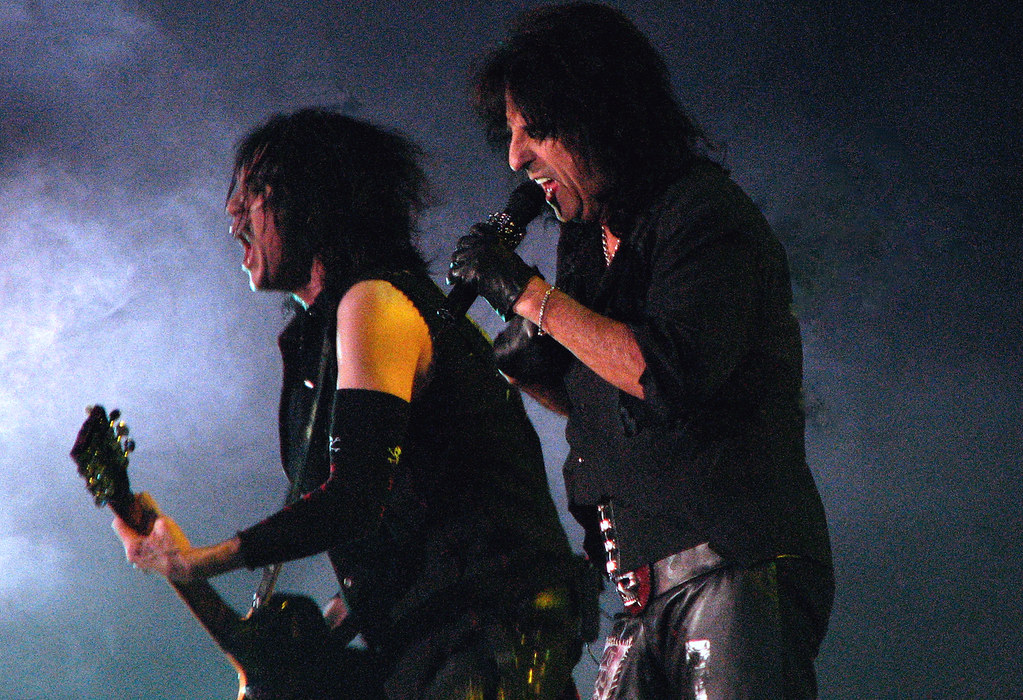
by Alice Cooper (1972) – <No more pencils no more books / No more teacher’s dirty looks / Out for summer / Out till fall / We might not come back at all>. ASCOLTA SU YOUTUBE. Il termine greco antico <metópōron> – composto da <metá> (“dopo”) e <opṓra> (“tarda estate”) – nei testi storici e medici (come in Tucidide e Ippocrate), indica la prima parte dell’”autunno”, “fall”, compresa tra la fine dell’estate e il tardo autunno <phthinópōron>. Photo: “5. ALICE COOPER” by Hot Gossip1 is marked with CC BY-ND 2.0.
da ‘SEVEN NATION ARMY’ a SHE’S NOT THERE’
SEVEN NATION ARMY
by The White Stripes (2003) – <And I’m talking to myself at night / Because I can’t forget / Back and forth through my mind / Behind a cigarette / And the message coming from my eyes / Says leave it alone>. ASCOLTA SU YOUTUBE. <Ómmata> è il termine più poetico per dire “occhi”, “eyes”, in greco antico, usato spesso nella tragedia e nell’epica.
(singolare: <τὸ ὄμμα – tò ómma>, III declinazione, neutro).
SEXUAL HEALING
by Marvin Gaye (1982) – <Baby, I got sick this mornin’ / A sea was stormin’ inside of me / Baby, I think I’m capsizin’ / The waves are risin’ and risin’>. ASCOLTA SU YOUTUBE. <Anatrépomai> è la forma medio-passiva del greco antico <ἀνατρέπω> (“rovesciare”, “abbattere”) e significa “capovolgersi”, “ribaltarsi”, “to capsize” (usato propriamente per imbarcazioni o carri, ma anche in senso figurato in svariati contesti).
SHAKE, RATTLE AND ROLL
by (Big) Joe Turner (1954) – <I believe to my soul you’re the devil and now I know / I believe to my soul you’re the devil and now I know / Well, the more I work, the faster my money goes>. ASCOLTA SU YOUTUBE. Sul concetto di “anima”, “soul”, vedi <pneûma>.
SHE LOVES YOU
by The Beatles (1963) – <You know it’s up to you / I think it’s only fair / Pride can hurt you, too / Apologize to her>. ASCOLTA SU YOUTUBE. “Orgoglio”, “pride”, in greco antico può essere <hýbris> (tracotanza), <hyperēphanía> (superbia), <alazoneía> (vanagloria), <phrónēma> (fierezza), <megalopsychía> (magnanimità) e <philotimía> (amor proprio).
SHE’S NOT THERE
by The Zombies (1964) – <But it’s too late to say you’re sorry / How would I know? Why should I care?>. ASCOLTA SU YOUTUBE. <Lypoûmai> è forma medio-passiva del verbo <λυπέω>: significa “sono spiacente”, “mi dispiace” (è la forma più diretta per dire “I am sorry”).
da ‘SHOULD I STAY OR SHOULD I GO’ a ‘SLOOP JOHN’
SHOULD I STAY OR SHOULD I GO
by The Clash (1982) – <It’s always tease, tease, tease / You’re happy when I’m on my knees / One day it’s fine and next it’s black / So if you want me off your back / Well, come on and let me know / Should I stay or should I go?>. ASCOLTA SU YOUTUBE. “Resto o vado via”, “should I stay or should I go” si rende in reco antico con <ménō ḕ apíō?>.
SHOUT
by The Isley Brothers (1959) – <Everybody shout now / Everybody shout now / Everybody, shout, shout / Shout, shout, shout>. ASCOLTA SU YOUTUBE. In greco antico ci sono molti modi per dire “strillare”, “to shout”: <βοάω – boáō> [contratto: <βοῶ – boô>] (gridare, chiamare a gran voce); <κράζω – krázō> (strillare, gracchiare); <ἀναβοάω – anaboáō> [contratto: <ἀναβοῶ – anaboô>] (lanciare un grido); <alalázō> (lanciare l’urlo di guerra <ἀλαλή>, gridare in coro); <oimṓzō> (gridare di dolore, gemere); <ololýzō) (gridare in modo acuto e vibrante).
SIGN O’ THE TIMES
by Prince (1987) – <Sign o’ the times mess with your mind / Hurry before it’s too late / Let’s fall in love, get married, have a baby / We’ll call him Nate / If it’s a boy>. ASCOLTA SU YOUTUBE. In greco antico “fuggi”, “scappa”, “hurry”, si dice <pheûge>, imperativo presente (2ª persona singolare) di <φεύγω>. Photo: “Prince-Guitar_pink” by njTare is licensed under CC PDM 1.0.

(SITTIN’ ON) THE DOCK OF THE BAY
by Otis Redding (1968) – <Looks like nothin’s gonna change / Everything seems to stay the same / I can’t do what ten people tell me to do / So I guess I’ll remain the same>. ASCOLTA SU YOUTUBE. In greco antico il numero “dieci”, “ten”, si scrive per esteso <δέκα – déka> e si scrive <ιʹ> (minuscolo) oppure <Ιʹ> (maiuscolo) nella numerazione alfabetica (sistema ionico o milesio),
SLOOP JOHN B
by The Beach Boys (1966) – <Let me go home, let me go home / I want to go home, yeah yeah / Well I feel so broke up / I want to go home>. ASCOLTA SU YOUTUBE. “casa”, “home”, in greco antico è <oîkos>.
da ‘SMELLS LIKE TEEN SPIRIT’ a ‘SOUL MAN’
SMELLS LIKE TEEN SPIRIT
by Nirvana (1991) – <I’m worse at what I do best / And for this gift I feel blessed / Our little group has always been / And always will until the end>. ASCOLTA SU YOUTUBE. In greco antico “fortunato”, “beato”, “blessed”, si dice <makários>.
SOMEBODY TO LOVE
by Jefferson Airplane (1967) – <When the truth is found / To be lies / And all the joy / Within you dies / Don’t you want somebody to love / Don’t you need somebody to love / Wouldn’t you love somebody to love / You better find somebody to love, love>. ASCOLTA SU YOUTUBE. “Qualcuno da amare”, “somebody to love” in greco antico si dice <τινὰ φιλεῖν – tinà phileîn>: <tiná> è l’accusativo singolare del pronome indefinito <τις> (“qualcuno”) [qui funge da complemento oggetto (es. “cerco qualcuno da amare”)]. <Tις> è una enclitica, ma poiché si trova all’inizio della locuzione (senza una parola precedente su cui appoggiarsi), mantiene l’accento sulla sillaba finale (grave <ὰ> davanti a un’altra parola, acuto <ά> se isolato); <phileîn> è l’infinito di <φιλέω>.
SON-OF-A PREACHER MAN
by Dusty Springfield (1968) – <The only one who could ever reach me / Was the son of a preacher man / The only boy who could ever teach me / Was the son of a preacher man / Yes, he was, he was, ooh, yes, he was>. ASCOLTA SU YOUTUBE. In greco antico “insegnare, “to teach”, è <didáskō>.
Soul man – Sam & Dave (1967)
<Got what I got the hard way / And I make it better, each and every day / So honey, said don’t you fret / ‘Cause you ain’t seen nothing yet>. ASCOLTA SU YOUTUBE. Sulla nozione di “anima”, “soul” vedi <pneûma> e <psychḗ>.
da ‘SPANISH HARLEM’ a ‘STANDING IN THE SHADOWS OF LOVE’
SPANISH HARLEM
by Ben E. King (1960) – <There is a rose in Spanish Harlem / A red rose up in Spanish Harlem / It is a special one, it’s never seen the sun / It only comes out when the moon is on the run / And all the stars are gleaming / It’s growing in the street right up through the concrete / But soft and sweet and dreaming>. ASCOLTA SU YOUTUBE. Il fiore “rosa”, “rose”, in greco antico è <rhódon>.
SPOONFUL
by Howlin’ Wolf (1960) – <Men lie about that spoonful / Some cry about that spoonful / Some die about that spoonful / Everybody fight about a spoonful / That spoon, that spoon, that spoonful>. ASCOLTA SU YOUTUBE. In greco antico “cucchiaio”, “spoon”, è <mýstron> oppure <kochliárion> (“cucchiaino”).
STAN
by Eminem featuring Dido (2000) – <My tea’s gone cold I’m wondering why I / Got out of bed at all / The morning rain clouds up my window / And I can’t see at all / And even if I could it’ll all be gray>. ASCOLTA SU YOUTUBE. <Poliós> è l’equivalete greco antico di “grigio”, “gray”.
La musica rock è una filosofia di vita
STAND
by Sly & the Family Stone (1969) – <Stand / In the end you’ll still be you / One that’s done all the things you set out to do / Stand / There’s a cross for you to bear / Things to go through if you’re going anywhere / Stand / For the things you know are right / It’s the truth that the truth makes them so uptight / Stand / All the things you want are real / You have you to complete and there is no deal>. ASCOLTA SU YOUTUBE. In greco antico “alla fine”, “in fin dei conti”, “tutto sommato”, “in the end”, è <tò hólon>.
STAND BY ME
by Ben E. King (1961) – <If the sky that we look upon / Should tumble and fall / Or the mountains should crumble to the sea / I won’t cry, I won’t cry, no I won’t shed a tear / Just as long as you stand, stand by me>. ASCOLTA SU YOUTUBE. In greco antico “resta con me”, “resta al mio fianco”, “stand by me” è <parástēthí moi>.
STANDING IN THE SHADOWS OF LOVE
by Four Tops (1966) – <All alone / I’m destined to be, with misery my only company / It may come today, it might come tomorrow / But it’s for sure I ain’t got nothing but sorrow>. ASCOLTA SU YOUTUBE. In greco antico <álgos> (sostantivo neutro della III declinazione) significa “dolore”, “pena”, “sofferenza”, “sorrow” (indica sia il dolore fisico sia quello dell’anima; da questo termine derivano parole italiane come analgesico o nostalgia).
da ‘STAYIN’ ALIVE’ a ‘SUICIDE BLONDE’
STAYIN’ ALIVE
by Bee Gees (1977) – <Whether you’re a brother or whether you’re a mother / You’re stayin’ alive, stayin’ alive>. ASCOLTA SU YOUTUBE. “Fratello”, “brother”, in greco antico è <adelphós>. Photo: “Bee Gees Live” by bestgibb is licensed under CC BY-SA 2.0.
Stairway to heaven – Led Zeppelin (1971)
<And a new day will dawn / For those who stand long / And the forests will echo with laughter>. ASCOLTA SU YOUTUBE. “Risata fragorosa”, “sghignazzo”, “laughter”, in greco antico è <kanchasmós>.
STRAWBERRY FIELDS FOREVER
by The Beatles (1967) – <Living is easy with eyes closed / Misunderstanding all you see / It’s getting hard to be someone / But it all works out / It doesn’t matter much to me>. ASCOLTA SU YOUTUBE. “Campi di fragole per sempre”, “strawberry fields forever” in greco antico si dice <agroì chamaikerásōn eis aeí>.
STREET FIGHTING MAN
by The Rolling Stones (1968) – <Hey think the time is right / For a palace revolution / But where I live the game / To play is compromise solution>. ASCOLTA SU YOUTUBE. “Gioco”, “gara”, “competizione”, “game”, in greco antico è <agṓn>.
SUBTERRANEAN HOMESICK BLUES
by Bob Dylan (1965) – <Try to be a success / Please her, please him, buy gifts / Don’t steal, don’t lift / Twenty years of schoolin’ / And they put you on the day shift>. ASCOLTA SU YOUTUBE. In greco antico “successo”, “buona riuscita”, “success”, è <eupragía>.
SUICIDE BLONDE
by INXS (1990) – <Got some revelation / Put into your hands / Save you from your misery like rain across the land / Don’t you see the color of deception / Turning your world around again>. ASCOLTA SU YOUTUBE. Il greco antico di “inganno”, “frode”, “deception” è <apátē>.
da ‘SUITE: JUDY BLUE EYES’ a ‘SURRENDER’
SUITE: JUDY BLUE EYES
by Crosby, Stills & Nash (1969) – <It’s getting to the point where I’m no fun anymore / I am sorry / Sometimes it hurts so badly, I must cry out loud / “I am lonely”>. ASCOLTA SU YOUTUBE. <Lypeî> è il modo greco antico per dire “fa male all’animo”, “addolora”, “ferisce emotivamente”, “it hurts”.
SUMMERTIME BLUES
by Eddie Cochran (1958) – <Sometimes I wonder what I’m a-gonna do / But there ain’t no cure for the summertime blues>. ASCOLTA SU YOUTUBE. “Cura”, “terapia”, “trattamento”, “cure” in greco antico è <therapeía>.
Sunday bloody Sunday – U2 (1983)
<And it’s true we are immune / When fact is fiction and TV reality / And today the millions cry / We eat and drink while tomorrow they die>. ASCOLTA SU YOUTUBE. Nel greco ellenistico e tardoantico, poiché nell’epoca classica la settimana di sette giorni non era ancora in uso, “domenica”, “Sunday”, si dice <hē hēméra toû Hēlíou> corrispondente all’inglese Sunday e al latino dies Solis, introdotto quando nel mondo greco-romano si diffuse la settimana planetaria di sette giorni.
SUNSHINE OF YOUR LOVE
by Cream (1968) – <I’ve been waiting so long / To be where I’m going / In the sunshine of your love>. ASCOLTA SU YOUTUBE. <Periménō> (composto di <μένω>, “restare”) è uno dei modi per dire “aspettare”, “to wait”, in greco antico.
SUPERSTITION
by Stevie Wonder (1972) – <When you believe in things / That you don’t understand / Then you suffer / Superstition ain’t the way>. ASCOLTA SU YOUTUBE. Per dire “superstizione”, “superstition” in greco antico si usa la parola <deisidaimonía>.
SURRENDER
by Cheap Trick (1978) – <Whatever happened to all this season’s losers of the year? / Every time I got to thinking, where’d they disappear?>. ASCOLTA SU YOUTUBE. Uno dei modi per dire “scomparire”, “disappear”, in greco antico è <ekleípō>, “eclissarsi” (usato sia per la scomparsa graduale di cose o usanze, sia in astronomia per la scomparsa del sole o della luna; da qui deriva eclissi).
da ‘SUSPICIOUS MINDS’ a ‘SYMPATHY FOR THE DEVIL’
SUSPICIOUS MINDS
by Elvis Presley (1969) – <We can’t go on together / With suspicious minds (suspicious minds) / And we can’t build our dreams / On suspicious minds>. ASCOLTA SU YOUTUBE. In greco antico “sospettoso”, “suspicious”, si dice <hýpoptos>.
SWEET CHILD O’ MINE
by Guns n’ Roses (1987) – <And if I’d stare too long / I’d probably break down and cry>. ASCOLTA SU YOUTUBE. In greco antico, un modo per dire “guardare fisso”, “fissare con lo sguardo”, “to stare”, è <ἀτενίζω – atenízō>.
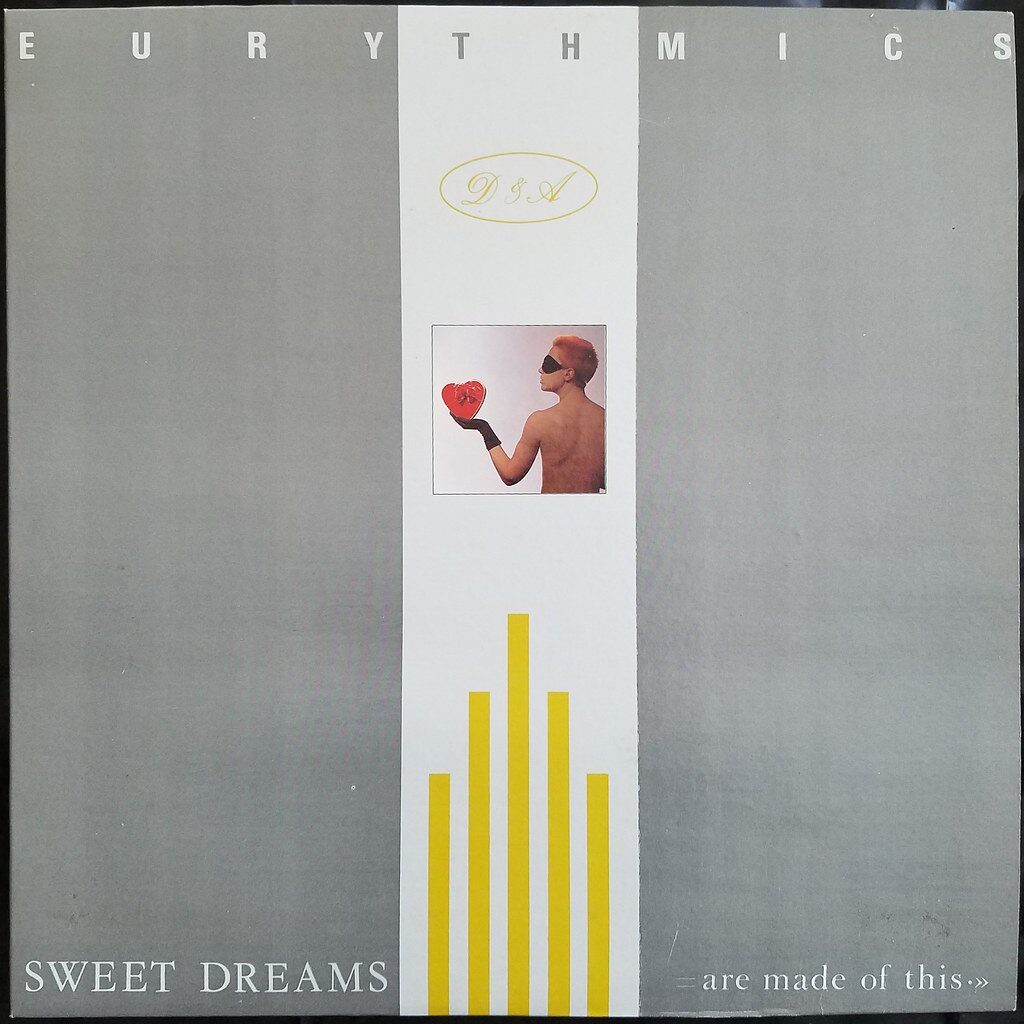
SWEET DREAMS (ARE MADE OF THIS)
by Eurythmics (1983) – <Sweet dreams are made of this / Who am I to disagree? / I travel the world / And the seven seas / Everybody’s looking for something. / Some of them want to use you / Some of them want to get used by you / Some of them want to abuse you / Some of them want to be abused>. ASCOLTA SU YOUTUBE. In greco antico, il verbo più diretto e comune per dire “abusare”, “approfittare (eccessivamente)”, “to abuse”, è <καταχράομαι / καταχρῶμαι – katakhráomai / katakhrômai>. Photo: “20171221_133034” by capleez is licensed under CC BY-NC-SA 2.0.
SWEET EMOTION
by Aerosmith (1975) – <You talk about things that nobody cares / You’re wearing out things that nobody wears / You’re calling my name but I gotta make clear / I can’t say baby where I’ll be in a year>. ASCOLTA SU YOUTUBE. “Un anno”, “a year” in greco antico è <ἔτος – étos>.
SWEET JANE
by The Velvet Underground (1970) – <They’ll tell you life is full of dirt / And the women never really faint / And the villains always blink their eyes / And the children are the only ones who blush / ‘Cause life is just to die>. ASCOLTA SU YOUTUBE. “Arrossire”, “to blush”, in greco antico è <ἐρυθριάω / ἐρυθριῶ – erythriáō / erythriô> (la seconda è la forma contratta attica).
Sympathy for the devil – The Rolling Stones (1968)
<Pleased to meet you / Hope you guess my name / But what’s puzzling you / Is the nature of my game>. ASCOLTA SU YOUTUBE. “Piacere di conoscerti” (in greco antico, come in inglese, non c’è il “lei” di cortesia), “pleased to meet you”, si dice <ἥδομαί σοι ἐντυχών – hḗdomaí soi entychṓn> (se chi parla è un uomo); <ἥδομαί σοι ἐντυχοῦσα – hḗdomaí soi entychoûsa> (se chi parla è una donna).
Vai alla home page di SOKRATIKO.IT oppure torna in testa alla sezione CANZONI P-Z oppure torna all’inizio della lettera S
T
da ‘TAKE ME OUT’ a ‘TELL IT LIKE IT IS’
TAKE ME OUT
by Franz Ferdinand (2004) – <So if you’re lonely / You know I’m here waiting for you / I’m just a cross hair / I’m just a shot away from you>. ASCOLTA SU YOUTUBE. Nell’ antica Grecia non esistevano ovviamente le armi da fuoco, quindi si usava il tiro d’arco <τόξευμα
– tóxeuma> o il tiro di pietra/fionda <λίθου βολή – líthou bolḗ> come unità di misura per indicare una distanza brevissima (“a un tiro di schioppo da te”, “a shot away from you”). L’espressione più idiomatica è <τόξευμα ἀπέχω σου – tóxeuma apékhō sou>.
TAKE ME TO THE RIVER
by Al Green (1974) – <You stole my money and my cigarettes / And I haven’t seen hide nor hair of you yet>. ASCOLTA SU YOUTUBE. In greco antico, il sostantivo per dire “fiume”, “river” è <ποταμός – potamós>.
TANGLED UP IN BLUE
by Bob Dylan (1975) – <Then she opened up a book of poems / And handed it to me / Written by an Italian poet / From the thirteenth century / And everyone of them words rang true / And glowed like burnin’ coal / Pourin’ off of every page / Like it was written in my soul / From me to you / Tangled up in blue>. ASCOLTA SU YOUTUBE. “Poesie, “poems”, in greco antico è <poiḗmata>.
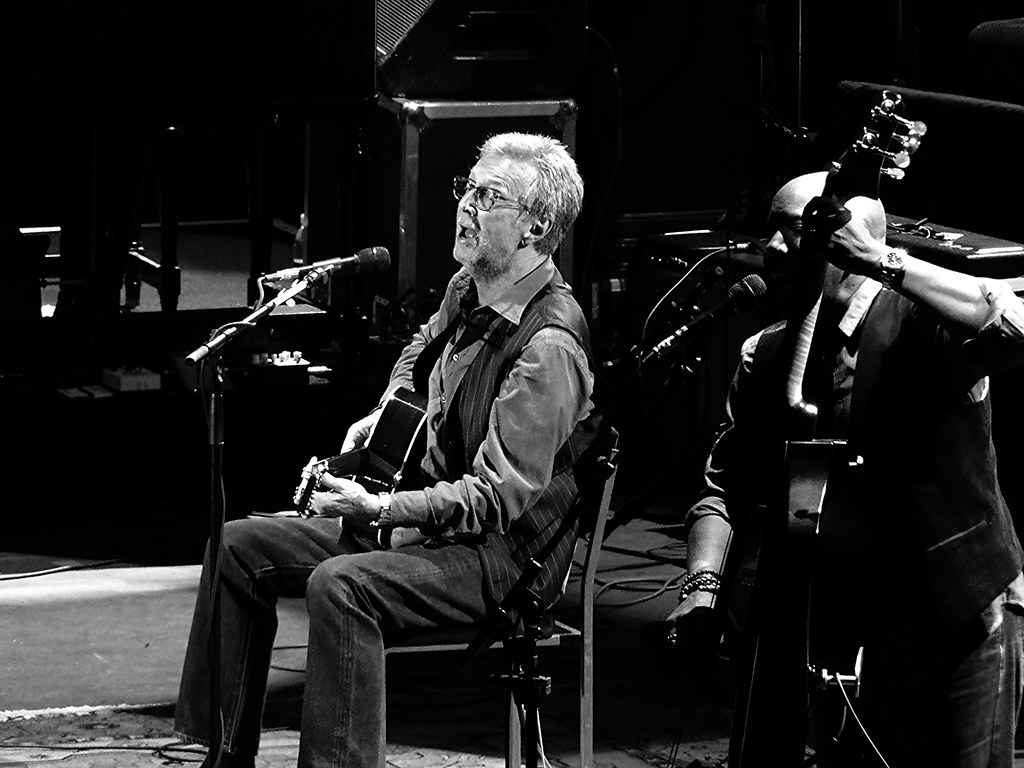
TEARS IN HEAVEN
by Eric Clapton (1992) – <Time can bring you down, time can bend your knees / Time can break your heart, have you begging please, begging please / Beyond the door there’s peace I’m sure / And I know there’ll be no more tears in heaven>. ASCOLTA SU YOUTUBE. “Piegare”, “to bend”, in greco antico è <kámptō>. Photo: “Clapton” by Jonathan Bayer is licensed under CC BY-NC-SA 2.0.
TELL IT LIKE IT IS
by Aaron Neville (1966) – <Life is too short to have sorrow / You may be here today and gone tomorrow / You might as well get what you want / So go on and live, baby, go on and live>. ASCOLTA SU YOUTUBE. Per dire in greco antico “bimba”, “baby” (rivolto a una donna adulta e non legato all’età anagrafica) si può usare <paidíon>, letteralmente “bambina/piccola” (molto usato nella commedia come vezzeggiativo amoroso), oppure <kórē>, «fanciulla/ragazza» (spesso usato anche per donne adulte in senso affettuoso o poetico).
da ‘THANK YOU’ a ‘THAT’S THE WAY OF THE WORLD’
THANK YOU (Falettinme Be Mice Elf Agin)
by Sly & the Family Stone (1970) – <Lookin’ at the devil, grinnin’ at his gun / Fingers start shakin’, I begin to run / Bullets start chasin’ I begin to stop / We begin to wrestle I was on the top>. ASCOLTA SU YOUTUBE. In greco antico, il sostantivo per dire “dita”, “fingers”, è <δάκτυλοι – dáktyloi>, dal singolare <δάκτυλος – dáktylos>, “dito” (in poesia presenta anche una forma alternativa neutra al plurale: <δάκτυλα – dáktyla>.
THAT’LL BE THE DAY
by Buddy Holly (1957) – <You sit and hold me and you tell me boldly / That some day, well I’ll be blue>. ASCOLTA SU YOUTUBE. “Boldly” significa “coraggiosamente”. Sul concetto di “coraggio” vedi <andreía>.
That’s all right – Elvis Presley (1954)
<I’m leaving town for sure / Well, then you won’t be bothered with / Me hanging around your door / Well, that’s all right, that’s all right>. ASCOLTA SU YOUTUBE. In greco antico per esprimere in modo colloquiale l’idea di “tutto bene”, “non c’è problema”, “that’s all right”, le formule più idiomatiche sono <πάντα καλῶς ἔχει – pánta kalôs ékhei> oppure l’avverbio secco <καλῶς – kalôs>.
THAT’S ENTERTAINMENT
by The Jam (1980) – <A hot summer’s day and sticky black tarmac / Feeding ducks in the park and wishing you were far away / That’s entertainment, that’s entertainment>. ASCOLTA SU YOUTUBE. In greco antico non esiste un termine corrispondente al concetto moderno di industria dell’”intrattenimento”, “entertainment”, ma a seconda della sfumatura si usano principalmente <διατριβή – diatribḗ> (passatempo/svago), <τέρψις – térpsis> (diletto/piacere), <παιδιά – paidiá> (gioco/divertimento) o <θέαμα – théama> (spettacolo).
THAT’S THE WAY OF THE WORLD
by Earth, Wind & Fire (1975) – <You will find peace of mind / If you look way down in your heart and soul / Don’t hesitate ’cause the world seems cold / Stay young at heart, ’cause you’re never, never old>. ASCOLTA SU YOUTUBE. Sulla nozione di “pace dell’anima”, “peace of mind”, vedi <ataraxía>.
da ‘THE BOXER’ a ‘THE HOUSE OF THE RISING SUN’
THE BOXER
by Simon & Garfunkel (1969) – <I have squandered my resistance / For a pocket full of mumbles, such are promises / All lies and jests / Still a man hears what he wants to hear / And disregards the rest>. ASCOLTA SU YOUTUBE. In greco antico, il sostantivo per dire “promesse”, “promises” (al plurale) è <ὑποσχέσεις – hyposkhéseis>, dal singolare <ὑπόσχεσις – hypóskhesis>, (“promessa”).
THE BOYS OF SUMMER
by Don Henley (1984) – <Out on the road today / I saw a deadhead sticker on a cadillac / A little voice inside my head said: / “Don’t look back, you can never look back”>. ASCOLTA SU YOUTUBE. “Voce”, “voice”, in greco antico è è <φωνή – phōnḗ>.
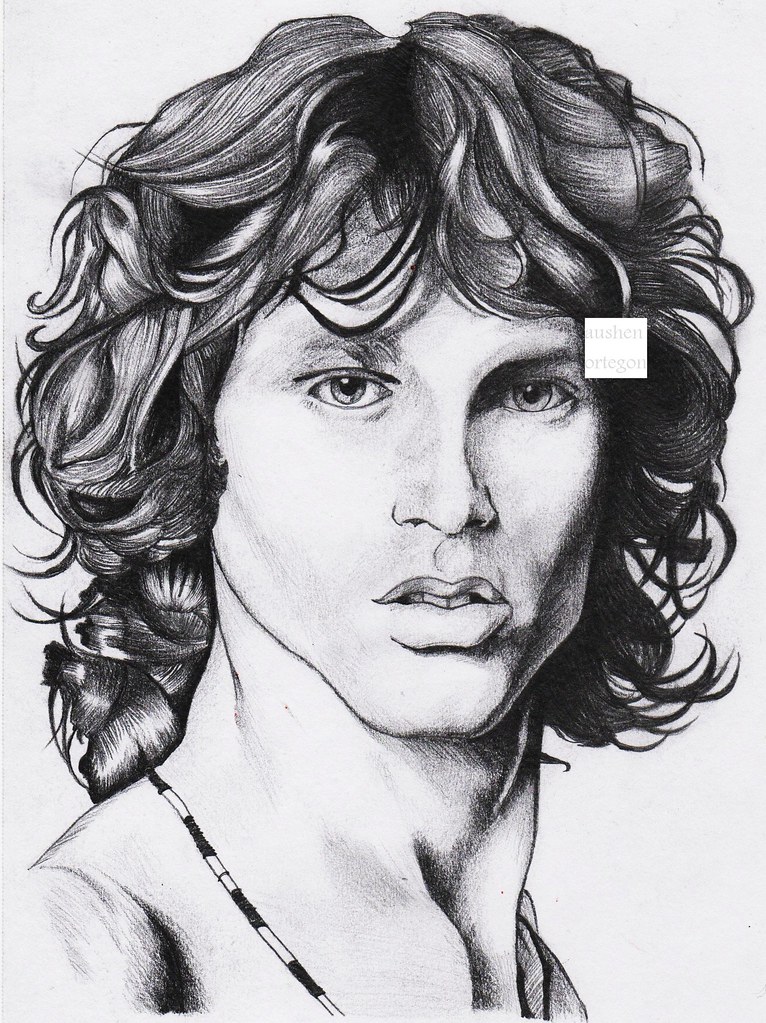
THE END
by The Doors (1967) – <It hurts to set you free / But you’ll never follow me / The end of laughter and soft lies / The end of nights we tried to die / This is the end>. ASCOLTA SU YOUTUBE. In greco antico, “è la fine”, “è finita”, “this is the end” si dice <toûto tò télos estín> (“questa è la fine”), mentre nel linguaggio teatrale ed emotivo per dire “è finita”, “siamo perduti” si usa <ólōlen>, (“è finito/distrutto”) oppure <pépraktai>, (“è compiuto/fatta”). Photo: “Morrison” by MorrisonXXI is licensed under CC BY-NC-ND 2.0.
THE GREAT PRETENDER
by The Platters (1955) – <Oh-oh, yes I’m the great pretender / Pretending that I’m doing well / My need is such I pretend too much / I’m lonely but no one can tell>. ASCOLTA SU YOUTUBE. In greco antico “necessità”, “need” è <anánkē>, mentre se si intende il bisogno materiale, la mancanza o l’indigenza si usa <khreía> o <éndeia>.
THE HARDER THEY COME
by Jimmy Cliff (1975) – <So as sure as the sun will shine / I’m gonna get my share now of what’s mine / And then the harder they come / The harder they’ll fall, one and all / Ooh the harder they come / The harder they’ll fall, one and all>. ASCOLTA SU YOUTUBE. In greco antico, “la mia parte”, “my share”, è <tò emòn méros> oppure semplicemente <tò méros mou>, usando il sostantivo neutro <μέρος> (“parte”, “porzione”, “quota”).
THE HOUSE OF THE RISING SUN
by The Animals (1964) – <Oh mother tell your children / Not to do what I have done / Spend your lives in sin and misery / In the House of the Rising Sun>. ASCOLTA SU YOUTUBE. In greco antico, “sole nascente”, “rising sun” è <hḗlios anískhōn> oppure <hḗlios anatéllōn>, usando il sostantivo <hḗlios>, (“sole”) accompagnato dal participio presente dei verbi <ἀνίσχω> o <ἀνατέλλω> (“sorgere”, “levarsi”).
da ‘THE LETTER’ a ‘THE RISING’
THE LETTER
by The Box Tops (1967) – <Ain’t got time to take a fast train / Lonely days are gone, I’m a-goin’ home>. ASCOLTA SU YOUTUBE. “Giornate solitarie”, “lonely days”, in greco antico è <érēmoi hēmérai>.
La musica rock è una filosofia di vita
THE LOCO-MOTION
by Little Eva (1962) – <Do it nice and easy, now, don’t lose control / A little bit of rhythm and a lot of soul>. ASCOLTA SU YOUTUBE. “Non perdere il controllo”, “don’t lose control” è <mḕ exístaso seautoû>.
THE MESSAGE
by Grandmaster Flash & the Furious Five (1982) – <It’s like a jungle sometimes / It makes me wonder how I keep from goin’ under>. ASCOLTA SU YOUTUBE. In greco antico, per rendere l’idea figurata di “giungla”, “jungle”, come luogo ostile, caotico, insidioso e senza legge, si può dire sono <ánomos pólis> (“città senza legge”), <thēríōn koítē> (“covo/tana di belve”) oppure <lókhmē>, (“macchia/covo d’insidie”, già usato in senso metaforico dai Greci per indicare luoghi di agguati).
THE NIGHT THEY DROVE OLD DIXIE DOWN
by The Band (1969) – <Now I don’t mind choppin’ wood / And I don’t care if the money’s no good / You take what you need and you leave the rest / But they should never have taken the very best>. ASCOLTA SU YOUTUBE.
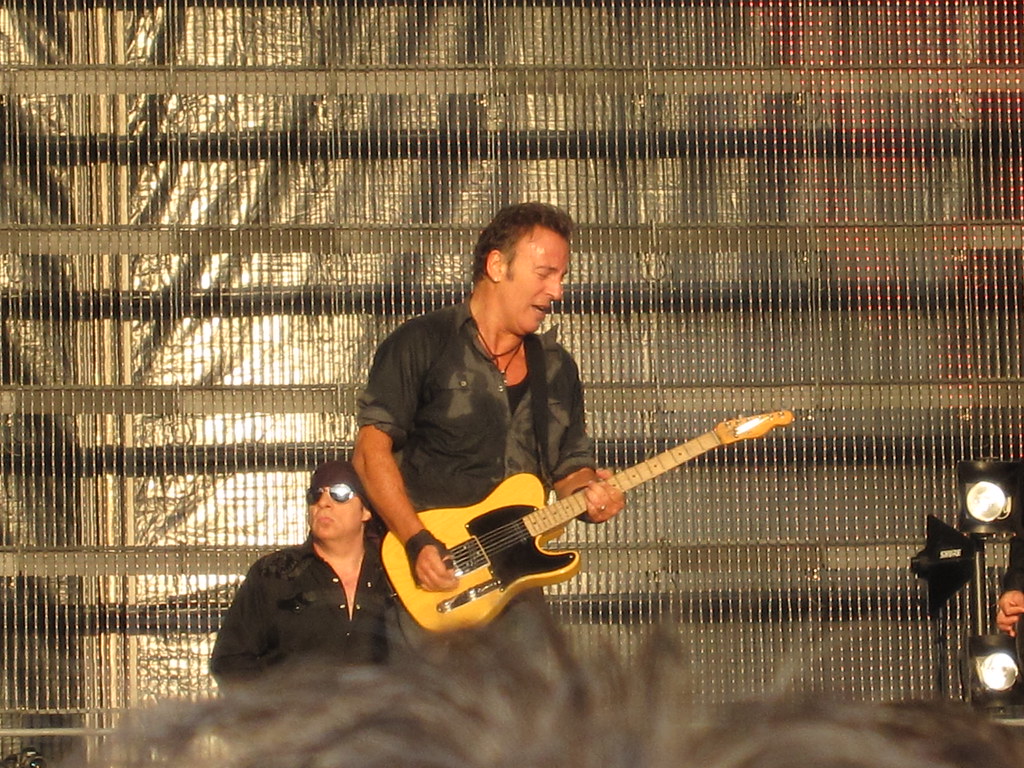
THE RISING
by Bruce Springsteen (2002) – <Can’t see nothin’ in front of me / Can’t see nothin’ coming up behind / I make my way through this darkness / I can’t feel nothing but this chain that binds me>. ASCOLTA SU YOUTUBE. Photo: “IMG_1277” by avonea is licensed under CC BY-NC-ND 2.0.
da ‘THE SOUND OF SILENCE’ a ‘THE TRACKS OF MY TEARS’
THE SOUND OF SILENCE
by Simon & Garfunkel (1965) – <And in the naked light I saw / Ten thousand people, maybe more / People talking without speaking / People hearing without listening / People writing songs that voices never share / No one dared / Disturb the sound of silence>. ASCOLTA SU YOUTUBE.
THE TIMES THEY ARE A-CHANGIN’
by Bob Dylan (1964) – <Come writers and critics, prophesize with your pen / And keep your eyes wide, the chance won’t come again / And don’t speak too soon for the wheel’s still in spin / And there’s no tellin’ who that it’s namin’ / For the loser now will be later to win / For the times, they are a-changin’>. ASCOLTA SU YOUTUBE.
THE THRILL IS GONE
by B. B. King (1969) – <I’m free from your spell / And now that it’s all over / All I can do is wish you well>. ASCOLTA SU YOUTUBE.
The tracks of my tears – The Miracles (1965)
<Although I might be laughing loud and hearty / Deep inside I’m blue / So take a good look at my face / You’ll see my smile looks out of place>. ASCOLTA SU YOUTUBE.
da ‘THE WANDERER’ a ‘THUNDER ROAD’
THE WANDERER
by Dion (1961) – <They call me the wanderer / Yeah, the wanderer / I roam around, around, around>. ASCOLTA SU YOUTUBE.
THE WEIGHT
by The Band (1968) – <I pulled into Nazareth, was feelin’ about half past dead / I just need some place where I can lay my head / “Hey, mister, can you tell me where a man might find a bed?” / He just grinned and shook my hand, “No” was all he said>. ASCOLTA SU YOUTUBE.
THE WIND CRIES MARY
by Jimi Hendrix Experience (1965) – <A broom is drearily sweeping / Up the broken pieces of yesterday’s life / Somewhere a queen is weeping / Somewhere a king has no wife / And the wind, it cries Mary>. ASCOLTA SU YOUTUBE.
THIRTEEN
by Big Star (1972) – <Won’t you let me walk you home from school / Won’t you let me meet you at the pool / Maybe Friday I can get tickets for the dance / And I’ll take you / Ooh>. ASCOLTA SU YOUTUBE.
THUNDER ROAD
by Bruce Springsteen (1975) – <We got one last chance to make it real / To trade in these wings on some wheels / Climb in back, heaven’s waiting on down the tracks>. ASCOLTA SU YOUTUBE.
da ‘TIGHTEN UP’ a ‘TUTTI-FRUTTI’
TIGHTEN UP
by Archie Bell & the Drells (1968) – <Let’s tighten it up now / Do the tighten up / Everybody can do it now>. ASCOLTA SU YOUTUBE.
TIRED OF BEING ALONE
by Al Green (1971) – <Tired of being alone here by myself, now / I tell ya, I’m tired baby / I’m tired of being all wrapped up late at night>. ASCOLTA SU YOUTUBE.
TRAIN IN VAIN
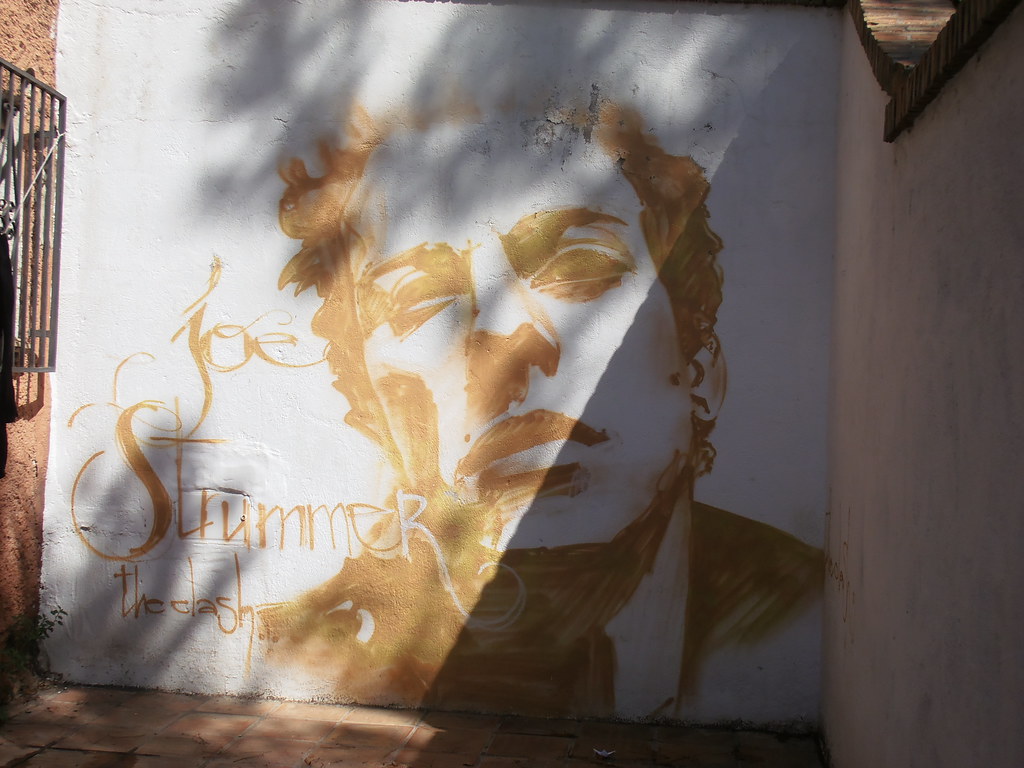
by The Clash (1979) – <So alone I keep the wolves at bay / And there’s only one thing I can say / You didn’t stand by me / No, not at all / You didn’t stand by me / No way / You must explain why this must be / Did you lie when you spoke to me?>. ASCOLTA SU YOUTUBE. Photo: “Placeta Joe Strummer, Joe Strummer Square, The Clash, Spain, Andalucia, Granada” by Jeanne Menjoulet is licensed under CC BY-ND 2.0.
TRY A LITTLE TENDERNESS
by Otis Redding (1966) – <Watch her groove / You got to know what to do, man / Take this advice / You gotta love, squeeze, don’t tease>. ASCOLTA SU YOUTUBE.
TUTTI-FRUTTI
by Little Richard (1955) – <She rocks to the east / She rocks to the west / But she’s the girl that I love best>. ASCOLTA SU YOUTUBE.
Vai alla home page di SOKRATIKO.IT oppure torna in testa alla sezione CANZONI P-Z oppure torna all’inizio della lettera T
U – La musica rock è una filosofia di vita
UMBRELLA
by Rihanna featuring Jay-Z (2007) – <These fancy things will never come in between / You’re part of my entity, here for infinity / When the world has took its part / When the world has dealt its cards / If the hand is hard, together we’ll mend your heart>. ASCOLTA SU YOUTUBE.
UNCHAINED MELODY
by The Righteous Brothers (1965) – <Lonely rivers flow / To the sea, to the sea / To the open arms of the sea / Lonely rivers sigh / “Wait for me, wait for me” / I’ll be coming home, wait for me>. ASCOLTA SU YOUTUBE.
UNDER THE MILKY WAY
by The Church (1988) – <And it’s something quite peculiar / Something that’s shimmering and white / It leads you here despite your destination / Under the Milky Way tonight>. ASCOLTA SU YOUTUBE.
UP ON THE ROOF
by The Drifters (1962) – <When this old world starts getting me down / And people are just too much for me to face / I climb way up to the top of the stairs / And all my cares just drift right into space>. ASCOLTA SU YOUTUBE.
Vai alla home page di SOKRATIKO.IT oppure torna in testa alla sezione CANZONI P-Z oppure torna all’inizio della lettera U
V
VISIONS OF JOHANNA
by Bob Dylan (1966) – <Inside the museums, infinity goes up on trial / Voices echo this is what salvation must be like after a while / But Mona Lisa musta had the highway blues / You can tell by the way she smiles>. ASCOLTA SU YOUTUBE.
VOODOO CHILD
by Jimi Hendrix Experience (1968) – <I didn’t mean to take you up all your sweet time / I’ll give it right back to you one of these days>. ASCOLTA SU YOUTUBE.
Vai alla home page di SOKRATIKO.IT oppure torna in testa alla sezione CANZONI P-Z oppure torna all’inizio della lettera V
W – La musica rock è una filosofia di vita
da ‘WALK AWAY RENEE’ a ‘WAKE UP LITTLE SUSIE’
WALK AWAY RENEE
by The Left Banke (1966) – <The empty sidewalks on my block are not the same / You’re not to blame / From deep inside the tears that I’m forced to cry / From deep inside the pain that I chose to hide>. ASCOLTA SU YOUTUBE.
WALKING IN THE RAIN
by The Ronettes (1964) – <Though sometimes we’ll fight, I won’t really care / And I’ll know it’s gonna be alright ’cause we’ve got so much we share>. ASCOLTA SU YOUTUBE.
WALK ON BY
by Dionne Warwick (1964) – <If you see me walking down the street / And I start to cry each time we meet / Walk on by, walk on by>. ASCOLTA SU YOUTUBE.
WALK ON THE WILD SIDE
by Lou Reed (1972) – <Jackie is just speeding away / Thought she was James Dean for a day / Then I guess she had to crash / Valium would have helped that bash / She said, hey babe, take a walk on the wild side / I said, hey honey, take a walk on the wild side / And the colored girls say / Doo doo doo doo doo doo doo doo doo>. ASCOLTA SU YOUTUBE. Photo: “Lou Reed” by Mexicaans fotomagazijn is licensed under CC BY-NC 2.0.

WALK THIS WAY
by Run-DMC (1986) – <It wasn’t me, she was foolin’ / ‘Cause she knew what was she was doin’ / When she told me how to walk this way / She told me to / Walk this way / Talk this way / Walk this way / Talk this way>. ASCOLTA SU YOUTUBE.
WAKE UP LITTLE SUSIE
by The Everly Brothers (1957) – <The movie wasn’t so hot / It didn’t have much of a plot / We fell asleep / Our goose is cooked / Our reputation is shot>. ASCOLTA SU YOUTUBE.
da ‘WATCHING THE DETECTIVES’ a ‘WE WILL ROCK YOU’
WATCHING THE DETECTIVES
by Elvis Costello (1977) – <You think you’re alone until you realize you’re in it / Now fear is here to stay, love is here for a visit / They call it instant justice when it’s past the legal limit / Someone’s scratching at the window, I wonder who is it?>. ASCOLTA SU YOUTUBE.
WATERLOO SUNSET
by The Kinks (1968) – <Every day I look at the world from my window / Chilly chilly is the evening time, Waterloo sunset’s fine>. ASCOLTA SU YOUTUBE.
WE GOTTA GET OUT OF THIS PLACE
by The Animals (1965) – <We gotta get out of this place / If it’s the last thing we ever do / We gotta get out of this place / ‘Cause girl, there’s a better life for me and you>. ASCOLTA SU YOUTUBE.
WELCOME TO THE JUNGLE
by Guns N’ Roses (1987) – <Welcome to the jungle, we’ve got fun and games / We got everything you want honey, we know the names / We are the people that can find whatever you may need / If you got the money, honey we got your disease>. ASCOLTA SU YOUTUBE.
WE’VE ONLY JUST BEGUN
by Carpenters (1970) – <We’ve only just begun to live / White lace and promises / A kiss for luck and we’re on our way / (We’ve only begun)>. ASCOLTA SU YOUTUBE.
We will rock you – Queen (1977)
<Buddy, you’re an old man, poor man / Pleading with your eyes, gonna get you some peace someday / You got mud on your face, big disgrace / Somebody better put you back into your place, do it!>. ASCOLTA SU YOUTUBE.
da ‘WHAT’D I SAY’ a ‘WHEN DOVES CRY’
WHAT’D I SAY
by Ray Charles (1959) – <When you see me in misery / Come on baby, see about me / Now yeah, hey hey, all right>. ASCOLTA SU YOUTUBE.
WHAT’S GOING ON
by Marvin Gaye (1971) – <There’s far too many of you dying / You know we’ve got to find a way / To bring some lovin’ here today, eheh>. ASCOLTA SU YOUTUBE.
WHAT’S LOVE GOT TO DO WITH IT
by Tina Turner (1984) – <I’ve been taking on a new direction / But I have to say / I’ve been thinking about my own protection / It scares me to feel this way oh oh oh>. ASCOLTA SU YUOTUBE.
La musica rock è una filosofia di vita
(WHAT’S SO FUNNY ‘BOUT) PEACE, LOVE AND UNDERSTANDING
by Elvis Costello and the Attractions (1979) – <As I walk through / This wicked world / Searchin’ for light in the darkness of insanity / I ask myself / Is all hope lost? / Is there only pain and hatred, and misery?>. ASCOLTA SU YOUTUBE.
WHEN A MAN LOVES A WOMAN
by Percy Sledge (1966) – <He’d give up all his comfort / Sleep out in the rain / If she said that’s the way it ought to>. ASCOLTA SU YOUTUBE.
WHEN DOVES CRY
by Prince (1984) – <Touch if you will my stomach / Feel how it trembles inside / You’ve got the butterflies all tied up / Don’t make me chase you / Even doves have pride>. ASCOLTA SU YOUTUBE.
da ‘WHERE DID OUR LOVE GO’ a ‘WHITE ROOM’
Where did our love go – The Supremes (1964)
<I’ve got this burning, burning, yearning feelin’ inside me / Ooh, deep inside me, and it hurts so bad>. ASCOLTA SU YOUTUBE.
WHILE MY GUITAR GENTLY WEEPS
by The Beatles (1968) – <I don’t know why nobody told you / How to unfold your love / I don’t know how someone controlled you / They bought and sold you>. ASCOLTA SU YOUTUBE.
WHIPPING POST
by The Allman Brothers Band (1969) – <Drown myself in sorrow as I look at what you’ve done / But nothing seemed to change, the bad times stayed the same / And I can’t run>. ASCOLTA SU YOUTUBE.
(WHITE MAN) IN HAMMERSMITH PALAIS
by The Clash (1979) – <White youth, black youth / Better find another solution / Why not phone up Robin Hood / And ask him for some wealth distribution>. ASCOLTA SU YOUTUBE.
White rabbit – Jefferson Airplane (1967)
<When logic and proportion have fallen sloppy dead / And the white knight is talking backwards / And the red queen’s off with her head / Remember what the dormouse said / Feed your head, feed your head>. ASCOLTA SU YOUTUBE.
WHITE ROOM
by Cream (1968) – <I’ll wait in this place where the sun never shines / Wait in this place where the shadows run from themselves>. ASCOLTA SU YOUTUBE.
da ‘WHO DO YOU LOVE?’ a ‘WHY DO FOOLS FALL IN LOVE’
WHO DO YOU LOVE?
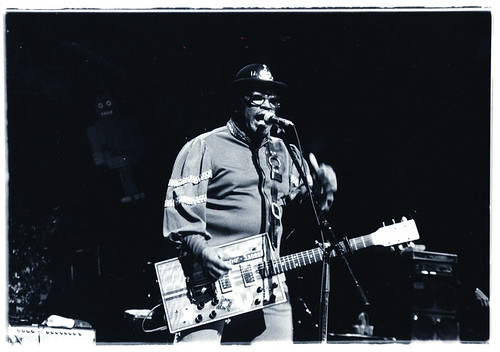
by Bo Diddley (1957) – <Down below, you used to tell the truth / Now, you’re lookin’ for something to say / You give me those eyes / And then look away>. ASCOLTA SU YOUTUBE. PHOTO: “bo diddley” by masao nakagami is licensed under CC BY-SA 2.0.
WHOLE LOTTA LOVE
by Led Zeppelin (1969) – <I wanna be your backdoor man / Hey, oh, hey, oh>. ASCOLTA SU YOUTUBE.
WHOLE LOTTA SHAKIN’ GOIN’ ON
by Jerry Lee Lewis (1957) – <Come on over baby / Really got the bull by the horn / We ain’t fakin’ / Whole lotta shakin’ goin’ on>. ASCOLTA SU YOUTUBE.
WHO’LL STOP THE RAIN
by Creedence Clearwater Revival (1970) – <As long as I remember / The rain’s been comin’ down / Clouds of mystery pourin’ / Confusion on the ground>. ASCOLTA SU YOUTUBE.
Who wants to live forever – Queen (1986)
<There’s no chance for us / It’s all decided for us / This world has only one sweet moment set aside for us>. ASCOLTA SU YOUTUBE.
WHY DO FOOLS FALL IN LOVE
by Frankie Lymon and The Teenagers (1956) – <Why does my heart skip this crazy beat / Because it knows / It will reach defeat / Tell me why, tell me why / Why do fools fall in love?>. ASCOLTA SU YOUTUBE.
da ‘WICHITA LINEMAN’ a ‘WILL YOU LOVE ME TOMORROW’
WICHITA LINEMAN
by Glen Campbel (1968) – <I know I need a small vacation / But it don’t look like rain / And if it snows that stretch down south won’t ever stand the strain>. ASCOLTA SU YOUTUBE.
WILD HORSES
by The Rolling Stones (1971) – <I watched you suffer a dull aching pain / Now you’ve decided to show me the same / No sweeping exit or offstage lines / Could make me feel bitter or treat you unkind / Wild horses couldn’t drag me away / Wild, wild horses couldn’t drag me away>. ASCOLTA SU YOUTUBE.
WILD THING
by The Troggs (1966) – <You make everything groovy, wild thing / Wild thing, I think you move me / But I wanna know for sure / Come on and hold me tight / You move me>. ASCOLTA SU YOUTUBE.
WILLIAM, IT WAS REALLY NOTHING
by The Smiths (1984) – <This town has dragged you down / Oh, no, and everybody’s got to live their life / And God knows I’ve got to live mine / God knows I’ve got to live mine>. ASCOLTA SU YOUTUBE.
WILL YOU LOVE ME TOMORROW
by The Shirelles (1960) – <Is this a lasting treasure / Or just a moment’s pleasure>. ASCOLTA SU YOUTUBE.
da ‘WISH YOU WERE HERE’ a ‘WON’T GET FOOLED AGAIN’
Wish you were here – Pink Floyd (1975)
<So, so you think you can tell / Heaven from hell / Blue skies from pain / Can you tell a green field / From a cold steel rail? / A smile from a veil? / Do you think you can tell?>. ASCOLTA SU YOUTUBE.
WITH A LITTLE HELP FROM MY FRIENDS
by The Beatles (1967) – <What would you think if I sang out of tune? / Would you stand up and walk out on me? / Lend me your ears and I’ll sing you a song / And I’ll try not to sing out of key>. ASCOLTA SU YOUTUBE.
WITH OR WITHOUT YOU
by U2 (1987) – <See the stone set in your eyes / See the thorn twist in your side>. ASCOLTA SU YOUTUBE.
WONDERFUL WORLD
by Sam Cooke (1960) – <Don’t know much about history / Don’t know much biology / Don’t know much about a science book / Don’t know much about the French I took>. ASCOLTA SU YOUTUBE.
WON’T GET FOOLED AGAIN
by The Who (1971) – <I’ll tip my hat to the new constitution / Take a bow for the new revolution / Smile and grin at the change all around / Pick up my guitar and play / Just like yesterday / Then I’ll get on my knees and pray / We don’t get fooled again / Don’t get fooled again, no no>. ASCOLTA SU YOUTUBE.
Vai alla home page di SOKRATIKO.IT oppure torna in testa alla sezione CANZONI P-Z oppure torna all’inizio della lettera W
Y
da ‘YESTERDAY’ a ‘YOU SEND ME’
YESTERDAY
by The Beatles (1965) – <Yesterday, all my troubles seemed so far away / Now it looks as though they’re here to stay / Oh, I believe in yesterday>. ASCOLTA SU YOUTUBE.
YOU ARE THE SUNSHINE OF MY LIFE
by Stevie Wonder (1972) – <You must have known that I was lonely / Because you came to my rescue>. ASCOLTA SU YOUTUBE.
YOU CAN’T ALWAYS GET WHAT YOU WANT
by The Rolling Stones (1969) – <And I went down to the demonstration / To get my fair share of abuse / Singing, “We’re gonna vent our frustration / If we don’t we’re gonna blow a fifty-amp fuse”>. ASCOLTA SU YOUTUBE.
La musica rock è una filosofia di vita
YOUNG AMERICANS
by David Bowie (1975) – <Well, well, well, would you carry a razor (oooh) / In case, just in case of depression? (oooh) / Sit on your hands on a bus of survivors / Blushing at all the Afro-Sheeners>. ASCOLTA SU YOUTUBE.
YOUNG BLOOD
by The Coasters (1957) – <I took one look and I was fractured / I tried to walk but I was lame / I tried to talk but I just stuttered: / What’s your name? What’s your name? / What’s your name? What’s your name?>. ASCOLTA SU YOUTUBE.
YOUR CHEATIN’ HEART
by Hank Williams (1953) – <The time will come / When you’ll be blue / Your cheatin’ heart / Will tell on you>. ASCOLTA SU YOUTUBE.
YOU REALLY GOT ME
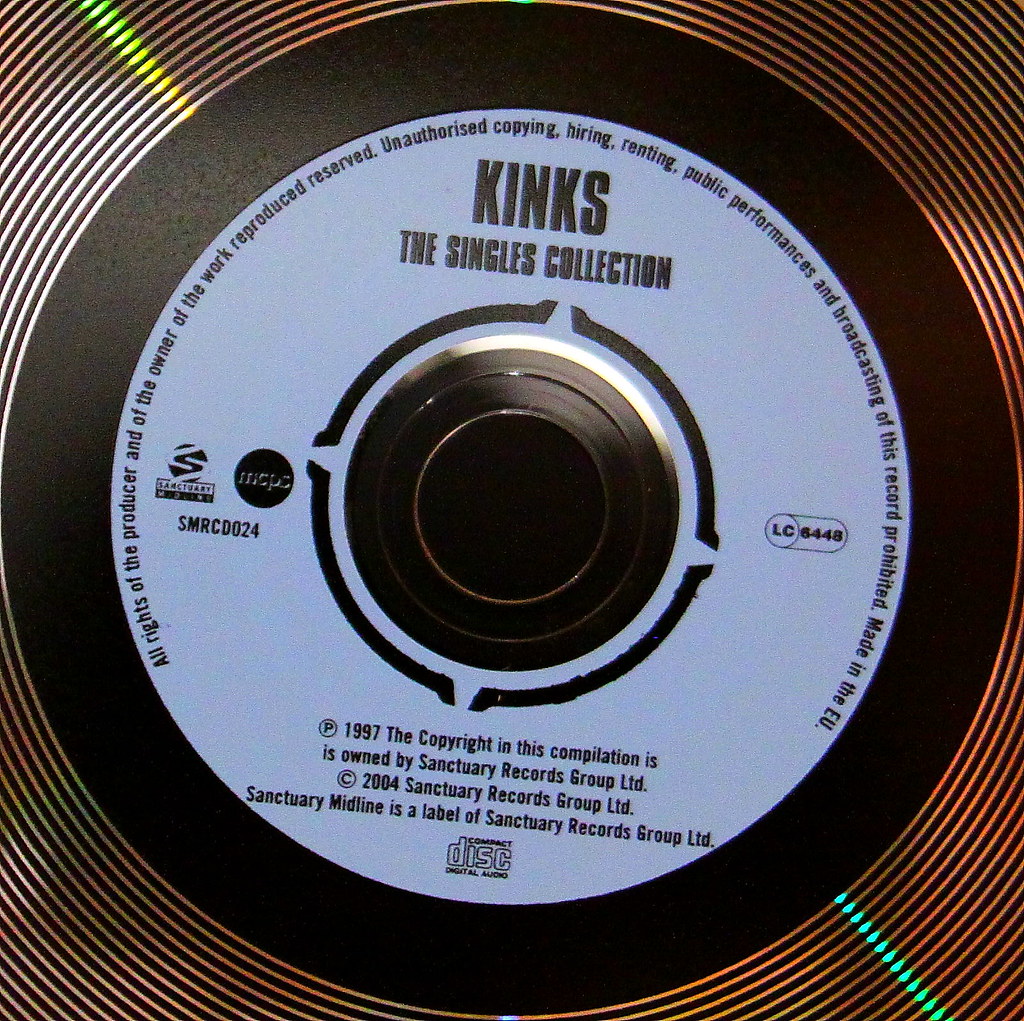
by The Kinks (1964) – <See, don’t ever set me free / I always want to be by your side>. ASCOLTA SU YOUTUBE. Photo: “CD Inner 43” by Mark Morgan Trinidad B is licensed under CC BY 2.0.
YOUR SONG
by Elton John (1970) – <It’s a little bit funny this feeling inside / I’m not one of those who can easily hide, I / Don’t have much money but boy if I did / I’d buy a big house where we both could live>. ASCOLTA SU YOUTUBE.
YOU SEND ME
by Sam Cooke (1957) – <You, you, you, you send me / I know you send me / I know you send me / Honest you do>. ASCOLTA SU YOUTUBE.
Vai alla home page di SOKRATIKO.IT oppure torna in testa alla sezione CANZONI P-Z oppure torna all’inizio della lettera Y
Titoli con Numeri
99 PROBLEMS
by Jay-Z (2003) – <If you grew up with holes in your zapatos / You’d celebrate the minute you was having dough>. ASCOLTA SU YOUTUBE.
1999
by Prince (1982) – <But life is just a party and parties weren’t meant to last / War is all around us, my mind says prepare to fight / So if I gotta die I’m gonna listen to my body tonight>. ASCOLTA SU YOUTUBE.
Vai alla home page di SOKRATIKO.IT oppure torna in testa alla sezione CANZONI P-Z